 GreenNest
Plant Pests & Diseases
Brown Leaf Tips on Houseplants: 4 Common Causes
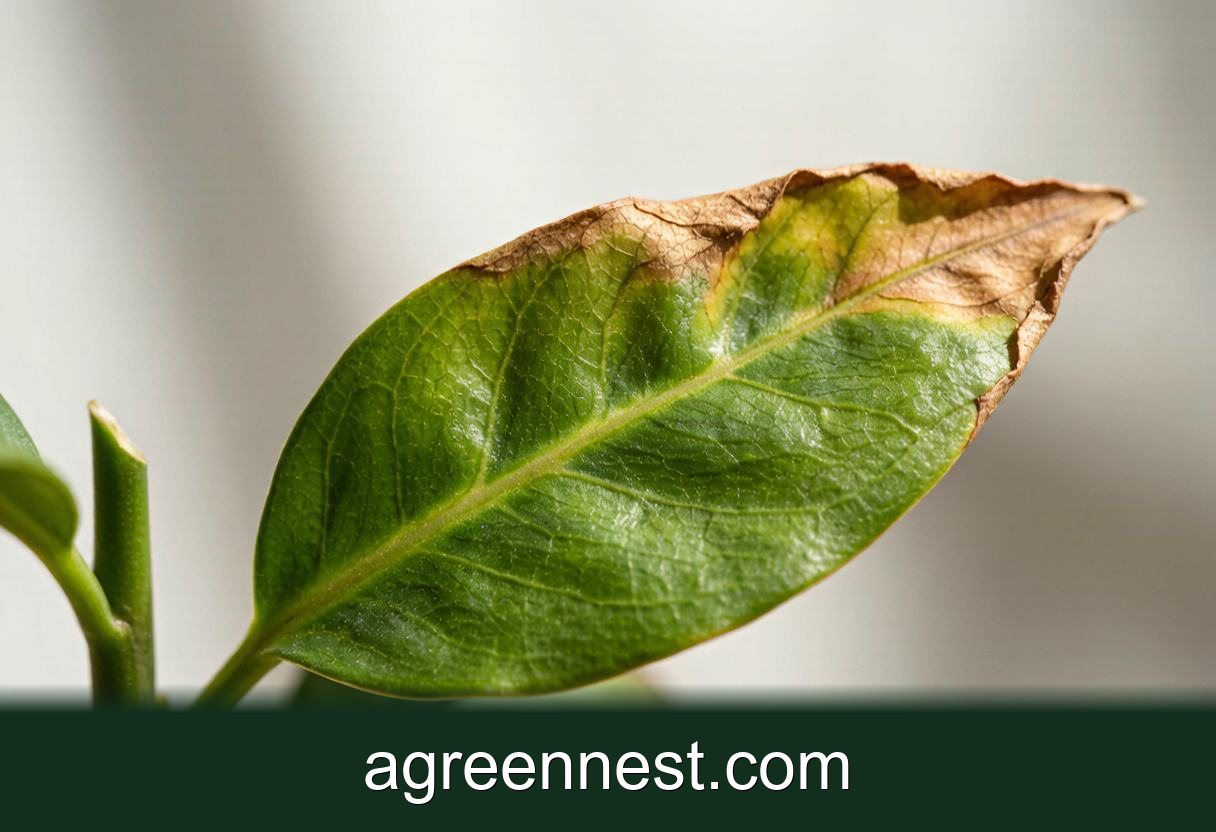
Brown, crispy leaf tips are one of the most common houseplant complaints, and they rarely mean pests. This GreenNest guide explains the four usual causes and exactly how to fix each one.
Why Do Leaf Tips Turn Brown?
Leaf tips brown because they are the farthest point from the roots, so they suffer first when water or nutrients go wrong. The tissue dies back from the tip, leaving a dry, brown edge that will not turn green again.
The good news is that the cause is usually environmental, not a disease, and a few simple changes restore healthy growth. The trick is figuring out which of the four causes is yours.
Cause 1: Low Humidity
Most houseplants come from humid tropical forests, but our heated and air-conditioned homes sit closer to a desert. When the air is too dry, leaf tips lose moisture faster than the roots can replace it.
Plants that hate dry air include calathea, fern, peace lily, and spider plant. You will often see brown tips plus curling or papery leaves.
How to Fix Low Humidity
- Group plants together so they share transpired moisture.
- Set pots on a humidity tray filled with pebbles and water.
- Run a small room humidifier near your collection.
- Mist lightly in the morning, though trays and humidifiers work better.
Aim for 40 to 60 percent humidity for most tropicals, and the brown tips should stop appearing on new growth.
Cause 2: Fluoride and Chlorine in Tap Water
Municipal tap water often contains fluoride and chlorine added for safety, but many houseplants are sensitive to them. The chemicals build up in the leaf tips and cause a uniform brown scorch.
Spider plants, dracaena, and peace lilies are especially reactive. You may notice browning even when watering and humidity seem fine.
How to Fix Water Issues
- Use distilled, filtered, or rainwater instead of straight tap water.
- If you must use tap, let it sit uncovered overnight so chlorine evaporates.
- Water with the filtered option for sensitive plants long term.
- Avoid softened water, which is high in salts that worsen the problem.
Switching water source is often the single biggest improvement for tip-browning plants.
Cause 3: Overwatering and Underwatering
Both extremes brown the tips, just for opposite reasons. Overwatering rots fine roots so the plant cannot drink, while underwatering simply leaves it thirsty at the edges.
Overwatered plants show yellow lower leaves, soggy soil, and soft brown tips. Underwatered plants show dry, curled leaves and soil pulling away from the pot.
How to Water Correctly
- Check the top inch or two of soil before watering, not on a calendar.
- Water thoroughly until it drains from the bottom, then empty the saucer.
- Let the surface dry to the right depth for your specific plant.
- Use a moisture meter to remove the guesswork for tricky species.
A moisture meter takes the emotion out of watering and prevents both drownings and droughts.
Cause 4: Salt and Fertilizer Buildup
Fertilizers and some tap waters leave behind soluble salts that accumulate in the soil. As the concentration rises, roots absorb it instead of water, and the tips burn brown.
You may see a white crust on the soil surface or pot rim, a telltale sign of salt buildup. This is common with frequent liquid feeding and no soil flushing.
How to Flush the Soil
- Take the plant to a sink or shower.
- Water slowly with plenty of clean water until it runs clear from the drainage holes.
- Let it drain fully and empty the saucer.
- Repeat the flush every two to three months if you fertilize often.
Cut back on fertilizer strength and frequency, and the browning should ease on new leaves.
Step-by-Step Recovery Plan
Not sure which cause is yours? Work through this order, since these fixes are safe to combine:
- Move the plant to higher humidity with a pebble tray.
- Switch to distilled or filtered water for two weeks.
- Check soil moisture with a meter and adjust your schedule.
- Flush the pot thoroughly to wash out salt buildup.
- Trim only the fully brown tips with clean scissors for a tidy look.
Remember that brown tissue will not regenerate, so trim for appearance and judge recovery by the new growth that follows.
Prevention Tips
Keep tips green with these everyday habits:
- Keep humidity steady with trays or a humidifier.
- Use distilled or filtered water for sensitive plants.
- Water based on soil moisture, not a fixed day.
- Flush pots every few months to prevent salt creep.
- Fertilize at half strength and only during active growth.
Pet and Child Safety
The fixes here are gentle, but a few notes keep everyone safe. Distilled and filtered water are harmless, but fertilizer concentrates and salt flushes should be kept out of reach, and hands washed after handling plant food. Trimmed leaf tips are not edible, so discourage young children from tasting them, and store any plant-care liquids with childproof caps.
Frequently Asked Questions
Q: Should I cut off brown leaf tips?
A:
Yes, trim only the dead brown part with clean scissors for looks, but the cause must be fixed or new tips still brown.
Q: Can brown tips turn green again?
A:
No, dead tissue stays brown, so judge recovery by healthy new growth rather than the old damaged leaves.
Q: Is tap water really bad for houseplants?
A:
It depends on your supply; sensitive plants like spider plant and dracaena often brown from fluoride and chlorine in tap water.
Q: How often should I flush the soil?
A:
Every two to three months if you fertilize regularly, or sooner if you see white salt crust on the soil.
Q: Will a humidity tray fix brown tips?
A:
It helps if low humidity is the cause, and it supports most tropicals even when combined with other fixes.
Q: Can too much fertilizer cause brown tips?
A:
Yes, salt and fertilizer buildup in the soil burns roots and shows up first as brown leaf tips.
Brown leaf tips are a signal, not a sentence, and the four causes above cover almost every case. For more care help, browse our pest control hub and keep your GreenNest plants lush and green.
Comments
Share your experience or ask a question. Comments are stored locally in your browser for this demo.