 GreenNest
Succulent Care
Echeveria Care Guide: Grow Perfect Rosettes Indoors
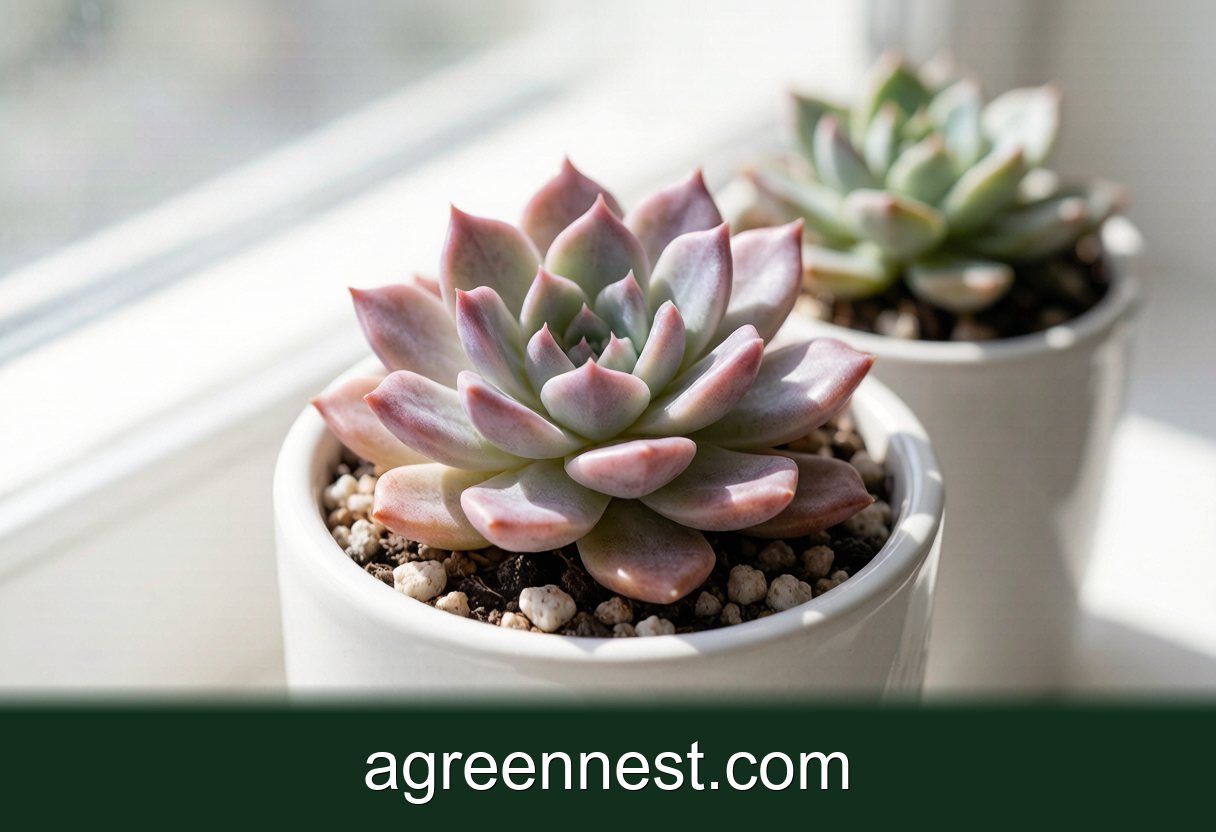
Echeveria is the poster child of the succulent world, loved for its symmetrical rosettes and powdery, pastel leaves. If you are new to indoor succulents, an Echeveria is one of the most rewarding plants you can grow.
Why Echeveria Makes a Great First Succulent
Echeveria comes from the rocky, sunny slopes of Central America, so it is built for bright light and occasional neglect. Popular types for beginners include Echeveria elegans (Mexican snowball), Echeveria 'Lola', and the ruffled Echeveria 'Perle von Nurnberg'. These plants stay compact, rarely outgrow their pot, and happily sit on a sunny windowsill for years.
The single biggest mistake new owners make is loving them too much with water. Once you understand their drought-loving nature, Echeveria care becomes almost effortless.
Light: The Secret to Tight Rosettes
Echeveria wants at least 6 hours of bright, indirect to direct light each day. A south- or west-facing window is ideal. With enough light, the rosette stays tight and the colors deepen.
Too little light causes etiolation — the plant stretches, the stem lengthens, and the leaves spread apart searching for sun. If you see a stretched "neck," move the plant to a brighter spot immediately.
Grow Lights for Dim Homes
If your windows are weak, a simple LED grow light fixes the problem fast. Aim for 12–14 hours of supplemental light daily, positioned 6–12 inches above the plant. Many GreenNest readers keep Echeveria glowing through dark winters with a basic panel.
Watering: The Soak-and-Dry Method
The golden rule is soak and dry. Water thoroughly until liquid runs from the drainage hole, then wait until the soil is completely dry before watering again. For most homes, this means every 7–14 days in summer and every 3–4 weeks in winter.
Signs Your Echeveria Is Thirsty
- Lower leaves look soft, thin, or slightly wrinkled.
- The whole rosette feels lighter when you lift the pot.
- Leaves lose their firm, plump squeeze-back.
Never let your Echeveria sit in a saucer of water. Empty any runoff 10 minutes after watering to avoid root rot.
Soil and Pots
Echeveria despises "wet feet." Use a gritty, fast-draining mix rather than standard potting soil. A blend of 50% cactus soil and 50% perlite or pumice works well.
Terracotta pots are perfect because they wick moisture from the soil. Choose a pot with a drainage hole that is only slightly larger than the root ball.
Temperature and Dormancy
Echeveria thrives between 65°F and 80°F (18–27°C). It tolerates brief dips to about 40°F (4°C) but should never freeze. In winter, growth slows; cut watering to once a month and keep it cool and bright.
Common Problems and Fixes
Shriveling Leaves
If lower leaves shrivel and the plant looks deflated, it is usually underwatered. Give it a deep soak. If leaves are mushy and translucent instead, you have overwatered — stop watering and let the soil dry fully.
Etiolation (Stretching)
Move the plant to stronger light. You cannot un-stretch an existing stretched stem, but a "behead" — cutting the top rosette and re-rooting it — gives you a fresh, compact plant.
Mealybugs
These white, cottony pests hide in leaf crevices. Dab them with a cotton swab dipped in 70% isopropyl alcohol. Repeat weekly until gone.
Color Tips: Getting Those Gorgeous Hues
The pink, purple, and orange tones in Echeveria come from stress coloring — gentle, natural stress from bright light and cool nights. To encourage it:
- Give maximum safe sunlight.
- Allow cool nighttime temperatures around 50–55°F (10–13°C).
- Avoid overfeeding; too much nitrogen keeps leaves green.
A little seasonal stress is healthy and beautiful. Just never let the plant actually freeze.
Repotting and Refreshing
Echeveria likes to be slightly root-bound, so repot only every 2–3 years or when roots crowd the drainage hole. Spring is the best time. Choose a pot just 1 inch wider than the current one; too much extra soil stays wet and invites rot.
After repotting, wait 4–5 days before the first watering so any disturbed roots can heal. Top-dress with a thin layer of small gravel to keep the lowest leaves off damp soil and to show off the rosette.
Frequently Asked Questions
Q: How often should I water my Echeveria?
A:
Water every 7–14 days in summer using the soak-and-dry method, and only every 3–4 weeks in winter when growth slows.
Q: Why is my Echeveria stretching and losing its shape?
A:
Stretching, called etiolation, means it needs more light. Move it to a brighter window or add a grow light to tighten the rosette.
Q: Can Echeveria grow under a grow light?
A:
Yes. Provide 12–14 hours of LED light daily, 6–12 inches above the plant, and you will get compact, colorful rosettes year-round.
Q: What kind of soil is best for Echeveria?
A:
Use a gritty, fast-draining mix such as 50% cactus soil and 50% perlite or pumice, never dense regular potting soil.
Q: How do I make my Echeveria turn pink or purple?
A:
Increase bright light and expose the plant to cool nights around 50–55°F to trigger natural stress coloring.
Q: Is Echeveria safe around pets?
A:
Yes, Echeveria is non-toxic to cats and dogs, making it a safe, friendly choice for households with pets.
Echeveria rewards a light touch and plenty of sun. Pair it with our free light calculator to find the brightest spot in your home, and grab our succulent ebook for a full month-by-month care schedule.
Comments
Share your experience or ask a question. Comments are stored locally in your browser for this demo.