 GreenNest
Low-Light Indoor Plants
Elephant Ear Care Guide (Alocasia amazonica)
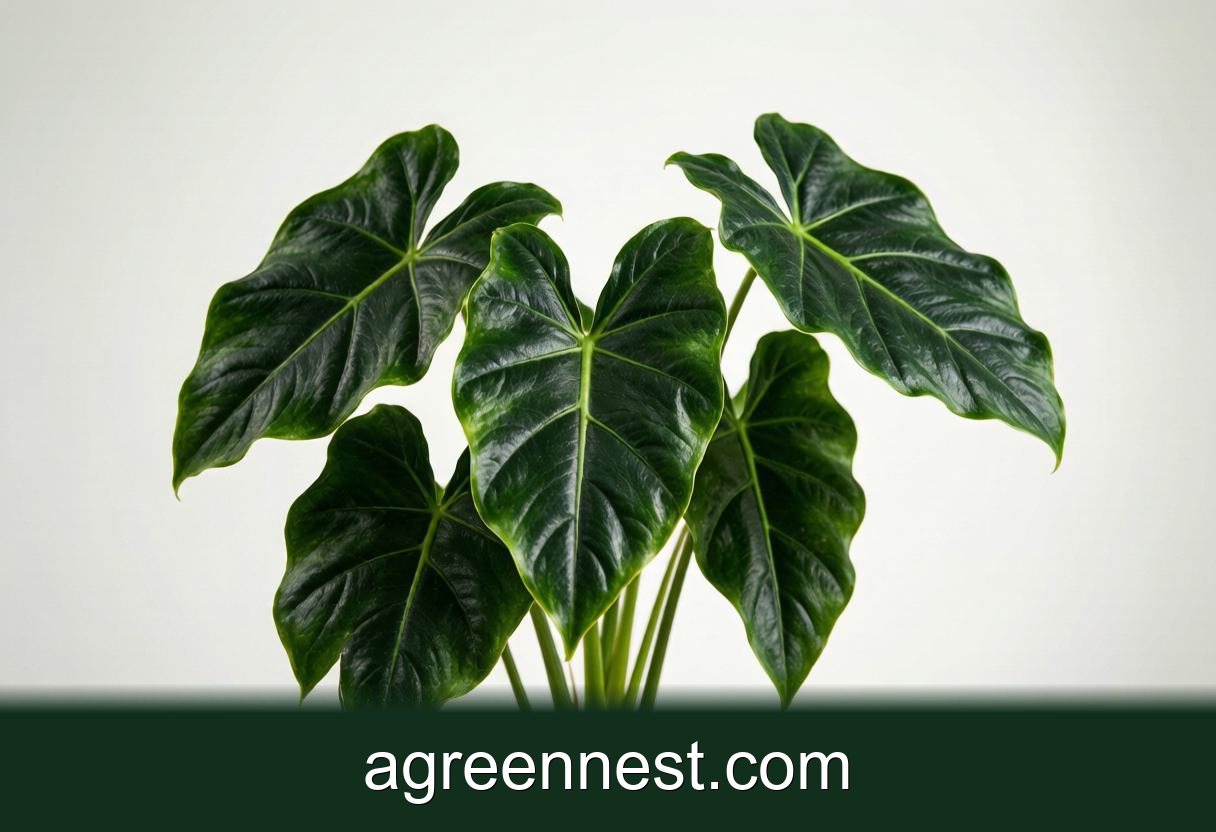
Elephant Ear at a Glance
| Care factor | What Elephant Ear wants |
|---|---|
| Light | bright indirect light, with a little gentle morning or evening sun |
| Water | water deeply only when the soil has dried out completely, roughly every 12 days in the growing season, and far less in winter |
| Temperature | comfortable around 60–85°F (16–29°C) |
| Humidity | it likes a humid spot or a pebble tray |
| Soil | a standard peat-free houseplant mix |
| Difficulty | best once you have a little experience |
| Pet safe | no -- keep it away from cats and dogs |
Elephant Ear (Alocasia amazonica) is a favourite among indoor gardeners because dramatic 'drama' leaf-drop happens if it dries or is moved -- keep steady..
Light Needs
Elephant Ear wants bright indirect light, with a little gentle morning or evening sun. The arrow leaves are boldly veined in contrasting silver.
Watering
water deeply only when the soil has dried out completely, roughly every 12 days in the growing season, and far less in winter. Note The sap or leaves can irritate pets if chewed, so site it out of reach.
Soil and Pot
Use a standard peat-free houseplant mix. A pot with a real drainage hole is non-negotiable -- sitting in water is the fastest way to lose a Elephant Ear.
Temperature and Humidity
It is happiest around comfortable around 60–85°F (16–29°C). it likes a humid spot or a pebble tray.
How to Propagate Elephant Ear
The easiest method is with splitting the clump at repotting or a pup separated from the mother. Let any cut surface dry for a day or two before it touches soil or water, then keep it barely moist until roots appear.
Common Problems and Fixes
- Leaning or stretched growth -- it wants more light. Move it brighter or add a grow light.
- Mushy, yellow base -- overwatering. Let it dry out and check the roots.
- Brown, crispy edges -- usually low humidity or salt build-up; flush the soil and raise humidity a little.
Frequently Asked Questions
Q: How often should I water Elephant Ear?
A:
water deeply only when the soil has dried out completely, roughly every 12 days in the growing season, and far less in winter.
Q: Is Elephant Ear safe for pets?
A:
no -- keep it away from cats and dogs.
Q: What light is best?
A:
bright indirect light, with a little gentle morning or evening sun.
Q: How do I make more of it?
A:
With splitting the clump at repotting or a pup separated from the mother.
Q: Why are the leaves changing colour?
A:
A little colour shift with the seasons is normal; dramatic scorch means too much direct sun, while fading to plain green means it wants more light.
Elephant Ear rewards a little attention with years of easy beauty. For a personalised schedule, try our free watering calculator and pair it with the light calculator to pick the perfect spot.
Comments
Share your experience or ask a question. Comments are stored locally in your browser for this demo.