 GreenNest
Low-Light Indoor Plants
Peace Lily Care in Low Light: Blooms in the Shade
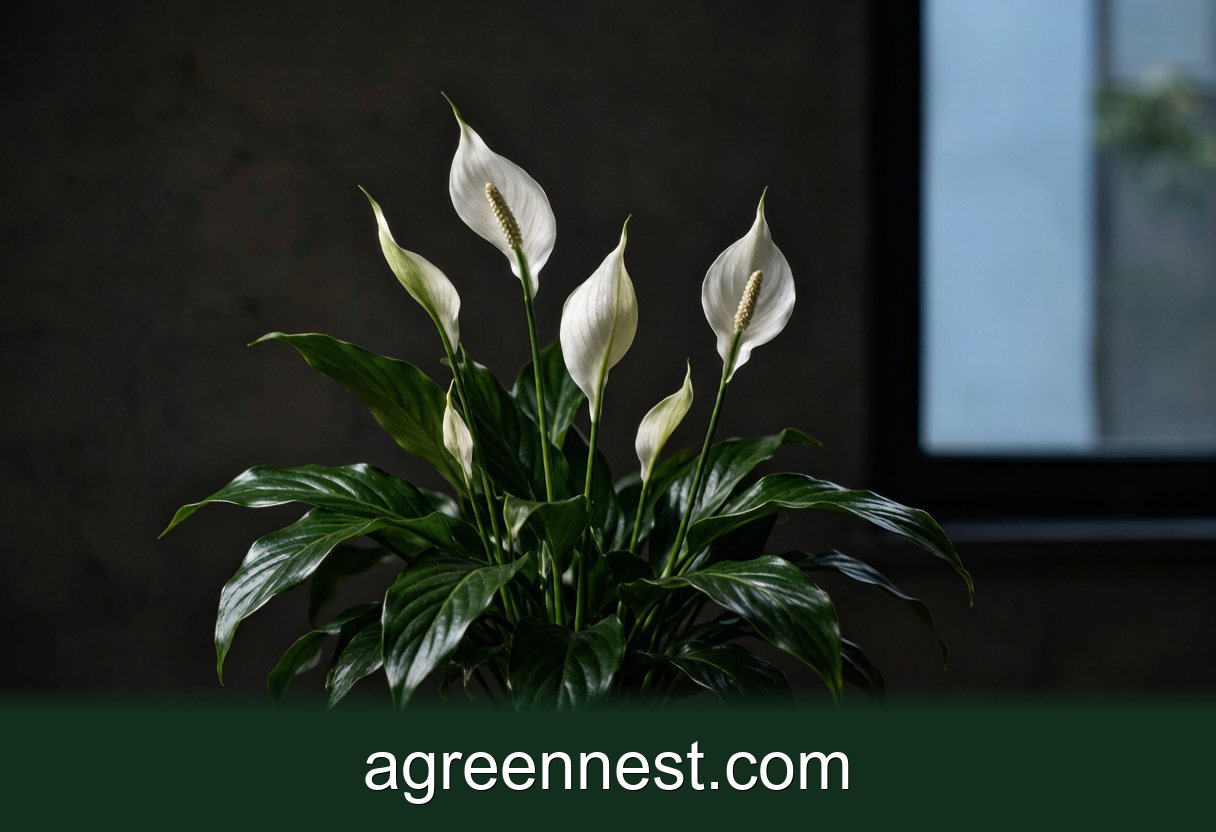
The Peace Lily (Spathiphyllum) is one of the only popular houseplants that flowers reliably in low light. Those white "blooms" are actually leaf-like spathes, and they appear even in a north-window room.
This guide shows how to coax blooms from a dim corner, how to read the plant's famous droop signal for watering, and how to handle brown tips and pet safety. Let's keep your Peace Lily happy and flowering.
Can Peace Lilies Really Bloom in Low Light?
Yes—with realistic expectations. Peace Lilies flower best in 100–250 foot-candles, but they still produce spathes at 50–100 foot-candles, which is a typical north-window or bright indirect spot.
In deeper shade they focus on foliage and may bloom less often. That is normal. A healthy, leafy Peace Lily in low light is a win even without constant flowers.
Encouraging more blooms
Give the brightest indirect light you can, keep the plant lightly fed in spring and summer, and let it become slightly pot-bound. Slightly root-bound Peace Lilies often flower more, as if reacting to gentle stress.
If you tend to over- or under-water, a simple soil moisture meter takes the guesswork out of the equation. Peace Lilies are sensitive to soil moisture, and a meter helps you hit the sweet spot every time.
Watering by Droop Signals
The Peace Lily is famous for dramatic drooping when thirsty. The whole plant wilts like it is fainting, then perks up within an hour of a good drink. It is the most honest "water me" signal in the plant world.
In low light, water roughly every 7–10 days in summer and every 10–14 days in winter. But the droop is your best timer—when leaves sag, water that day.
The right way to water
Water thoroughly until it runs from the drainage holes, then empty the saucer. Peace Lilies like even moisture but hate soggy roots, so let the top half-inch dry between drinks.
Use room-temperature water. Cold water shocks the roots, and Peace Lilies are sensitive to the chlorine and fluoride in tap water—both can cause brown leaf tips. Filtered or left-out overnight water is ideal.
Humidity and Brown Leaf Tips
Brown, crispy leaf tips are the most common Peace Lily complaint, especially in dry heated homes. The plant comes from humid rainforest floors and misses that moisture in our living rooms.
Raising humidity
- Mist the leaves every few days with a fine spray.
- Set the pot on a tray of pebbles and water, keeping the pot above the waterline.
- Group it with other plants so they share transpired moisture.
- Run a small humidifier nearby in winter.
Fixing the tips
Trim brown tips with clean scissors, following the leaf's natural point so the cut blends in. Then boost humidity and switch to filtered water to stop new damage.
Light Levels for Healthy Leaves
Peace Lilies want bright indirect light but adapt down to low. Direct sun burns the leaves to a bleached yellow, so keep them off hot windowsills.
A north or east window is perfect. In a dim interior, place the plant a few feet from an east window or use a sheer curtain on a brighter one. If the leaves look stretched and weak, it needs more light; if they scorch, it needs less.
Pet Toxicity: An Important Warning
Peace Lilies contain calcium oxalate crystals, the same irritant found in pothos and ZZ plants. Chewing the leaves causes intense mouth burning, drooling, and vomiting in cats and dogs.
The good news: Peace Lily toxicity is usually mild and self-limiting compared to true lilies, which can cause kidney failure in cats. Still, keep it on a plant stand or in a room pets cannot reach.
If a pet chews it
Rinse the animal's mouth with water and call your vet. Most cases resolve with supportive care, but prompt attention matters. Teach children that the plant is "look, don't taste."
Dividing a Peace Lily
Mature Peace Lilies form clumps that you can split to make new plants or refresh a crowded pot. Spring is the best time.
How to divide
- Water the plant a day before so roots are flexible.
- Slide it from the pot and gently tease the root ball apart by hand.
- Separate into sections, each with several leaves and its own root mass.
- Pot each in fresh, moist, well-draining mix and water lightly.
- Keep the new divisions in indirect light and mist often while they settle.
Division also revives a plant that has stopped blooming—fresh root space often triggers new spathes within a season.
Troubleshooting Quick Reference
- Drooping but soil is wet: Root rot or cold shock. Check drainage and let soil dry.
- Brown tips: Low humidity or tap-water chemicals. Filter water and raise humidity.
- No flowers: Too little light or too much nitrogen. Move brighter and cut excess feed.
- Yellow leaves: Usually overwatering. Let the top dry more between drinks.
Frequently Asked Questions
Q: Will a peace lily bloom in a low-light room?
A:
Yes, it can flower at 50–100 foot-candles, such as a north window. Blooms may be fewer in deep shade, but healthy foliage is still a win.
Q: How do I know when to water my peace lily?
A:
Watch for drooping leaves—the plant wilts when thirsty and revives fast after watering. Aim to water every 7–10 days in low light.
Q: Why are my peace lily leaf tips brown?
A:
Low humidity and fluoride or chlorine in tap water are the usual causes. Use filtered water and raise humidity to prevent more.
Q: Are peace lilies toxic to cats and dogs?
A:
Yes, they irritate the mouth and stomach if chewed, though they are milder than true lilies. Keep them out of pet reach.
Q: Can I use tap water on a peace lily?
A:
You can, but let it sit overnight so chlorine dissipates, or use filtered water to avoid brown tips from fluoride.
Q: How do I make my peace lily flower more?
A:
Give the brightest indirect light you can, feed lightly in spring and summer, and let it get slightly pot-bound. Dividing also sparks new blooms.
The Peace Lily proves that low-light indoor plants can still reward you with flowers, not just foliage. Pair it with a pothos low-light care routine for variety, and if watering timing trips you up, try our free light calculator to plan the perfect dim corner.


Comments
Share your experience or ask a question. Comments are stored locally in your browser for this demo.