 GreenNest
Low-Light Indoor Plants
Heartleaf Philodendron: Easy Low-Light Care Guide
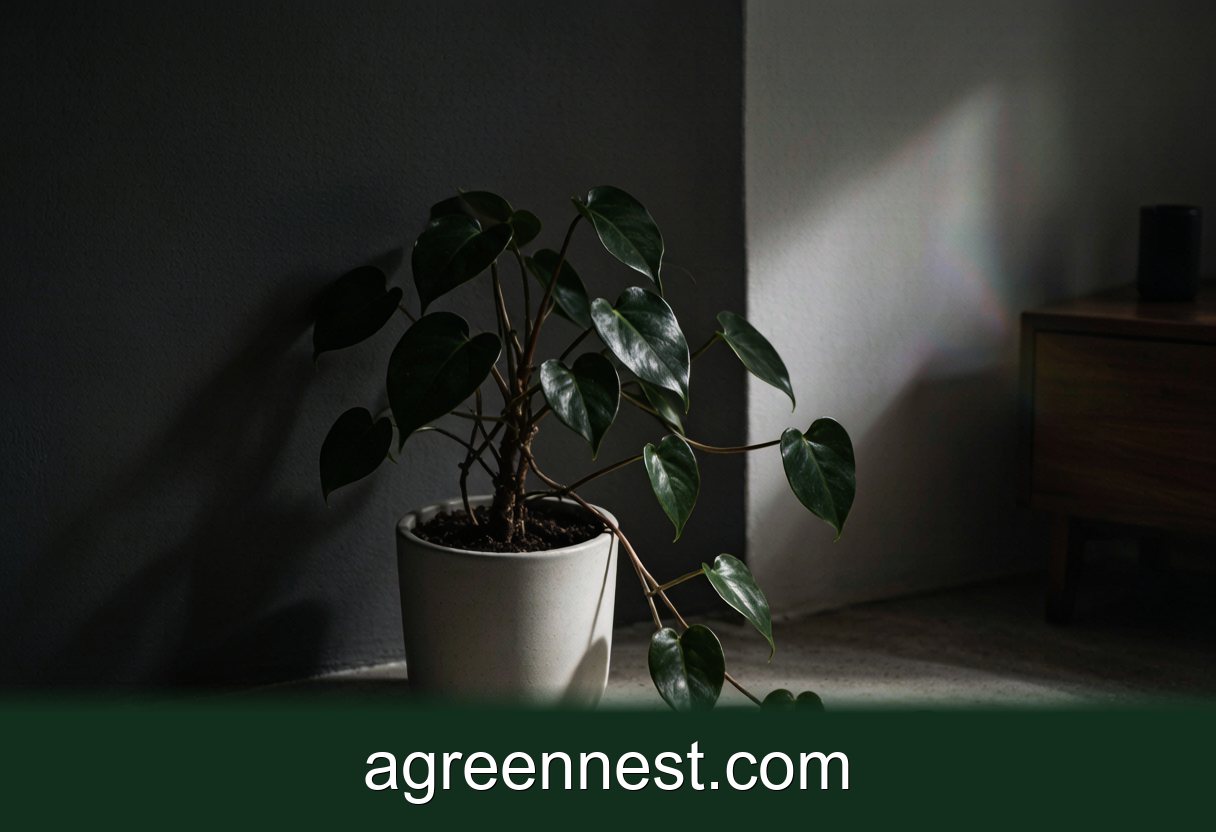
The Heartleaf Philodendron (Philodendron hederaceum) is one of the most forgiving low-light indoor plants you can bring home. It trails, climbs, and bounces back from neglect, making it a perfect starter plant for dim apartments and offices.
This guide walks through how much shade it tolerates, the watering rhythm that keeps it happy, and the simple tricks that stop its pretty leaves from fading.
How Much Light Can a Heartleaf Philodendron Take?
Heartleaf Philodendron thrives in 50–250 foot-candles, which covers most bright indirect spots and a surprising amount of shade. A few feet from an east window, a north-facing sill, or the middle of a well-lit room all work beautifully.
It also adapts to fluorescent office light, so a windowless cubicle is not a dealbreaker. Growth simply slows when light drops, and the leaves get a touch smaller.
The book test
If you can read a book in the spot without turning on a lamp at noon, your philodendron can live there. Below that, the plant survives but stops putting out much new growth.
When a corner is just a little too dim, a small clip-on LED grow light makes a big difference. Heartleaf Philodendron responds quickly, often pushing out a flush of new leaves within three to four weeks of added light.
The Right Watering Rhythm
Low light means the soil stays moist far longer than the care tag suggests. The number one killer of these plants is a well-meaning owner who waters on a fixed weekly schedule.
In a dim room, water every 10–14 days in summer and every 2–3 weeks in winter. Always let the top 1–2 inches of soil dry before the next drink.
The finger test
Stick your finger into the soil up to the second knuckle. If it feels dry, water thoroughly until liquid runs from the drainage holes. If it feels cool or damp, wait a few more days.
Never leave the pot sitting in a saucer of water. In shade, trapped moisture lingers and quietly rots the roots, which shows up as yellow, soft leaves near the soil line.
Climbing vs. Trailing
Few plants are as flexible as the Heartleaf Philodendron when it comes to styling. You can let it spill from a shelf or train it upward on a support, and both looks suit a low-light corner.
Trailing setups
A hanging basket or a high bookshelf lets the vines drape 4–8 feet over time. Pinch the growing tips now and then to encourage bushier side shoots instead of one lonely strand.
Climbing setups
In the wild, this philodendron climbs trees using aerial roots. A moss pole or small trellis gives it something to grab, and upright plants often grow larger, more heart-shaped leaves than trailing ones.
Either style works in low light. Just keep the plant where you can still reach it for watering and the occasional leaf wipe.
Propagation in Water
Heartleaf Philodendron is a propagation dream, which makes it ideal for beginners and for filling more dim corners on a budget. A single healthy vine becomes many plants.
Step-by-step
- Find a vine and locate a node, the small bump where a leaf meets the stem. Roots grow only from nodes.
- Cut just below a node with clean scissors, keeping 2–3 leaves above the cut.
- Drop the cutting in a jar of room-temperature water, submerging the node but keeping leaves dry.
- Change the water weekly and keep the jar in bright indirect light.
- In 2–4 weeks, white roots appear. Pot them once roots reach 1–2 inches.
Water vs. soil long term
Water-rooted cuttings look lovely in a vase and can remain there for months with weekly top-ups. For a permanent, vigorous plant, move them to soil so they can pull real nutrients.
Variegation Loss in Low Light
Many Heartleaf Philodendrons carry variegation, from the silver-streaked 'Brasil' to the creamy 'Lemon Lime'. Those pale patches have less chlorophyll, so the plant treats them as a luxury it can't afford in the dark.
What you'll notice
A 'Brasil' may shift toward plain green. A 'Lemon Lime' can dull to a soft, muddy lime. This is the plant conserving energy, not dying.
To keep variegation vivid, give the brightest indirect light you can manage, or add a grow light for a few hours each day. If leaves have gone fully green, move the plant closer to a window and trim the most faded vines to push fresh, patterned growth.
A dedicated grow light is the easiest way to preserve variegation in a genuinely dark room. Even two to three hours of supplemental light a day helps the pale cells stay bright and the plant stay compact.
Common Low-Light Problems
Even tough philodendrons send signals when something is off. Learn the two most common ones.
- Yellow leaves: Almost always too much water in low light. Let the soil dry more between drinks.
- Long, stretched stems: Not enough light. Move the plant closer to a window or add a grow light.
Pests are uncommon indoors, but watch for aphids and mealybugs near new growth. Wipe them off with a damp cloth or dab with rubbing alcohol, then isolate the plant for a week.
Frequently Asked Questions
Q: Can Heartleaf Philodendron grow in a room with no windows?
A:
It can survive under steady fluorescent or LED light, but it will not thrive long term. A small grow light keeps it healthy in a windowless space.
Q: How often should I water philodendron in low light?
A:
Roughly every 10–14 days in summer and 2–3 weeks in winter. Always let the top 1–2 inches of soil dry first.
Q: Why is my philodendron losing its variegation?
A:
Low light pushes the plant to make more green chlorophyll, fading silver or lime patterns. Move it brighter or add a grow light to restore color.
Q: Is Heartleaf Philodendron toxic to pets?
A:
Yes. It contains calcium oxalates that irritate a cat or dog's mouth and stomach. Hang it high or keep it out of reach of curious pets.
Q: Can I keep philodendron cuttings in water forever?
A:
You can for many months, but they grow best once potted in soil. Change the water weekly to prevent slime and keep the node submerged.
Q: Why are my philodendron leaves turning yellow?
A:
Usually overwatering in low light. Let the soil dry more between waterings and make sure the pot drains freely.
Heartleaf Philodendron shows that low-light indoor plants can be both easy and beautiful. Pair it with a spider plant in a bright corner for variety, and when a spot feels too dim, try our free light calculator to see if a grow light is worth it.
Comments
Share your experience or ask a question. Comments are stored locally in your browser for this demo.