 GreenNest
Low-Light Indoor Plants
Pothos in Low Light: Grow Lush Vines Anywhere
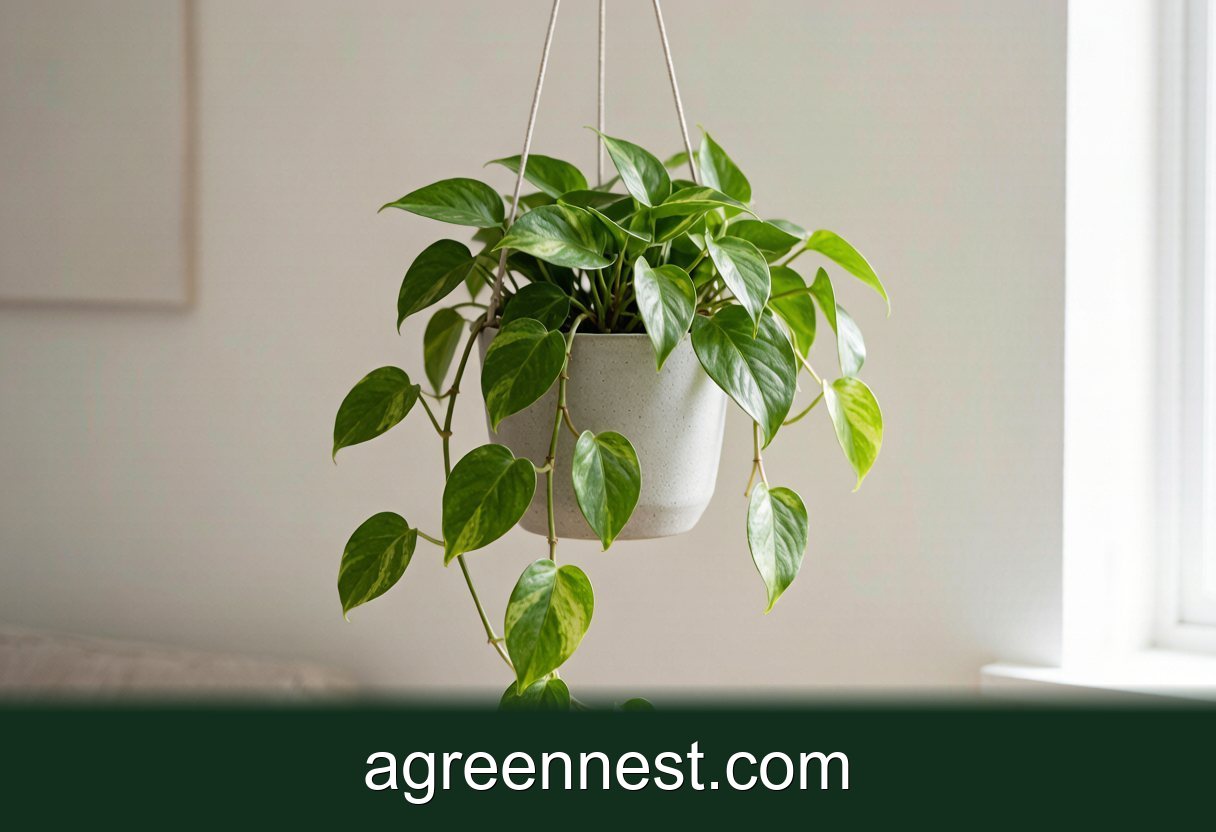
Pothos (Epipremnum aureum) is the go-to trailing plant for dim apartments, and for good reason. It shrugs off low light, bounces back from missed waterings, and grows into long, leafy curtains with almost no effort.
This guide covers exactly how much darkness a pothos can handle, how to water it in a dim room, and how to keep those pretty variegated leaves from fading. Let's get your vines thriving.
How Dark Is Too Dark for Pothos?
Pothos is famously flexible. It grows in 50–250 foot-candles, which covers most indoor spaces that are not a closed closet.
A north-facing window, the middle of a bright room, or a few feet from an east window all work. The plant will even tolerate a windowless office with steady fluorescent light.
The "can you read" rule
If you can comfortably read a paperback in the spot during the day, pothos can live there. When light drops below that threshold, growth stalls and new leaves shrink.
If your perfect corner is just a touch too dim, a small clip-on LED grow light bridges the gap. Pothos responds fast to even modest supplemental light, producing bigger, more frequent leaves within a few weeks.
Watering Pothos in Low Light
Low light means slower evaporation, so your pothos drinks less than the care tags suggest. Overwatering is the main way people lose these tough plants.
In a dim room, water roughly every 10–14 days in summer and every 2–3 weeks in winter. The safest method is to check the soil rather than the calendar.
The lift test
Pick up the pot. A dry pothos pot feels noticeably light. A freshly watered one feels heavy. When the pot is light and the top inch of soil is dry, give it a thorough soak until water runs from the drainage holes.
Never let the pot sit in a saucer of water. In low light, trapped moisture lingers and breeds root rot, which shows up as yellow, soft leaves near the base.
Trailing vs. Climbing
One of the joys of pothos is its versatility. You can let it tumble from a shelf or train it upward on a support.
Trailing setups
A hanging basket or a high shelf lets vines drape 6–10 feet over time. Pinch the growing tips occasionally to encourage bushier side growth instead of one long strand.
Climbing setups
Pothos is a natural climber in the wild, using aerial roots to scale trees. A moss pole or trellis near a wall gives it something to grab, and upright plants often develop larger, more mature leaves.
Either style works in low light. Just keep the plant where you can still reach it for watering and the occasional wipe of dust from the leaves.
Variegation Loss in Low Light
Those golden, marbled, or neon patterns that make pothos so pretty come from cells with less chlorophyll. In low light, the plant tries to make more green to capture every photon it can.
What you'll notice
A 'Golden Pothos' may shift toward solid green. A 'Neon' may dull to a softer lime. This is the plant adapting, not dying.
To keep variegation vivid, give the brightest indirect light you can manage, or add a grow light for a few hours a day. If the leaves have gone fully green, move the plant closer to a window and trim the most faded vines to encourage fresh, patterned growth.
Propagation in Water
Pothos is the easiest plant to propagate, which makes it perfect for beginners and for filling more low-light corners on a budget.
How to do it
- Find a vine and locate a node—the small bump where a leaf meets the stem. Roots grow only from nodes.
- Cut just below a node with clean scissors, keeping 2–3 leaves on the cutting.
- Drop the cutting in a jar of room-temperature water, submerging the node but keeping leaves above water.
- Change the water weekly and place the jar in bright indirect light.
- In 2–4 weeks you will see white roots. Pot them in soil once roots are 1–2 inches long.
Soil vs. water long term
Water-rooted cuttings look lovely in a vase and can live there for months with weekly top-ups. For a permanent plant, move them to soil so they can access nutrients and grow robustly.
Common Low-Light Problems
Even tough pothos sends signals when something is wrong. Learn the two big ones.
- Yellow leaves: Almost always too much water. Let the soil dry more between drinks.
- Leggy, spaced-out growth: Not enough light. Move closer to a window or add a grow light.
Pests are rare indoors but watch for mealybugs—white cottony clumps in the leaf joints. Dab them with a cotton swab dipped in rubbing alcohol and isolate the plant for a week.
Frequently Asked Questions
Q: Can pothos grow in a room with no windows?
A:
It can survive under steady fluorescent or LED office lighting, but it will not thrive long term. A small grow light keeps it healthy in a windowless space.
Q: How often should I water pothos in low light?
A:
Roughly every 10–14 days in summer and 2–3 weeks in winter. Always check that the top inch of soil is dry first.
Q: Why is my pothos losing its variegation?
A:
Low light causes the plant to produce more green chlorophyll, fading golden or neon patterns. Move it brighter or add a grow light to restore color.
Q: Can I keep pothos cuttings in water forever?
A:
Yes, for months, but they grow best once moved to soil. Change the water weekly to prevent slime and keep the node submerged.
Q: Is pothos toxic to pets?
A:
Yes. Pothos contains calcium oxalates that irritate a cat or dog's mouth and stomach. Hang it high or keep it out of reach.
Q: Why are my pothos leaves turning yellow?
A:
Usually overwatering in low light. Let the soil dry more between waterings and ensure the pot drains freely.
Pothos proves that low-light indoor plants can still be lush and dramatic. Pair your vines with a snake plant care routine for an unkillable corner, and when a spot feels too dim, try our free light calculator to see if a grow light is worth it.

Comments
Share your experience or ask a question. Comments are stored locally in your browser for this demo.