 GreenNest
Succulent Care
Propagating Succulents from Leaves: Step by Step
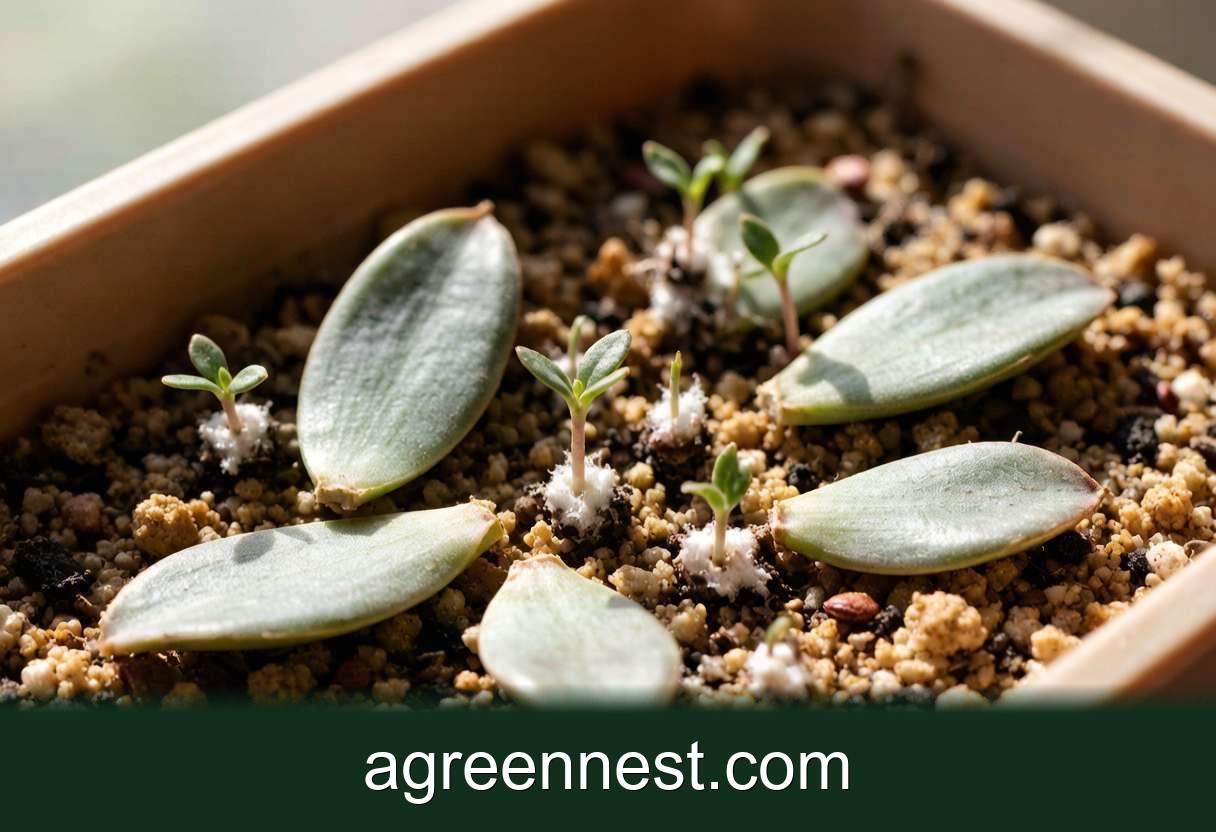
There is real magic in turning one succulent into twenty. Propagating succulents from leaves is cheap, satisfying, and perfect for beginners — all you need is a healthy leaf and a little patience.
Why Leaf Propagation Works
Many succulents, especially Echeveria, Sedum, and Graptopetalum, can grow a whole new plant from a single leaf. Each leaf carries enough stored water and energy to sprout tiny roots and a baby rosette. Offshoots, or "pups," from Aloe, Haworthia, and Jade multiply even faster.
Step 1: Choose and Remove Healthy Leaves
Pick plump, unblemished leaves from the lower stem. Gently twist the leaf side to side until it detaches cleanly at the base. A clean break is critical — if the leaf tears and leaves part of itself on the stem, it will not root.
Best Species for Leaf Propagation
- Echeveria and Graptopetalum: near 90% success.
- Sedum: very easy and fast.
- Crassula (Jade): slower but reliable from leaves.
- Haworthia and Aloe: better from offshoots than leaves.
Step 2: Let the Leaf Callus
This is the step most beginners skip, and it sinks their success rate. Lay leaves callus-side up on a dry tray for 2–4 days in a shady spot. A callus seals the wound so it will not rot when it touches soil.
Do not skip this even if you are impatient. An uncallused leaf in damp soil turns to mush within days.
Step 3: Set Up the Soil
Use a shallow tray filled with a gritty, well-draining mix — 50% cactus soil and 50% perlite works perfectly. Do not bury the leaves. Simply lay them on top, callus side down, spaced an inch apart.
Offshoots are even simpler: once a pup has a few roots of its own, snap or cut it from the mother and plant it directly in dry mix.
Step 4: Light and Misting
Place the tray in bright, indirect light — a north or east window is ideal. Direct sun scorches tender leaves. Mist the soil lightly every 3–5 days; you want it barely damp, never soggy.
Once tiny roots appear (about 2–4 weeks), you can mist a little closer to the leaf base. Keep airflow good to prevent mold.
Step 5: Watch for Roots and Babies
Within 3–6 weeks you should see pink roots, then a miniature rosette forming at the leaf base. The original leaf will slowly shrivel as it feeds the baby — that is normal and healthy.
When the baby has several leaves and a small root system, gently move it to its own pot. Water sparingly at first.
Understanding Success Rates
Realistic expectations save frustration:
- Healthy Echeveria leaf: 70–90% success.
- Sedum leaf: 80–95% success.
- Damaged or old leaf: under 30%.
- Offshoots: nearly 100% once separated cleanly.
Not every leaf makes it, and that is fine. Propagate a dozen and you will still get a healthy cluster of new plants.
What to Avoid
- Watering before callusing — guaranteed rot.
- Burying leaves — they need air, not soil cover.
- Direct hot sun — scorches fragile new growth.
- Over-misting — damp soil plus poor air equals fungus.
- Pulling leaves that resist — wait or pick another.
Speeding Things Up
Warmth helps. Keep propagation trays around 70–75°F (21–24°C). A seedling heat mat or a warm windowsill shortens rooting time. Avoid cold drafts, which stall growth for weeks.
Troubleshooting
If leaves go flat and translucent, they rotted — start over with callused leaves and less water. If nothing happens after six weeks, the leaf may have been too old; try fresher, plumper leaves from an actively growing plant.
Propagating from Offshoots (Pups)
Many succulents multiply on their own by sending up pups. Aloe, Haworthia, Jade, and Sempervivum are famous for this. Wait until a pup is at least one-third the size of the mother and has its own small roots.
To separate, slide the plant from its pot and gently tease the pup away with a clean knife, keeping its roots intact. Plant it in its own gritty mix and water lightly after a day. Pups root almost instantly because they already have a head start, making them the fastest path to a full collection.
Frequently Asked Questions
Q: How long does succulent leaf propagation take?
A:
Expect roots in 2–4 weeks and a visible baby rosette in 3–6 weeks, though warmth and species can speed or slow this.
Q: Do I need to let succulent leaves callus first?
A:
Yes. Always let leaves dry for 2–4 days so the cut seals; skipping this step causes rot and ruins your success rate.
Q: Should I water propagated leaves directly?
A:
No. Lay them on dry soil and mist lightly every 3–5 days; keep the mix barely damp rather than wet.
Q: What succulents propagate best from leaves?
A:
Echeveria, Graptopetalum, and Sedum are easiest with 70–95% success; Haworthia and Aloe do better from offshoots.
Q: Why did my succulent leaf turn mushy?
A:
It likely rotted from moisture before callusing or from over-misting; use a dry callus period and lighter misting next time.
Q: When can I pot a new succulent baby?
A:
Once the baby has several leaves and small roots, move it to its own gritty mix and water sparingly to settle it in.
Propagation is the most rewarding part of the succulent hobby, and it costs almost nothing. Use our free light calculator to place your trays in ideal bright, indirect light, and check our succulent ebook for a full propagation timeline chart.
Comments
Share your experience or ask a question. Comments are stored locally in your browser for this demo.