 GreenNest
Low-Light Indoor Plants
Snake Plant Care: The Low-Light Survivor Guide
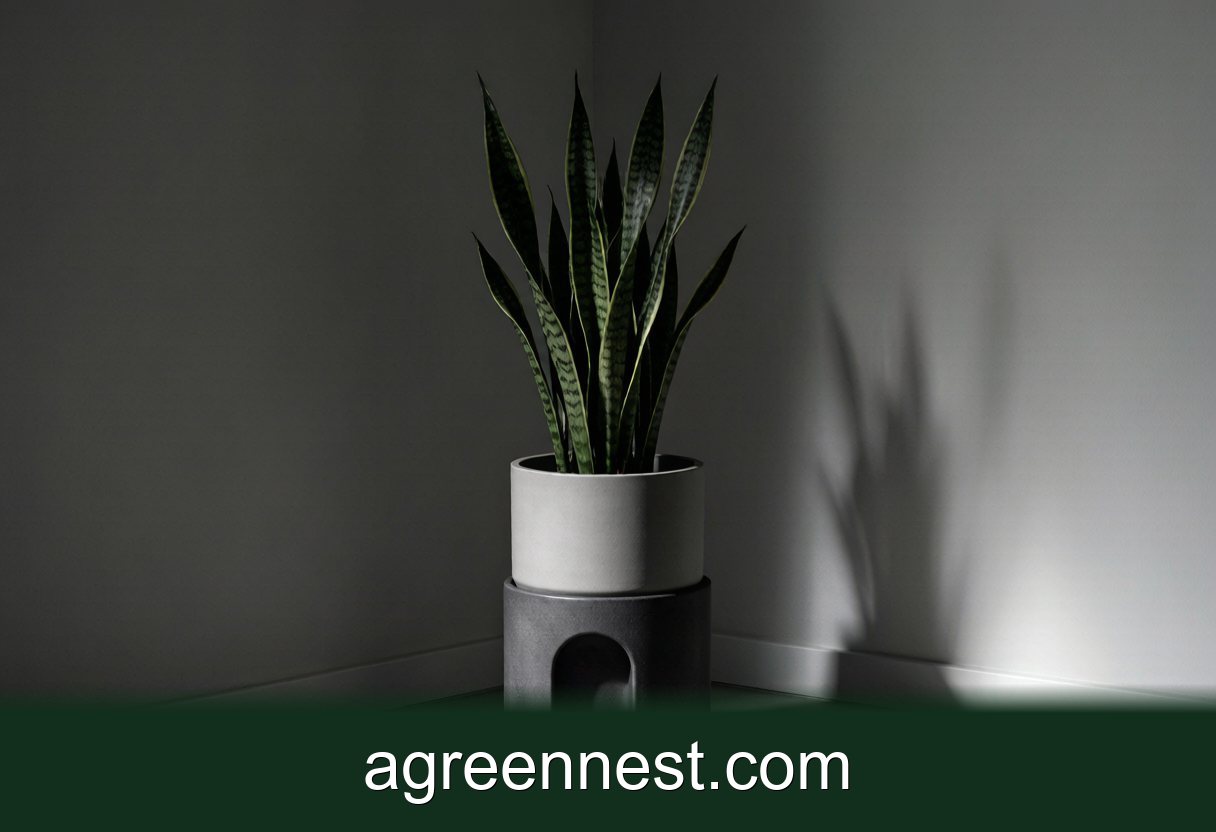
The snake plant (Sansevieria, now reclassified as Dracaena trifasciata) is the plant most people point to when they say, "I kill everything." It thrives on neglect, tolerates dim rooms, and asks for almost nothing in return.
If you have struggled with finicky houseplants, this is the one to start with. In this guide we break down exactly how to keep it happy in low light, how often to water, and what to do when the leaf tips turn brown.
Why Snake Plants Love Low Light
Snake plants evolved in the dry, shaded understory of West African regions. That background makes them unusually comfortable away from bright windows.
A snake plant will grow happily in 50–150 foot-candles. That is roughly the light you get across a room from a north window, or a few feet back from an east window. They survive even lower, though growth slows to a crawl.
How much is too little?
If you can still read a book in the room during the day without turning on a lamp, a snake plant can live there. True darkness—a bathroom with no window—will eventually thin the plant out, but it can still limp along for months.
Rotate the pot a quarter turn every month. Snake plants lean toward light, and a slow rotation keeps the rosette upright and balanced.
Watering: Less Is Almost Always More
The single biggest snake plant killer is overwatering. These plants store water in their thick, upright leaves, so they forgive long dry spells far better than soggy soil.
In low light the soil stays damp longer. During spring and summer, water every 2–3 weeks. In fall and winter, stretch that to every 4–6 weeks, or whenever the top 2 inches of soil feel bone dry.
The finger test
Push your index finger into the soil up to the second knuckle. If you feel any cool moisture, wait. If it is dry all the way down, it is time to water.
Always empty the saucer after 15 minutes. Standing water is the fast lane to root rot, the one condition snake plants genuinely hate.
Soil and Potting
A dense, water-holding mix is the enemy. Snake plants want a gritty, fast-draining blend that mimics rocky African soil.
Use a cactus or succulent mix and add extra perlite or coarse sand—about one part amendment to three parts mix. A terracotta pot helps because the clay wicks moisture from the root zone.
Repot only every 2–3 years, or when you see roots crowding the drainage holes. Go up just one pot size; too much soil stays wet and invites rot.
Propagation by Division
Division is the easiest, most reliable way to multiply your snake plant. It works because the plant grows from underground rhizomes that you can simply separate.
Step-by-step division
- Slide the plant out of its pot after the soil has dried.
- Gently tease apart the rhizomes with your hands or a clean knife.
- Make sure each division keeps at least three leaves and a healthy root section.
- Pot each piece in its own gritty mix and water lightly.
Leaf-cutting propagation is possible too, but it is slow—expect months before roots appear—and variegated types may revert to plain green. For beginners, division is the smarter play.
Air-Purifying Myths vs. Facts
You have probably heard that snake plants clean your air. The claim traces back to a 1989 NASA study, and the truth sits in the middle.
What the science actually says
Yes, snake plants absorb toxins like formaldehyde and benzene through their leaves. In a sealed lab chamber, they measurably improved air quality.
In a real home, though, you would need dozens of plants per room to match that effect. Think of your snake plant as a small, pleasant bonus—not a replacement for ventilation. It is a great story to tell guests, just not a medical device.
One real benefit stands out: snake plants release oxygen at night, the opposite of most plants. That makes them a lovely choice for a bedroom shelf.
Troubleshooting Brown Tips
Brown leaf tips are the most common snake plant complaint. They are rarely fatal, but they signal something is off.
Common causes
- Low humidity plus fluoride: Tap water high in fluoride can scorch tips. Let water sit overnight, or use filtered water.
- Inconsistent watering: Long droughts followed by floods stress the leaf edges.
- Cold drafts: Snake plants dislike temperatures below 50°F (10°C).
The fix
Snip the brown portion with clean scissors, following the leaf's natural pointed shape so the cut is nearly invisible. Then steady your watering rhythm and move the plant away from vents or leaky windows.
If the whole leaf goes mushy and yellow at the base, that is rot. Pull it, check the rhizome for black mush, and let the remaining roots dry out before the next watering.
Frequently Asked Questions
Q: Can snake plants survive with no sunlight?
A:
They can survive in very dim rooms but not true darkness. Aim for at least indirect low light, such as across a room from a north window.
Q: How often should I water a snake plant in winter?
A:
Every 4–6 weeks is typical, or whenever the top 2 inches of soil are completely dry. Less light means slower drying, so always check first.
Q: Why are the tips of my snake plant turning brown?
A:
Usually fluoride in tap water, inconsistent watering, or cold drafts. Trim the brown edge and use filtered water to prevent more.
Q: Are snake plants safe for pets?
A:
No. Snake plants are mildly toxic to cats and dogs if chewed, causing stomach upset. Keep them on a high shelf away from curious pets.
Q: Do snake plants really clean the air?
A:
They do remove some toxins in lab studies, but you would need many plants per room to notice at home. Enjoy them as a small bonus, not a purifier.
Q: Can I propagate a snake plant from a single leaf?
A:
Yes, but it is slow and variegated leaves may turn solid green. Dividing the rhizome is faster and keeps the original look.
Snake plants are the friendliest starting point in the world of low-light indoor plants, and they pair beautifully with other easy growers. When you are ready to expand, browse our curated low-light houseplant list or try our free light calculator to find the perfect corner for your next plant.



Comments
Share your experience or ask a question. Comments are stored locally in your browser for this demo.