 GreenNest
Plant Pests & Diseases
Spider Mites on Houseplants: ID and Treatment
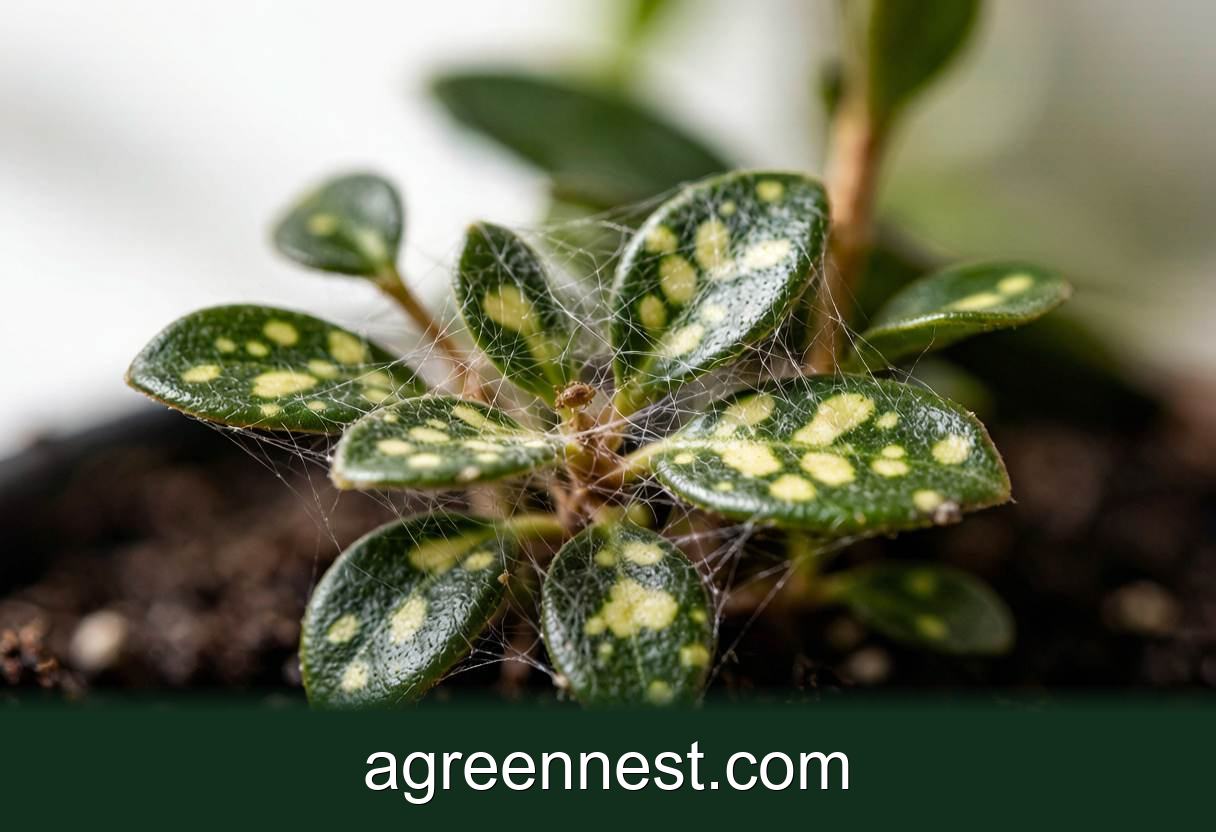
Spider mites are tiny arachnids that can wreck a houseplant before you even notice them. They thrive in dry, warm homes, so knowing the early signs helps you act fast.
What Are Spider Mites?
Spider mites are not insects but close relatives of spiders, and they are almost invisible to the naked eye. What you usually see first is the damage they leave behind.
They pierce plant cells and suck out the contents, leaving a trail of tiny pale dots. Left alone, they weave fine webbing across leaves and stems.
Where They Come From
Mites often arrive on new plants, cut flowers, or drift in through open windows. Once inside, low indoor humidity in winter or summer air conditioning lets them multiply rapidly.
A single female lays dozens of eggs, and warm conditions can complete a generation in under a week. That speed is why early action matters.
Signs of Spider Mites
Look closely, especially on the undersides of leaves, for these clues:
Signs:
- Fine, silvery stippling or tiny yellow speckles on leaves
- A dusty, bleached appearance on older foliage
- Delicate webbing between leaf joints and stems
- Leaves turning yellow, bronzing, or dropping early
- Tiny moving dots when you tap a leaf over white paper
Because mites are so small, a magnifying glass or phone macro shot helps confirm them. Webbing is the most reliable giveaway on established infestations.
How They Spread
Mites crawl from plant to plant when foliage touches, and they also ride air currents. Brushing past an infested plant can carry them on your clothes or tools.
This is why quarantine and good spacing are your first defenses.
Step 1: Quarantine Immediately
Move any suspect plant away from the rest of your collection at once. Keep it in a separate room if possible for at least two weeks of monitoring.
Wash your hands and any tools after handling it. Do not reuse the same watering can on healthy plants until you are sure the mites are gone.
Step 2: Increase Humidity
Spider mites hate moisture. Raising humidity slows them down and makes your plant less inviting.
Treatment Steps:
- Group plants together to raise local humidity.
- Use a pebble tray with water beneath the pot.
- Mist leaves lightly in the morning so they dry by evening.
- Run a humidifier nearby during dry winter months.
Aim for humidity above fifty percent. Mites struggle to thrive when the air is consistently moist.
Step 3: Spray With Water
A strong stream of lukewarm water knocks mites and webbing off the plant. Do this in a sink or shower, focusing on leaf undersides.
Wipe leaves afterward with a damp cloth to remove survivors. Repeat every few days, since water alone does not kill eggs.
Step 4: Apply Neem Oil
Neem oil disrupts the mite life cycle and smothers adults and nymphs. Mix a labeled neem solution and spray every surface, especially the undersides of leaves.
Apply every seven days for three to four weeks. The oil works best as a routine rather than a one-time fix, so stay consistent.
Why Neem Helps
Neem's active compounds reduce mite feeding and egg hatching. It is gentle on plants and far safer than many synthetic miticides for home use.
Spray in the evening to avoid leaf scorch, and keep the plant out of direct sun while wet.
Step 5: Consider Beneficial Insects
For serious or recurring problems, predatory mites such as Phytoseiulus persimilis eat spider mites directly. They are a natural, chemical-free option for larger collections.
Release them onto lightly infested plants and avoid spraying neem for a few days so the predators can establish. This approach works well in greenhouses and sunny indoor setups.
Prevention Tips
- Inspect new plants for two weeks before placing them near others.
- Keep humidity moderate, especially in heated or air-conditioned rooms.
- Dust leaves regularly so mites have fewer hiding spots.
- Avoid drought stress, since weak plants attract pests.
- Rotate neem sprays monthly as a light preventative during dry seasons.
Pet and Child Safety
Neem oil is low toxicity but should be kept out of reach, and sprayed leaves should dry before pets or children touch them. Beneficial predatory mites are harmless to people and animals and pose no safety concern indoors.
Frequently Asked Questions
Q: Are spider mites harmful to humans?
A:
Spider mites do not bite or harm people, but the neem sprays used to treat them should dry before skin contact.
Q: How do I know if I have spider mites?
A:
Look for fine webbing, stippled yellow leaves, and tiny moving dots on the undersides of foliage.
Q: Will higher humidity get rid of spider mites?
A:
Higher humidity slows mites and discourages breeding, but pair it with neem and water sprays for full control.
Q: Can spider mites kill a plant?
A:
Heavy infestations strip leaves of moisture and chlorophyll, and severe cases can kill small or stressed plants.
Q: Is neem oil safe around pets?
A:
Neem oil is low toxicity, but keep pets from licking treated leaves until the spray has dried completely.
Q: How long does treatment take?
A:
Most spider mite problems clear in three to four weeks of repeated neem and humidity care.
Spider mites reward early detection and steady humidity. Explore more solutions in our pest control tools and keep your GreenNest plants healthy year-round.

Comments
Share your experience or ask a question. Comments are stored locally in your browser for this demo.