 GreenNest
Low-Light Indoor Plants
Spider Plant Care: Low-Light Friendly & Pet-Safe
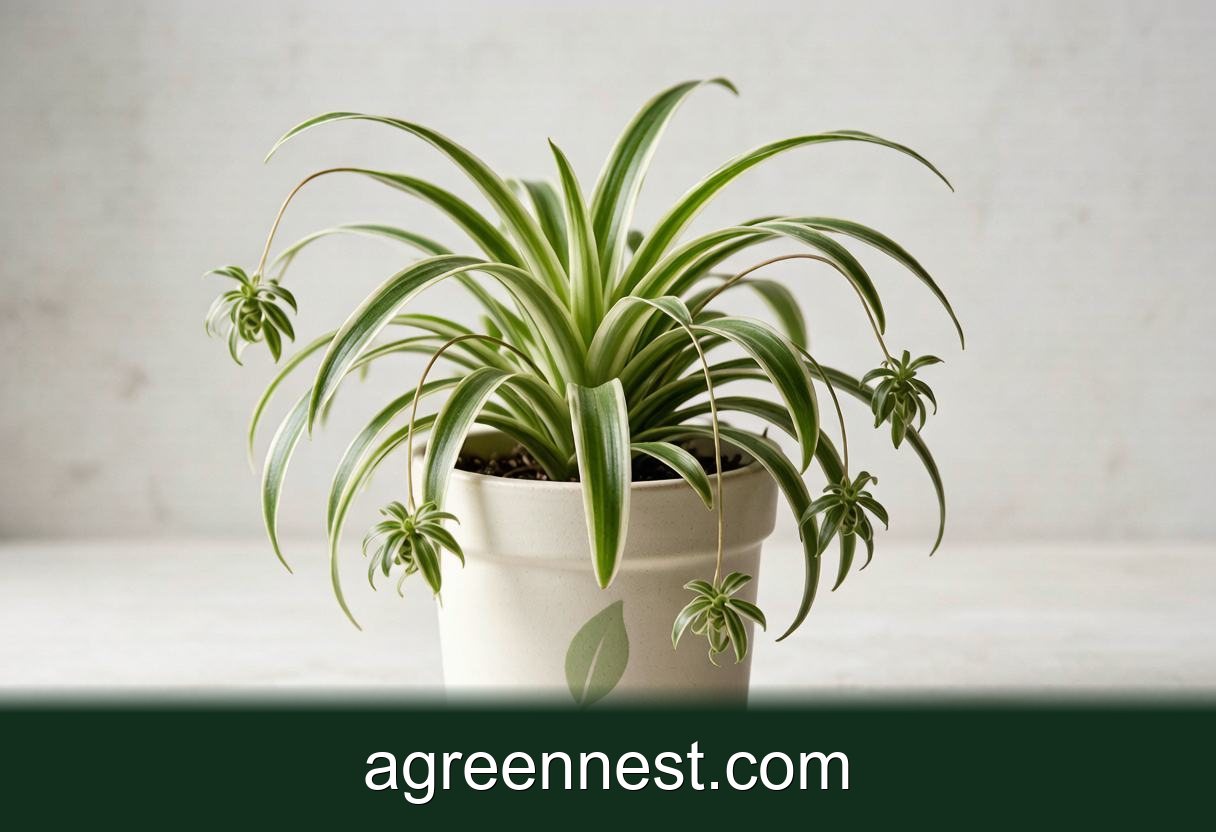
The Spider Plant (Chlorophytum comosum) is the friendly classic of low-light indoor plants. With arching green-and-white leaves and a habit of tossing out baby plantlets, it brings life to shelves and corners without asking for much in return.
This guide covers how it handles dim rooms, the watering rhythm that keeps it happy, and the fun part: turning those dangling babies into brand-new plants.
How Spider Plants Handle Low Light
Spider plants are more shade-tolerant than their bright, cheerful look suggests. They grow well in 100–300 foot-candles, which covers north windows, bright rooms, and a few feet from an east or west window.
In lower light, the leaf stripes stay softer and the plant produces fewer babies, but it stays healthy and tidy. Direct sun, by contrast, scorches those pale leaves, so shade is actually safer than a hot sill.
Finding the sweet spot
A spot where you can read comfortably without a lamp at midday is ideal. Too dark, and the plant gets thin and reluctant to flower; too bright and direct, and the tips burn.
Spider plants hate sitting in wet soil, so a porous terracotta pot is the smart choice. Terracotta wicks moisture away from the roots, which protects the plant in a dim room where the soil dries slowly.
The Watering Rhythm
Chlorophytum likes even moisture but bolts at being waterlogged. In low light, water roughly every 7–10 days in summer and every 2–3 weeks in winter, adjusting for your room's dryness.
Let the top inch of soil dry between drinks, then water until liquid runs from the drainage holes. Empty the saucer so the roots never soak.
The tip-burn clue
Brown, crisp leaf tips are the classic spider plant complaint. They usually point to fluoride or chlorine in tap water, not a watering mistake. Switch to filtered or rainwater and the new growth comes in clean.
Mild humidity helps too. A nearby pebble tray or the natural moisture of a bathroom corner keeps those arching leaves from crisping at the ends.
Those Arching Spiderettes
The signature feature of a happy spider plant is its babies, called spiderettes or plantlets. They dangle from long arching stems like little parachutes, each a miniature clone ready to root.
Why they appear
Mature plants send out flower stalks that, after brief white blooms, develop tiny plantlets at the tips. A brighter spot and steady watering encourage more of them, though even shaded plants produce some.
You can leave them dangling for a full, fountain-like look, or harvest them to multiply your collection. Either way, they signal a contented plant.
Propagation From the Babies
Spider plants are the easiest plant to share with friends. Each spiderette already has tiny root nubs, so rooting them is almost foolproof.
Step-by-step
- Choose a spiderette with small brown nubs at its base; these are baby roots.
- Snip it from the mother plant's stem with clean scissors.
- Set it on top of moist soil in a small pot, or float the base in a water glass until roots lengthen.
- Keep it in bright indirect light and water lightly; roots form in 1–2 weeks.
- Once established, treat it like a mature plant and watch it send out its own babies.
Starting each baby in its own terracotta pot keeps the roots airy from day one. The breathable clay prevents the damp, heavy soil that leads to rot in a low-light home.
Pet-Safe and Family-Friendly
One of the best things about Chlorophytum is that it is completely non-toxic. The ASPCA lists it as safe for cats and dogs, so you can hang it low or place it where pets roam.
A note for nibblers
Cats often chew the dangling leaves or bat at the spiderettes, which is harmless. If your pet is a dedicated chewer, the worst outcome is a slightly ragged plant, not a vet visit.
This makes the spider plant a rare win-win: a pretty, low-light houseplant you never have to move out of reach of curious animals.
Common Low-Light Problems
Even easy spider plants have a few tells.
- Brown leaf tips: Usually tap-water chemicals. Use filtered water and raise humidity.
- Pale, thin growth: Too little light. Move closer to a window or add gentle supplemental light.
- Drooping, soft leaves: Overwatering. Let the soil dry more and check drainage.
Occasional aphids or scale may appear on the stems. Wipe them off with a damp cloth or dab with rubbing alcohol, then keep an eye out for a week.
Frequently Asked Questions
Q: Can a spider plant live in low light?
A:
Yes, it tolerates 100–300 foot-candles and stays healthy in north windows or bright rooms, though it makes fewer babies in deeper shade.
Q: How often should I water a spider plant?
A:
About every 7–10 days in summer and 2–3 weeks in winter. Let the top inch of soil dry before watering again.
Q: Why do my spider plant tips turn brown?
A:
Usually fluoride or chlorine in tap water. Switch to filtered or rainwater and the new leaves stay green at the tips.
Q: Is the spider plant safe for cats and dogs?
A:
Yes, Chlorophytum is non-toxic to pets, making it a safe choice for homes with animals that like to nibble.
Q: How do I propagate spider plant babies?
A:
Snip a spiderette with root nubs, set it on moist soil or in water, and roots form in 1–2 weeks. Then pot it up and care for it normally.
Q: Why isn't my spider plant making babies?
A:
It may be too young, too dim, or slightly underfed. Give it brighter indirect light and a light spring feeding to encourage spiderettes.
Spider plants show that low-light indoor plants can be playful, pet-safe, and endlessly shareable. Pair yours with a heartleaf philodendron for trailing variety, and when a corner feels too dim, try our free light calculator to plan the perfect spot.

Comments
Share your experience or ask a question. Comments are stored locally in your browser for this demo.