 GreenNest
Succulent Care
Succulent Light and Temperature Needs Explained
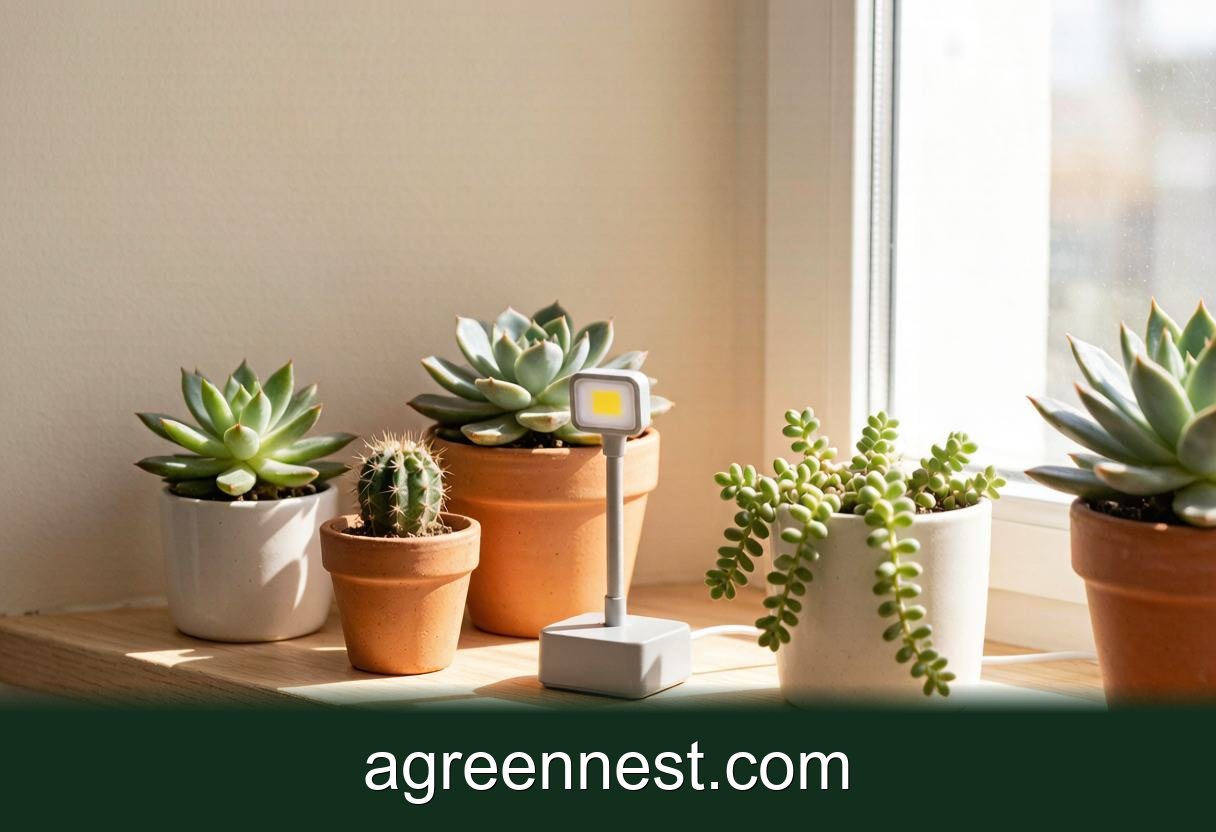
Light and temperature are the two dials that control whether your succulents stay compact and colorful or stretch into sad, pale shadows. Get these right and almost everything else falls into place.
How Much Light Succulents Really Need
Most succulents like Echeveria, Sedum, and Aloe want at least 6 hours of bright light daily. "Bright" means direct or very strong indirect sun. A plant that gets only 2–3 hours of weak light will slowly decline.
Species vary. Haworthia and Gasteria tolerate lower light and make great desk plants. Sun-lovers like Lithops and Graptopetalum want a full south window or outdoor sun.
Window Directions Matter
Where you place the pot changes everything:
- South window: strongest, all-day light. Best for sun-lovers.
- East window: gentle morning sun, good for most types.
- West window: intense afternoon sun; fine but watch for scorch.
- North window: weakest; only Haworthia and Sansevieria thrive.
Rotate the pot a quarter turn weekly so all sides get even light and the plant grows straight instead of leaning.
Using Grow Lights
Not everyone has a sunny window, and winter slashes natural light. A full-spectrum LED grow light solves both problems. Position it 6–12 inches above the plants and run it 12–14 hours a day.
Grow lights are especially handy for keeping Echeveria colorful through dark months. Choose a panel rated around 20–40 watts for a small shelf, and use a simple timer so the schedule stays consistent.
Reading Light Problems
Etiolation (Stretching)
If your succulent grows a long, bare stem with widely spaced leaves, it is starving for light. This is etiolation. The fix: move it to brighter conditions or add a grow light. The stretched part will not retract, but new growth will be tight.
You can "behead" the plant — cut the healthy top rosette, let it callus, and replant it. The bare stem often sprouts new pups at the base.
Sunburn
Yes, too much sudden sun scorches. Pale, brown, or white patches mean the plant cooked. Acclimate gradually: start in shade and add an hour of direct sun each day over two weeks.
Temperature: The Comfort Zone
Most succulents are happiest between 65°F and 80°F (18–27°C). They handle normal home temperatures well, but dramatic swings stress them.
Heat Tolerance
Succulents shrug off heat better than cold, but above 90°F (32°C) with strong sun, some thin-leaved types like Sedum can wilt. Provide afternoon shade in heat waves and improve airflow with a fan.
Cold Limits
Cold is the real danger. Soft succulents like Echeveria and Aloe suffer below 40°F (4°C) and die at freezing. Hardy types like Sempervivum and Sedum survive down to -20°F (-29°C) outdoors. Know your species before leaving plants outside.
Seasonal Light and Temperature Strategy
- Spring: increasing light; begin normal watering and feeding.
- Summer: maximum light; shield from harsh midday sun if needed.
- Fall: light drops; reduce water as growth slows.
- Winter: lowest light and cool temps; use grow lights and water sparingly.
A cool, bright winter (around 50–55°F nights) actually benefits many succulents and triggers stunning stress colors.
Fixing Etiolated Plants: A Quick Plan
- Identify the light gap — usually a north window or crowded shelf.
- Move the plant to a south/east window or set up a grow light.
- Rotate weekly for even exposure.
- Behead badly stretched stems to restart compact growth.
- Watch new growth; tight rosettes confirm success.
Acclimating New Plants to Light
New succulents from a shop often arrive pale from low-light storage. Throwing them straight into full sun causes shock and scorch. Instead, acclimate over two weeks: start in bright indirect light, then add one hour of direct morning sun daily.
This gradual build lets the plant produce protective pigments and thicken its leaves. Skip acclimation and you risk white burn patches that never heal. Patience here pays off with tougher, more colorful plants that handle summer sun with ease.
Using a Light Meter
Guessing light levels leads to mistakes. A simple handheld light meter or a free phone app gives a real reading in foot-candles or lux. Most succulents want 10,000–15,000 lux for several hours; below 5,000 they will slowly stretch.
Measure at plant height, not the ceiling, and check at midday when sun is strongest. Track readings through the seasons so you know when to add a grow light. Numbers remove the mystery and make light care repeatable.
Frequently Asked Questions
Q: How much light do succulents need per day?
A:
Most need at least 6 hours of bright, direct or strong indirect light daily; low-light types like Haworthia need less.
Q: What window is best for succulents?
A:
A south-facing window gives the strongest all-day light, ideal for sun-lovers; east windows suit most others.
Q: Can succulents grow under grow lights?
A:
Yes. Use a full-spectrum LED 6–12 inches above plants for 12–14 hours daily to replace weak natural light.
Q: What temperature is too cold for succulents?
A:
Soft succulents suffer below 40°F (4°C) and die at freezing; only hardy types like Sempervivum survive hard frost.
Q: How do I fix a stretched, etiolated succulent?
A:
Move it to brighter light or add a grow light; behead badly stretched stems to regrow a tight, compact rosette.
Q: Can too much sun hurt succulents?
A:
Yes. Sudden intense sun causes brown scorch patches; acclimate plants slowly by adding an hour of sun daily.
Light and temperature are the levers that turn a struggling plant into a showpiece. Find your brightest spot with our free light calculator, and learn year-round timing in our succulent ebook.
Comments
Share your experience or ask a question. Comments are stored locally in your browser for this demo.