 GreenNest
Succulent Care
Overwintering Succulents Indoors: The Complete Guide
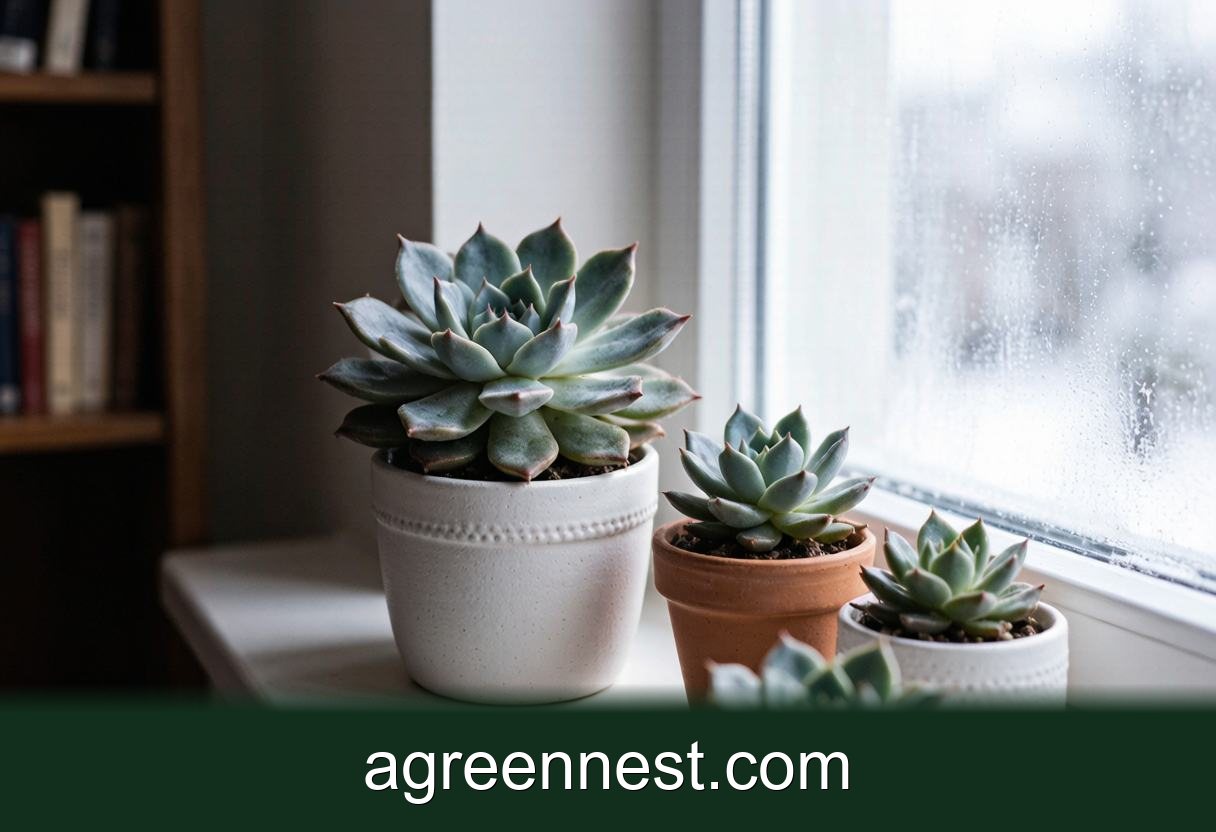
As days shorten and temperatures drop, most succulents shift into survival mode. Knowing how to overwinter succulents indoors keeps them alive, compact, and ready to burst back into growth next spring.
Why Overwintering Matters
Succulents are built for dry, sunny climates, not cold, damp winters. When you leave tender varieties like Echeveria, Crassula, and Haworthia outside below 40°F (4°C), their water-filled leaves freeze and turn to mush. Bringing them indoors before the first frost is the single most important step in year-round succulent care.
Indoor overwintering is not about forcing growth. It is about helping the plant rest safely until conditions improve. A plant that sails through winter with minimal fuss will reward you with stronger color and faster growth when spring returns.
Understanding Winter Dormancy
Most common succulents are winter-dormant, or at least slow down dramatically when daylight drops below 10 hours. During dormancy, the plant's metabolism slows. It stops producing new leaves, stops stretching for light, and drinks almost nothing.
This is completely normal. Do not panic if your plump Echeveria suddenly looks a little deflated or stops growing in December. That is the plant conserving energy, not dying. Forcing growth with extra water or fertilizer during dormancy is the fastest way to rot the roots.
Signs Your Plant Is Dormant
- Growth has visibly stopped for several weeks.
- Leaves may look slightly less plump but stay firm.
- The soil stays dry far longer than in summer.
Accept the slowdown. Your job in winter is maintenance, not acceleration.
Light Through the Short Days
Even dormant succulents need light. A south- or west-facing window that delivers 4–6 hours of bright, indirect sun is ideal. Without enough light, plants etiolate — they stretch tall and pale, searching for the sun that is no longer there.
South-Facing Windows
A south window gives the longest, strongest winter light in the Northern Hemisphere. Push plants right up to the glass (but not touching cold panes) to maximize exposure. Rotate pots a quarter turn each week so all sides get even light and the plant stays symmetrical.
Supplemental Grow Light
If your home is dim, a full-spectrum LED grow light is a winter lifesaver. Run it 10–12 hours a day, positioned 6–12 inches above the plants. This prevents stretching and keeps colors vivid through February.
Slashing Your Watering Routine
This is where most people go wrong. A succulent that needed water every 7–10 days in summer may need it only every 3–4 weeks in winter. Cold soil plus wet roots equals root rot, the number one winter killer.
Cut water by at least half, and in cold, dark rooms you may water only once a month. Always check the soil first — never water on a calendar alone.
How to Tell When to Water
- The pot feels noticeably light when lifted.
- The lowest leaves look slightly soft or wrinkled.
- A wooden skewer inserted 2 inches comes out bone dry.
When you do water, give a light drink rather than a full soak. The goal is to keep roots barely alive, not to fuel active growth.
Frost Protection Basics
Tender succulents cannot handle freezing, but even "hardy" types like Sempervivum suffer if pots freeze solid. Keep indoor temperatures between 45°F and 60°F (7–15°C) for most varieties. Cool air actually supports healthy dormancy.
If you must move plants through a cold garage or porch first, wrap pots in bubble wrap or newspaper to insulate the roots. A sudden freeze on exposed roots can kill a plant even if the leaves look fine.
Indoor Placement: Avoid Drafts and Heating Vents
Where you set your succulents matters as much as how you water them. Two spots are silent killers: drafty windows and hot heating vents.
Cold drafts from single-pane windows shock roots and mimic frost. Hot, dry air from vents sucks moisture from leaves and triggers false thirst. Both stress the plant and invite pests like spider mites.
The sweet spot is a bright windowsill away from direct vent flow, or a plant shelf a few feet back from the glass with a grow light overhead. Stable temperatures beat the warmest spot every time.
The Spring Wake-Up Routine
When days lengthen past 11–12 hours and nighttime temps stay above 50°F (10°C), your succulents wake up. Rushing this transition shocks them, so ease them back into active care over 2–3 weeks.
Step-by-Step Spring Routine
- Increase light gradually. Move plants closer to the window or extend grow-light hours by an hour each week.
- Resume deeper watering. Switch from light sips to a full soak-and-dry cycle.
- Begin fertilizing. Use a diluted cactus fertilizer at quarter strength once a month.
- Check for pests. Inspect leaf crevices; treat any mealybugs before they spread.
- Repot if needed. Spring is the perfect time to refresh soil or upgrade a crowded pot.
Within a month you should see fresh, tight growth and deeper color — proof your overwintering worked.
Frequently Asked Questions
Q: How often should I water succulents in winter?
A:
Most indoor succulents need water only every 3–4 weeks in winter. Always check that the soil is dry and the pot feels light before watering.
Q: Can succulents survive near a cold windowsill?
A:
Yes, if temps stay above 40°F (4°C) and leaves do not touch the glass. Cold but stable air actually helps healthy winter dormancy.
Q: Should I fertilize succulents during overwintering?
A:
No. Dormant plants cannot use fertilizer, and feeding in winter encourages weak, rotten growth. Wait until spring.
Q: Why is my succulent stretching in winter?
A:
Stretching, or etiolation, means it needs more light. Move it to a brighter window or add a 10–12 hour LED grow light.
Q: When should I bring outdoor succulents inside?
A:
Bring tender succulents indoors before the first frost, when nighttime lows approach 40°F (4°C), to prevent frozen, mushy leaves.
Q: How do I wake up dormant succulents in spring?
A:
Gradually increase light and watering over 2–3 weeks, then resume light fertilizing once new growth appears.
Overwintering is mostly about restraint: less water, cooler air, and steady light. Pair your routine with our free light calculator to map the brightest winter windows, and grab our succulent ebook for a full seasonal schedule.

Comments
Share your experience or ask a question. Comments are stored locally in your browser for this demo.