 AGreenNest
Plant Pests & Diseases
Downy Mildew on Houseplants: Spot It and Stop It in 48 Hours
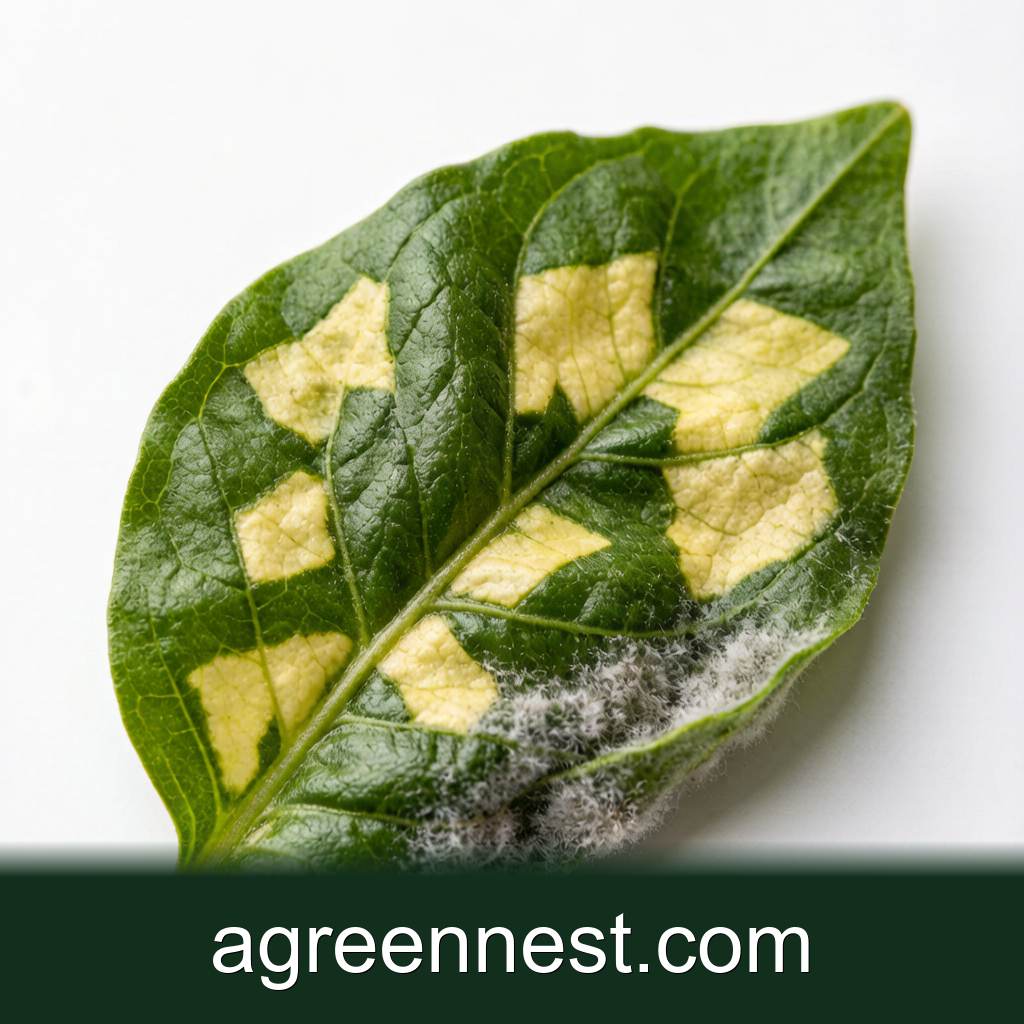
You watered on schedule, the leaves looked fine yesterday, and this morning there are yellow angular patches on top and a fuzzy gray growth underneath. That is downy mildew, and it moves faster than most people expect. I lost a tray of basil to it in three days because I mistook the first spots for ordinary yellowing.
What downy mildew looks like
Downy mildew is a water mold, not a true fungus, and it shows up in a tell-tale pattern.
- Top of leaf: pale yellow to brown angular patches bounded by the leaf veins, so they look like little squares.
- Underside: a soft gray, purple, or white fuzz, especially in the morning when humidity is high.
- Spread: patches enlarge and merge, then the leaf curls, dries, and drops.
- Favorite targets: basil, rose, grape ivy (Cissus), and crowded seedlings under lights.
It is easy to confuse with powdery mildew, but powdery mildew sits on top in white circles and tolerates dry air. Downy mildew prefers the underside and thrives in damp, cool conditions. If your leaves are yellow with square edges underneath, you have downy, not powdery.
Ranked causes, most likely first
Work down this list and you usually find the trigger fast.
- Still, humid air. The spores need 85 to 100 percent humidity and temperatures of 15 to 21°C (59 to 70°F) to germinate. A crowded shelf with no airflow is the classic setup.
- Overhead watering or misting. Water sitting on leaves for hours is the open door. The mold germinates from a film of moisture in as little as 4 hours.
- Poor light plus crowding. Plants packed shoulder to shoulder never dry out, and weak light slows leaf drying after any splash.
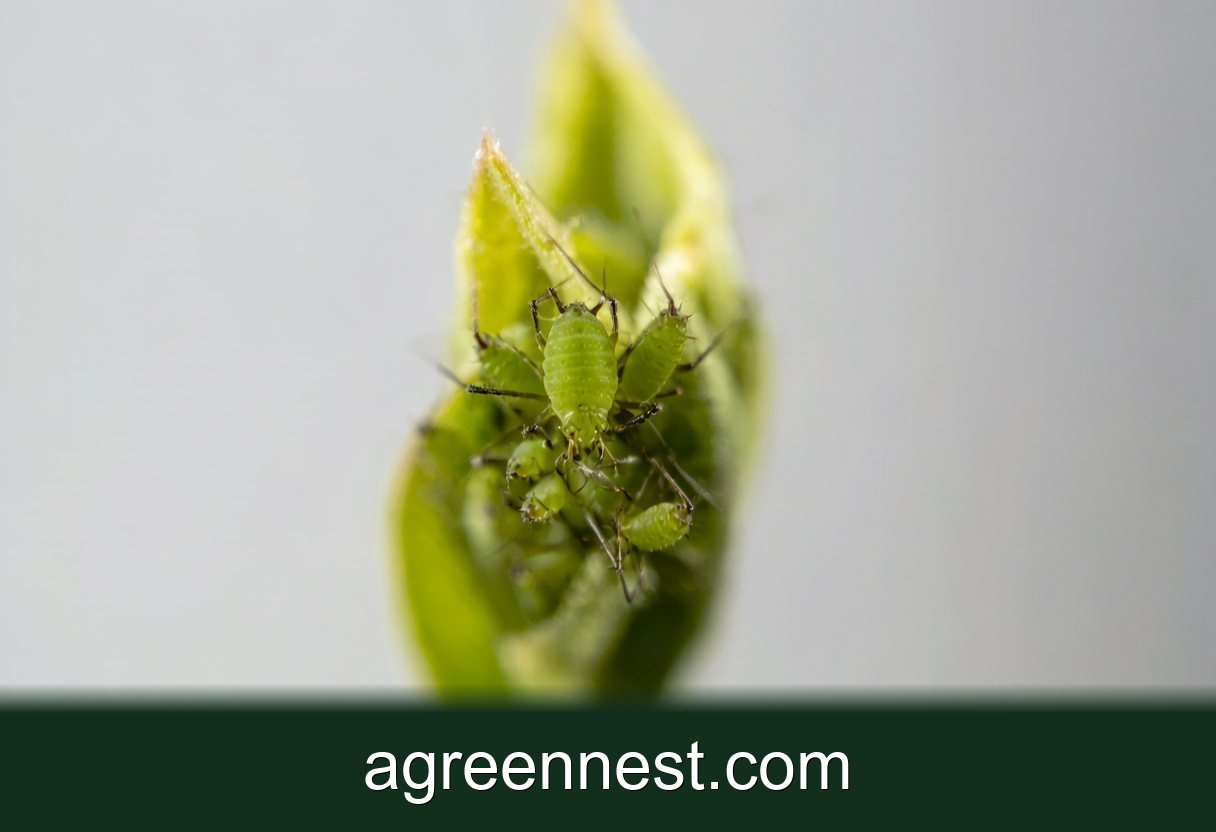
- Infected new plant. A nursery seedling can carry dormant spores. Always quarantine new arrivals for two weeks, as our early pest identification guide recommends.
- Cool night drafts with wet soil. A chilly room and a full saucer is the worst combination for this particular disease.
If several plants show the same pattern at once, suspect the environment rather than one sick plant. Our complete pest and disease guide helps you rule the others out.
The 48-hour fix
Act the day you see it. The goal is to break the humidity and kill the spores before they spread to the next leaf.
- Isolate. Move the plant away from everything else, ideally to a separate room, for at least two weeks.
- Remove infected leaves. Snip every spotted leaf at the stem with clean scissors. Do not compost them; bag and bin them.
- Dry the air. Run a fan for airflow, keep humidity under 50 percent, and stop all misting. Warm the room to about 22 to 24°C during the day if you can.
- Water the soil only. Pour at the base, never on the foliage, and empty the saucer 30 minutes later.
- Treat the underside. Spray a potassium bicarbonate or copper-based fungicide on the leaf backs every 7 days for three weeks. Neem oil slows spread but will not clear an established outbreak on its own.
You should see no new patches within a week if the air stays dry. New growth that emerges clean is the sign you won.
Aftercare and prevention
Once the outbreak is stopped, keep the conditions hostile to it.
- Space plants so air moves between the pots; a 5 to 10cm gap is enough for small specimens.
- Water in the morning so any splash dries during the day, not overnight.
- Keep night temperatures steady and avoid cold drafts on wet soil.
- Inspect the undersides weekly. The guide to why leaves yellow helps you tell disease from normal aging.
- If you grow edibles, rotate crops and never reuse the same soil for basil two seasons running, since spores overwinter in the mix.
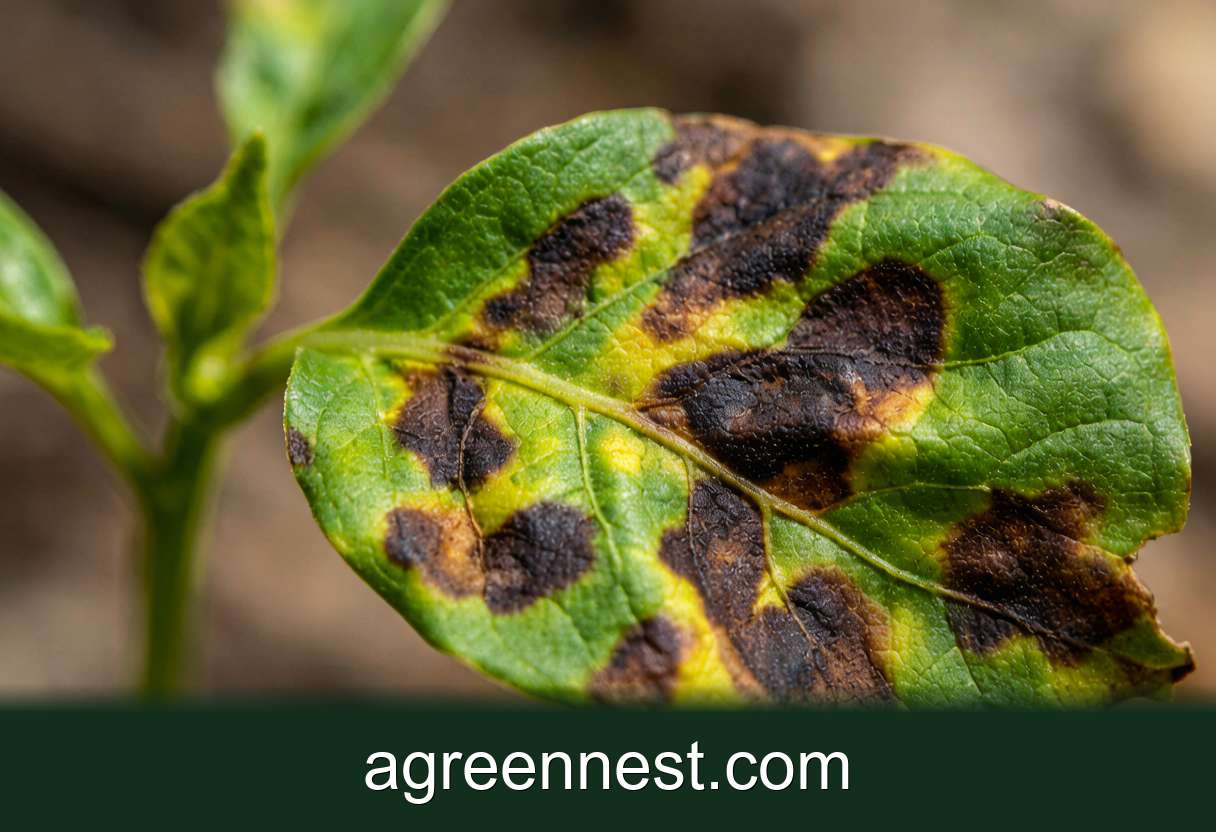
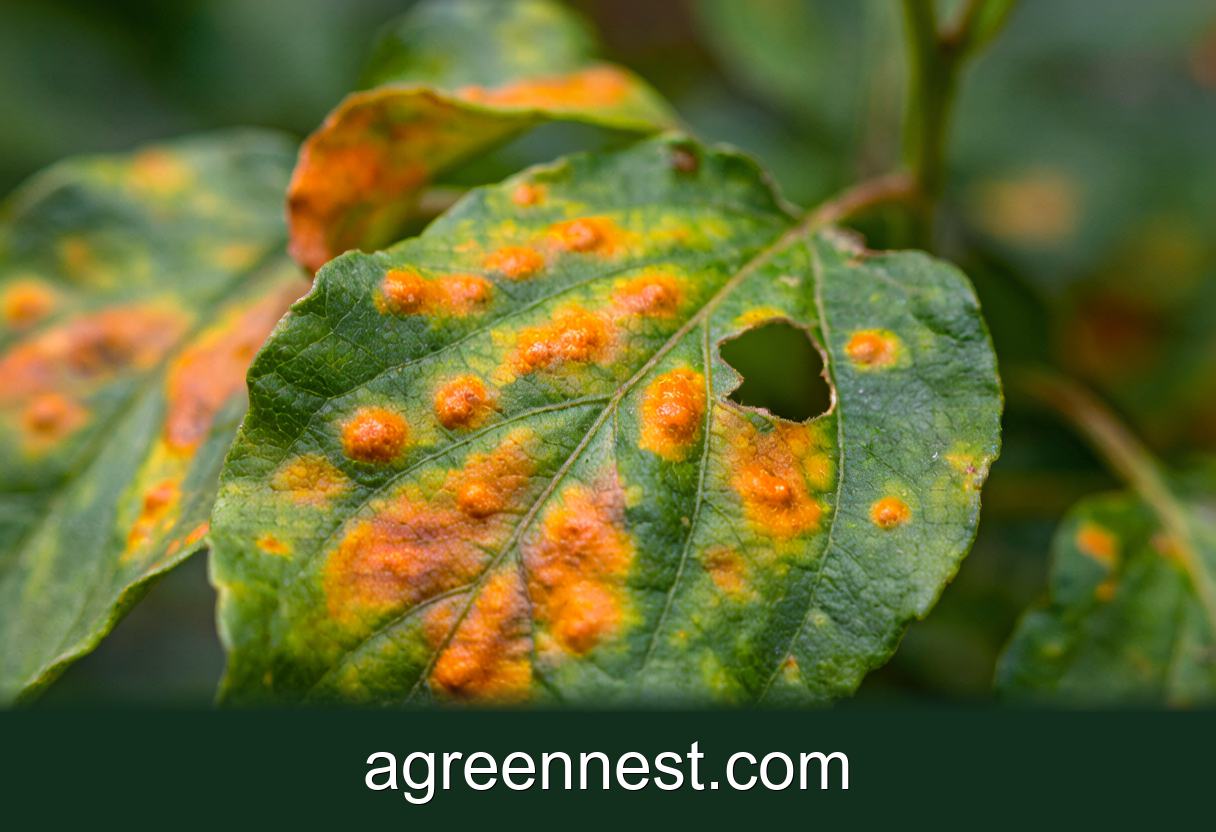
Leaf-spot diseases share some of these habits, and our rust fungus article covers another look-alike worth knowing.
When it is too late
If the stem itself shows soft gray rot or more than three quarters of the leaves are gone, the plant is past saving and will keep shedding spores onto its neighbors. Pull it, bag it, and clean the shelf with a dilute bleach wipe. Sterilise any tool you used and wash your hands before touching healthy plants.
Most cases caught in the first 48 hours recover completely. The ones that fail are the ones left for a weekend.
Frequently Asked Questions
Q: How is downy mildew different from powdery mildew on the same plant?
A:
Powdery mildew is white circles on top and likes dry warm air; downy mildew is yellow square patches on top with gray fuzz underneath and likes cool damp air. The treatments differ, so the distinction matters.
Q: Why did it appear right after I started misting?
A:
Misting leaves a film of water that the spores need to germinate. Stop misting, improve airflow, and the outbreak usually stalls within days.
Q: Will it spread to my other houseplants?
A:
Yes, through air currents and splashes, especially in still humid rooms. Isolate the sick plant for two weeks and keep humidity low near the others.
Q: Can I eat basil that had downy mildew after treatment?
A:
Only the clean new growth after the plant recovers. Discard any leaf that ever showed a patch, and wash the rest well. When in doubt, compost the whole plant.
Q: Does downy mildew come back every season?
A:
It can overwinter in soil and on dropped leaves, so reusing contaminated mix or leaving debris around invites a repeat. Fresh soil and a clean shelf break the cycle.
Downy mildew rewards fast hands more than strong chemicals, so the moment you see square yellow patches, isolate and dry the air. Catch it inside 48 hours and the plant usually comes back clean. Keep our early pest identification guide bookmarked and check leaf undersides every time you water.
Recommended Tools for Plant Pests & Diseases Care
Free, no-signup helpers matched to this guide.
🔍 Free Tool
Pest & Problem Identifier
Pick the symptoms you see and get the likely culprit plus a fix.
Free Ebooks to Explore
Downloadable handbooks — no email required.
Free Ebook
The AGreenNest Succulent Care Handbook
The complete, beginner-to-confident guide to growing fat, happy succulents — 10 chapters and a 20-plant directory.
Free Ebook
Haworthia & Haworthiopsis Care Handbook
A focused guide to the striped, forgiving Haworthia clan.

Join the Conversation
Have a tip or a question about Downy Mildew on Houseplants: Spot It and Stop It in 48 Hours? Share it below — comments are saved on our server.