 AGreenNest
Plant Pests & Diseases
Botrytis Gray Mold: Save Plants in 48 Hours
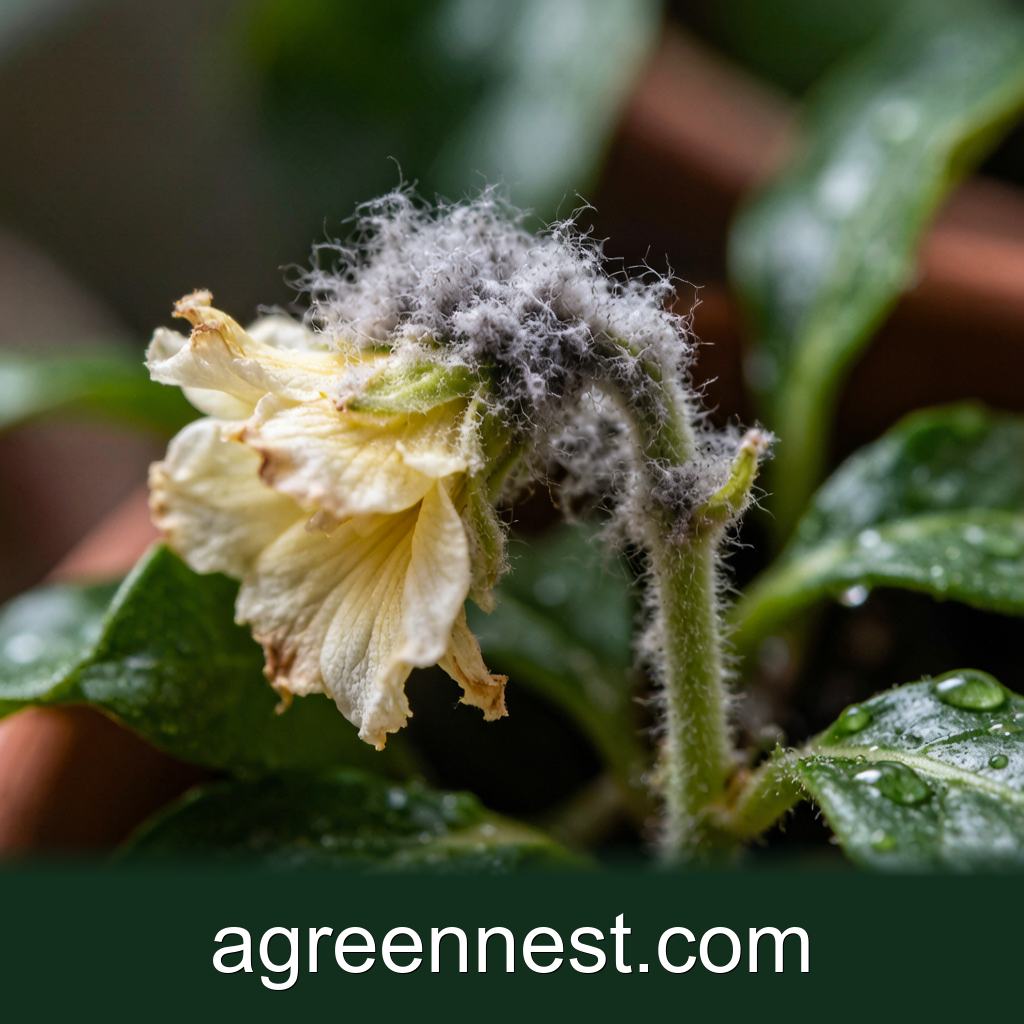
Spotting Botrytis Before It Spreads
Two winters back a peace lily I kept in a cold bathroom developed soft brown spots on its open flowers, and within three days a dusty gray fuzz had crept down the stalk. That was Botrytis cinerea, a necrotrophic fungus better known as gray mold. It starts as water-soaked patches, then a velvety gray-brown spore mass appears, most often on petals, young stems, and the top of the potting mix after a plant has been sitting wet.
The spores are everywhere in the air. They only germinate when they land on dying or already-wounded tissue that stays damp for 12 hours or more at temperatures between 15 and 25 °C (59 to 77 °F). A single infected flower can release tens of thousands of spores, so catching it early is the difference between losing one bloom and losing the plant.
What Actually Causes It (Ranked)
I rank the causes by how often they lead to an outbreak in a normal home:
- Overhead watering. Splashing the leaves and flowers keeps the surface wet for hours. I water at the soil line now, and my botrytis incidents dropped to near zero.
- Crowded plants. Pots jammed on a shelf trap still air. Botrytis needs humidity above roughly 85 percent and no breeze to take hold.
- Dead plant matter left in the pot. A spent flower or a yellow leaf is free food. The fungus colonizes dying tissue first, then moves into living cells.
- A cold, damp room. A 12 °C (54 °F) corner with poor ventilation is close to ideal for spore germination, worse than a warm dry room by a wide margin.
If you already fight a related fungus, the advice in powdery mildew on houseplants and treating powdery mildew overlaps here, since both love stale air, though mildew prefers drier conditions.
Your 48-Hour Rescue Plan
Act the moment you see fuzz. The clock matters because the mycelium reaches the stem base in about two days on a thin-leaf plant.
First, with clean, disinfected scissors (wipe the blades with 70 percent isopropyl alcohol between cuts), remove every infected flower, leaf, and a 2 cm margin of healthy tissue around the lesion. Bag the clippings and bin them, do not compost them near the plants.
Second, move the pot to a brighter, airier spot. A fan on low, or opening a window for an hour, drops localized humidity. Keep the room above 18 °C (64 °F) if you can, since cold plus damp is the worst combination.
Third, keep the leaves and any remaining flowers dry. Water at the base only, and if the top of the soil is moldy, scrape off the top 1 to 2 cm and replace it with fresh mix. Do not mist the plant for at least a week.
Fourth, dispose of any spoiled fruit or cut flowers nearby. I once lost a begonia because a rotting apple on the same shelf seeded the air with spores. Remove the food source and the spread stops.
After the Crisis: Long-Term Fixes
Once the plant is clean, the goal is to never give Botrytis a wet, still home again. Space pots so air moves between them, aim for one air change every few hours in the room, and deadhead spent blooms the day they fade. In my experience a weekly once-over with a quick look at flower bases catches trouble before it spreads.
For broader pest and disease context, the houseplant pests complete guide is worth keeping open, and if you are unsure what the spots are, our pest identifier tool covers fungal signs too.
A Quick Word on Neem and Other Sprays
People ask whether neem oil cures gray mold. It helps as a preventive because it slows spore germination, but once the fuzz is visible, physical removal beats spraying. Use neem at the labeled 0.5 to 1 percent rate as a follow-up every 7 days, not as the first move. Copper or Bacillus-based fungicides are options for serious cases, but most home outbreaks clear with the cleanup above.
Frequently Asked Questions
Q: Is gray mold on my plant dangerous to people?
A:
The spores can irritate asthma or allergy sufferers when disturbed in quantity, so wear a mask when cutting out heavy growth. It is not a skin infection risk for healthy people.
Q: Will the mold come back after I cut it off?
A:
Only if the conditions that fed it return. Dry leaves, moving air, and removing dead tissue usually keep it gone. Recheck the plant every two days for a week.
Q: Can I save a plant whose stem has already gone soft and brown?
A:
If the main stem base is mushy, the plant is usually lost, though you can often root a healthy top cutting. Check the base daily during treatment.
Q: Should I throw out the whole potting mix?
A:
Not unless the surface is thick with mold. Scraping the top 1 to 2 cm and watering at the base is enough in most cases.
Q: Does botrytis only appear in winter?
A:
It peaks in cool damp seasons, yet any stuffy bathroom or crowded shelf in summer can trigger it when air stalls and humidity stays high.
Gray mold rewards fast hands more than strong chemicals. Cut out the infected tissue, dry the air, and keep leaves off the wet list, and most houseplants bounce back within a week. If you are not certain the spots are fungal, confirm with our pest identifier tool.
Recommended Tools for Plant Pests & Diseases Care
Free, no-signup helpers matched to this guide.
🔍 Free Tool
Pest & Problem Identifier
Pick the symptoms you see and get the likely culprit plus a fix.
Free Ebooks to Explore
Downloadable handbooks — no email required.
Free Ebook
The AGreenNest Succulent Care Handbook
The complete, beginner-to-confident guide to growing fat, happy succulents — 10 chapters and a 20-plant directory.
Free Ebook
Haworthia & Haworthiopsis Care Handbook
A focused guide to the striped, forgiving Haworthia clan.

Join the Conversation
Have a tip or a question about Botrytis Gray Mold: Save Plants in 48 Hours? Share it below — comments are saved on our server.