 AGreenNest
Hydroponic Growing
Growing Cilantro Hydroponically: A Fast 30-Day Guide
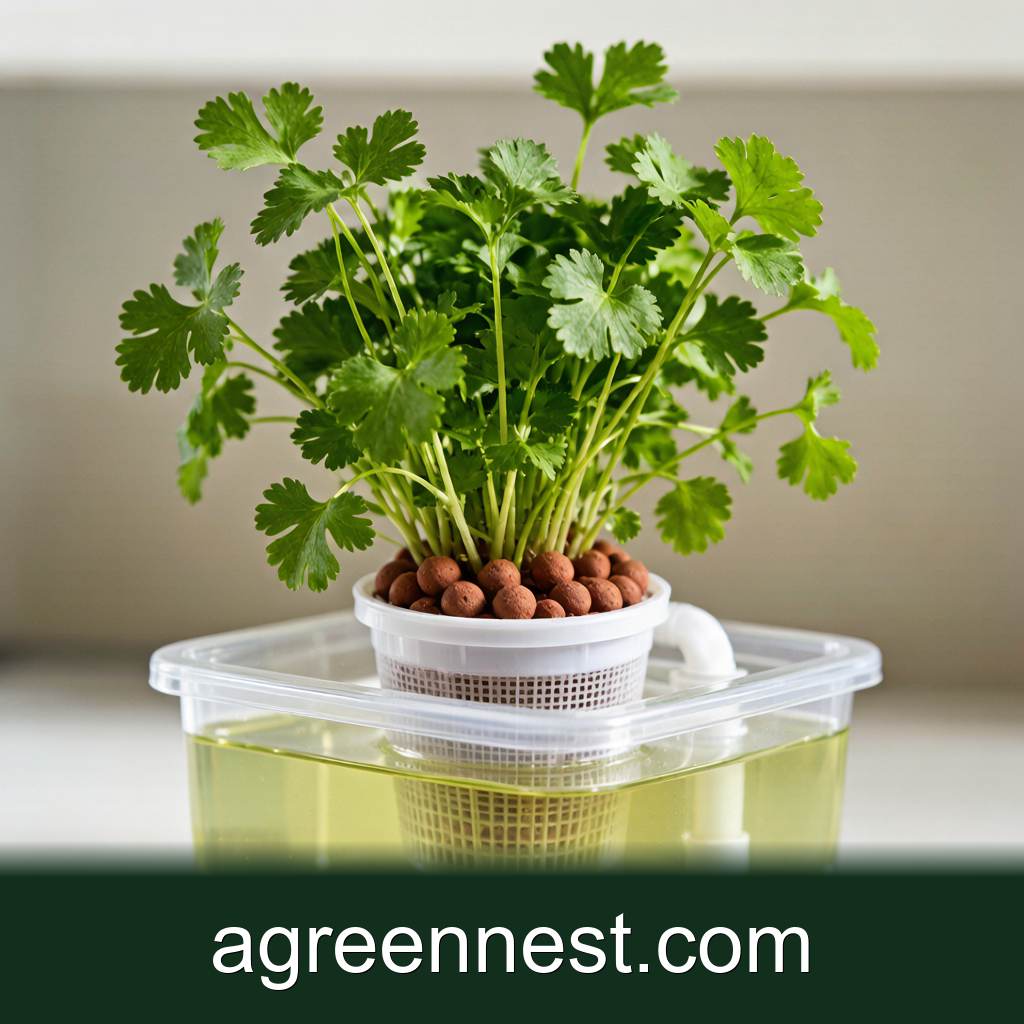
I once watched a row of soil-grown Coriandrum sativum turn from lush green to a tangle of flower stalks in under ten days once the weather warmed. Cilantro is a cool-season annual, and heat pushes it to bolt fast. That single trait frustrates most gardeners, but it is also why hydroponics suits this herb so well. When you control root temperature and nutrient delivery, you slow the clock on bolting and buy real harvest weeks.
The plant wants cool roots and steady moisture. In a recirculating system you give it both, and you skip the uneven watering that stresses soil crops into flowering early. Keep the air around 18-24°C and you will usually get three to five cuts before the plant decides it is finished. Cooler is better. At 21°C the leaves stay tender. At 27°C the stem starts to lengthen within a week.
Picking a System: DWC or NFT
Two setups suit cilantro, and both are covered in our guide to the deep water culture method and the nutrient film technique. In DWC the roots sit in an aerated reservoir. In NFT a thin film of nutrient solution runs past the roots in a sloped channel.
For cilantro I lean toward DWC because the deep net pot filled with clay pebbles keeps the crown dry while the roots stay cool. NFT works too, but cilantro's taproot grows long and can crowd narrow channels if you run it past week six. Either way, use a 2-3 inch net pot and a growing medium that holds the seedling upright through the first wobbly weeks.
If you are starting from scratch, a countertop hydroponic kit gets you growing in an afternoon and removes the guesswork from the pump and timer.
Seed Starting and Your Target Numbers
Cilantro seed is really a dried fruit, so soak it overnight in room-temperature water to speed germination. Sow two or three seeds per net pot and expect sprouts in 7-10 days at 20-22°C. Thin to one strong seedling once they show two true leaves, because crowded pots bolt sooner.
Once they are feeding, hold the nutrient strength between EC 1.0 and 1.6. I keep mine near 1.2 during the first two weeks, then nudge up to 1.5 as the leaves multiply. pH sits at 6.0-6.7, which matches what the hydroponic pH guide recommends for leafy herbs. If pH drifts above 6.8 you will see the new leaves pale first, a classic sign the plant is locking out iron. Drop the pH back toward 6.2 and the green usually returns within a few days.
Light, Air, and Daily Care
Cilantro does not need intense light, but it needs duration. Aim for 12-16 hours a day at 200-400 µmol/m²/s. A basic LED grow light on a timer handles this without heating the room. Run the light on the longer end in winter when ambient light is weak, and pull it back toward 12 hours in a bright summer window.
Air movement matters more than people expect. A small fan on low keeps the leaf surface dry and slows powdery mildew, which cilantro catches readily in still, humid air. Top off the reservoir every two or three days with plain pH-corrected water, and do a full nutrient change every two weeks so the solution does not drift out of range.
Succession Sow Every Two Weeks
Because cilantro bolts, the only way to keep a steady supply is to start new pots on a rolling schedule. I sow a fresh net pot every 14 days. By the time the oldest plant bolts at around day 40, the newest is ready to cut. This staggered approach is the real secret behind a continuous herb harvest, and it means you are never depending on a single tired plant.
You can take the first cut at 30-45 days when the stems are 10-15 cm tall. Snip the outer leaves and let the center regrow. Most plants give two or three harvests before the leaf flavor turns sharp and the quality drops. After that, compost it and let the next pot in the queue take over.
Harvest, Storage, and Getting More From Each Plant
Cut in the morning when the leaves hold the most water and the essential oils are at their peak. Rinse gently and store the stems in a glass of water in the fridge, the way you would keep cut flowers, and they stay crisp for a week. If you freeze the leaves instead, you lose some texture but keep most of the flavor for cooked dishes.
For a bigger yield from the same footprint, run two DWC buckets side by side and stagger them by a week. The hydroponic nutrients guide explains how to mix a leaf-focused formula so the plants put energy into foliage rather than flower.
Frequently Asked Questions
Q: Why does my hydroponic cilantro taste soapy?
A:
That flavor is genetic and shows up in some people more than others, but heat and bolting make it stronger. Keep air temps at or below 24°C and harvest before flowers open to keep the taste mild.
Q: Can I grow cilantro from supermarket cuttings in water?
A:
Cilantro rarely roots from a cut stem the way basil does. Start from seed instead, since the taproot resents being transplanted once it is established.
Q: What EC should I use for cilantro seedlings versus mature plants?
A:
Hold seedlings at EC 1.0-1.2 for the first two weeks, then raise to 1.4-1.6 as leaf mass builds. Going above 1.8 usually tips the leaf edges and slows growth.
Q: How do I stop cilantro from bolting indoors?
A:
Cool roots are the lever. Keep the reservoir below 22°C with an ambient air temp of 18-22°C, use 14-16h of light rather than constant sun, and succession sow so you are never relying on one old plant.
Q: Is DWC or NFT better for a first try at cilantro?
A:
DWC is more forgiving because the large water volume buffers temperature and pH swings. NFT is fine but demands closer daily attention to flow and root space.
Q: How much light is too much for cilantro?
A:
Above about 500 µmol/m²/s combined with warm air, you push the plant toward stress and bolting. Stay in the 200-400 µmol/m²/s band and you will get tender leaves.
Cilantro rewards a little planning more than almost any other herb, and a simple DWC bucket turns a crop that bolts in ten days outdoors into a month of steady cuttings. Start one pot this week, and once you see how fast it grows, read the nutrients guide to dial in your mix for the next round.
Recommended Tools for Hydroponic Growing Care
Free, no-signup helpers matched to this guide.
Free Ebooks to Explore
Downloadable handbooks — no email required.
Free Ebook
The AGreenNest Succulent Care Handbook
The complete, beginner-to-confident guide to growing fat, happy succulents — 10 chapters and a 20-plant directory.
Free Ebook
Haworthia & Haworthiopsis Care Handbook
A focused guide to the striped, forgiving Haworthia clan.


Join the Conversation
Have a tip or a question about Growing Cilantro Hydroponically: A Fast 30-Day Guide? Share it below — comments are saved on our server.