 AGreenNest
Hydroponic Growing
Grow Tomatoes Hydroponically: A Beginner's Indoor Crop
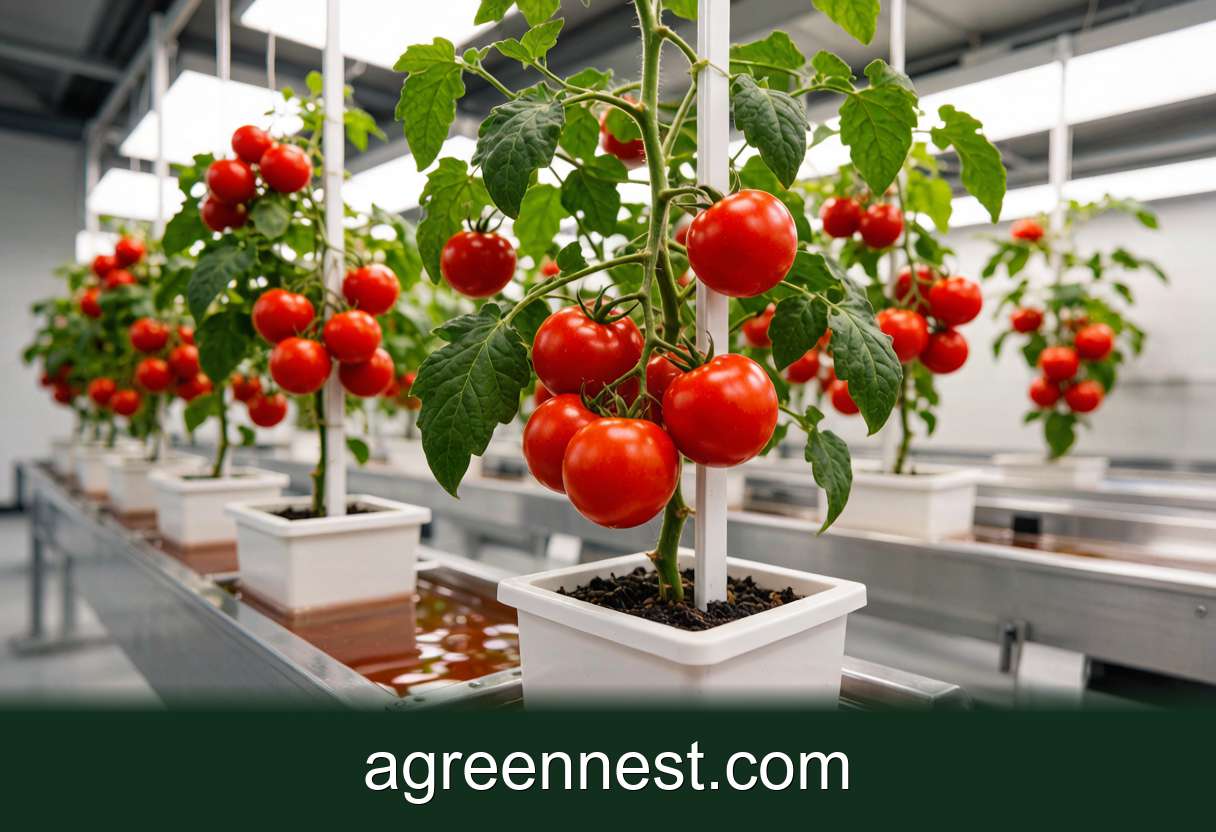
The best plants for hydroponics list is mostly herbs and greens — safe, mild, a bit boring. Dwarf tomatoes are the crop that makes people believe the system works, because you get actual fruit from a bucket on the counter.
What you need
- A deep water culture or Kratky bucket — a 10–20 L reservior with the plant in a net pot above it
- A dwarf / determinate variety: 'Tiny Tim', 'Balconi', 'Micro Tom' — full-size types do not fit indoors
- Hydroponic nutrients A & B, not soil fertilizer
- A grow light — tomatoes are sun pigs; 12–16 hours at 300–500 µmol
- A small fan for airflow (prevents fungus and strengthens stems)
Setup (the short version)
Mix nutrient at half the label strength to start — about EC 1.5–2.0, pH 5.8–6.2 (see the pH guide). Hang the light 15–25 cm above the plant and run it 14 hours a day. Top up the reservior with plain water as it drops; change the whole solution every 2–3 weeks.
Pollinate by hand: tomatoes indoors have no bees, so tap the flower clusters daily or wipe them with a soft brush. Skip this and you get flowers and no fruit — the mistake that makes people think hydroponic tomatoes "do not work."
The numbers that decide your yield
- Light: under 200 µmol, the plant lives but sets few fruit. Aim 300+ at the canopy.
- pH: outside 5.5–6.5 the plant locks out calcium and the tips rot (blossom-end rot).
- Temperature: 18–26°C. Above 30°C pollination fails even with hand-help.
- Nutrients: too much nitrogen = big leaves, few flowers. Switch to a bloom formula once flowering starts.
Common mistakes
- No hand-pollination — flowers drop, zero fruit.
- Not enough light — leggy, flowering but barren. A south window alone is rarely enough; add a bar.
- Overfeeding — tip burn and salt buildup. Half-strength, then watch.
- Still air — weak stems and powdery mildew; a \$10 fan fixes both.
Dwarf tomatoes are the crop that turns hydroponics from "interesting" into "I grew food." Get the light up to 300 µmol, hand-pollinate daily, and hold pH at 5.8–6.2 — those three habits decide whether you eat a tomato or just grew a bush. Start from the beginner setup if you have not built a system yet.
Recommended Tools for Hydroponic Growing Care
Free, no-signup helpers matched to this guide.
Free Ebooks to Explore
Downloadable handbooks — no email required.
Free Ebook
The AGreenNest Succulent Care Handbook
The complete, beginner-to-confident guide to growing fat, happy succulents — 10 chapters and a 20-plant directory.
Free Ebook
Haworthia & Haworthiopsis Care Handbook
A focused guide to the striped, forgiving Haworthia clan.
Join the Conversation
Have a tip or a question about Grow Tomatoes Hydroponically: A Beginner's Indoor Crop? Share it below — comments are saved on our server.