 AGreenNest
Plant Care Accessories
How to Use a Moisture Meter (Without Lying to Yourself)

A moisture meter is the most returned plant gadget I know, and almost always because the person using it trusted the first number they saw. Push the probe into dry topsoil and it reads 1, so they water, and the root ball three centimetres down was already soaked. The tool is honest. The reading depends on where and how you…
A moisture meter is the most returned plant gadget I know, and almost always because the person using it trusted the first number they saw. Push the probe into dry topsoil and it reads 1, so they water, and the root ball three centimetres down was already soaked. The tool is honest. The reading depends on where and how you use it. Here is the method that actually changes how you water.
Pick the right meter and ignore the gimmicks
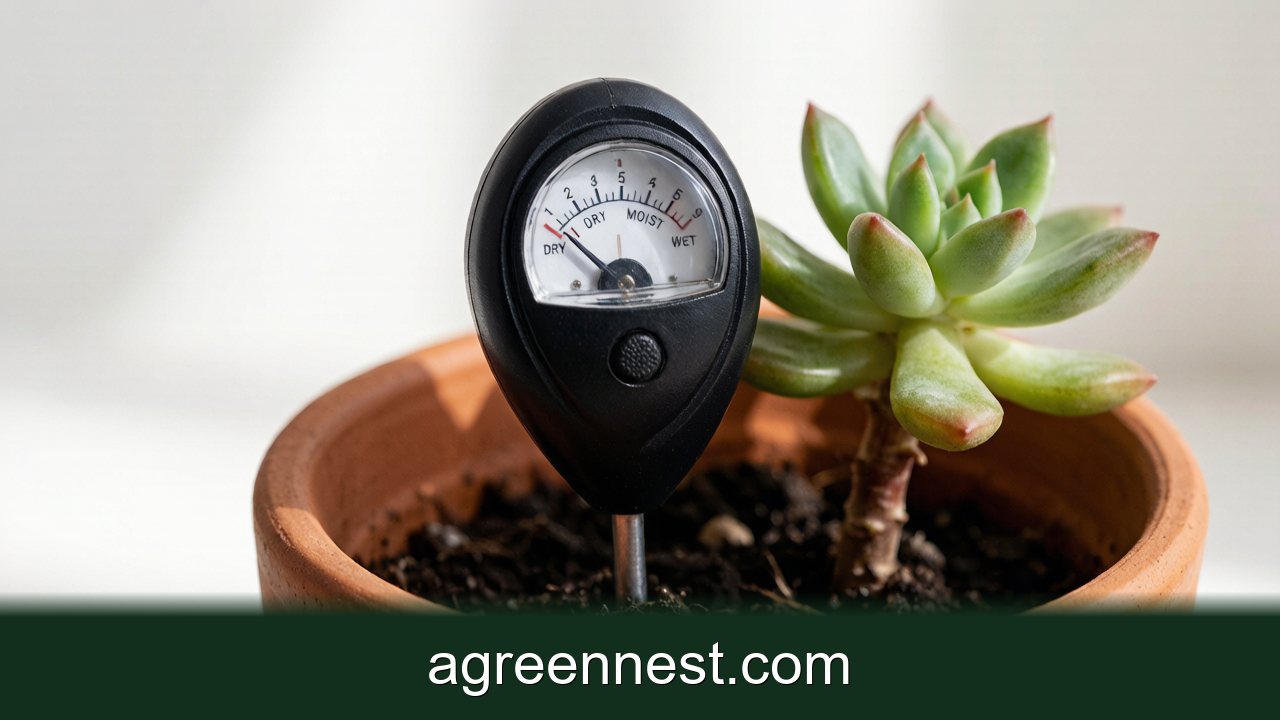
A basic analog moisture meter with a single probe and a 1 to 10 dial is enough. Skip the ones that also claim to read light and pH from the same tip; those extra numbers are rough guesses. You want one job done well, which is how wet the soil is right now.
Where to push the probe
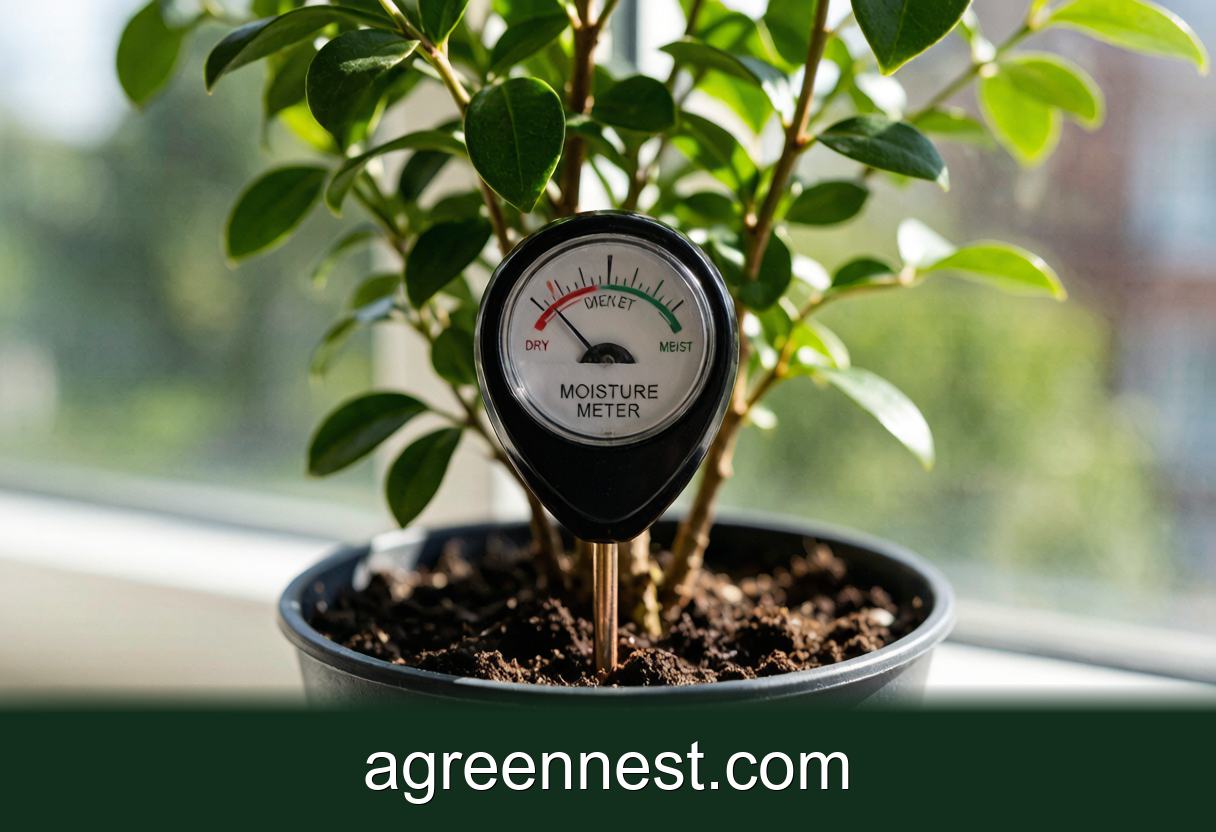
The error everyone makes is reading the top. The top 2cm dries first and tells you nothing about the root zone. Push the probe down to two-thirds of the pot depth, beside the root ball, not through the center where you might spear a root. In a 12cm pot that means about 8cm down; in a 20cm pot, about 13cm. Angle it slightly so it slips past the drainage area without punching the base.
What the numbers mean, by plant
The scale is not universal across species. A reading of 4 means different things to different plants:
- Succulents and cacti: water at 2 to 3, nearly dry. A 4 means wait.
- Pothos, spider plant, peace lily: water around 3 to 4.
- Ferns and calatheas: keep at 5 to 6, never let them hit 2.
Our low-light care mistakes guide explains why "feels dry on top" leads people to drown plants that wanted to stay damp at the base.
Calibrate against your own finger
For the first two weeks, check the meter reading and then verify with a finger at the same depth. You will learn what a "3" feels like in your mix, because soil type changes the number. A gritty succulent mix reads drier faster than a peat-heavy mix at the same real moisture. Once you trust the dial, the finger is backup, not the main check. A self-watering pot removes the guess for thirsty types, but for a succulent the meter plus the watering schedule is the pairing that stops rot.
The three mistakes that lie to you
- Reading the surface. Push deep or the number is noise.
- Leaving it in the pot. Metal probes left sitting in wet soil corrode and start giving false highs. Pull it out after each reading.
- Trusting it in fresh potting mix. New soil with fertilizer spikes can read wetter than it is for the first week. Rinse the probe and wait a few waterings before you believe it.
When a meter is the wrong tool
A meter is useless in very rocky or pure-perlite mixes, where the probe touches air gaps and lies low. It also will not save a plant whose problem is light or pests, not water. For a spider plant that tells you when it is thirsty by arching its leaves, a meter is optional. Use it where the cost of guessing is high, like a prized succulent or a fern you keep drowning.
A 30-second routine that works
Every three to four days, push the probe two-thirds down, note the number, pull it out, rinse it. Write nothing down; just build the habit of feeling the trend, not the single reading. A plant heading from 5 to 3 over a week tells you more than one snapshot.
Frequently Asked Questions
My meter reads 1 even right after watering. Is it broken?
Probably not. You likely pushed it into a dry pocket or the probe is not reaching the wet root zone. Push deeper, beside the root ball, and water again only if the deep reading stays at 1 two days later.
Can the probe damage roots when I check often?
If you angle it to the side of the root ball it rarely hits a major root. Checking every few days is safe; stabbing straight down the center is not.
Do I still need to water on a schedule with a meter?
No, that is the point. The meter replaces the calendar. Water when the deep reading hits your plant's number, not on Tuesday.
Why does my reading swing from 8 to 2 across the pot?
Uneven watering. You watered from one side and the far soil stayed dry. Water slowly in a circle so the whole root ball wets evenly.
Are cheap $8 meters accurate enough?
For the 1 to 10 wet-or-dry question, yes. Spend more only if you want a durable probe; the extra digits on fancy models are not more truthful.
A moisture meter earns its spot only when you read the root zone, not the crust on top, and pull it out after each check. Pair the deep reading with the watering schedule for your species and the guesswork ends. If you would rather skip the probe, the spider plant care guide shows a plant that tells you when it is thirsty on its own.
Recommended Tools for Plant Care Accessories Care
Free, no-signup helpers matched to this guide.
Free Ebooks to Explore
Downloadable handbooks — no email required.
Free Ebook
The AGreenNest Succulent Care Handbook
The complete, beginner-to-confident guide to growing fat, happy succulents — 10 chapters and a 20-plant directory.
Free Ebook
Haworthia & Haworthiopsis Care Handbook
A focused guide to the striped, forgiving Haworthia clan.

Join the Conversation
Have a tip or a question about How to Use a Moisture Meter (Without Lying to Yourself)? Share it below — comments are saved on our server.