 AGreenNest
Plant Care Accessories
Mix Your Own Gritty Succulent Soil at Home
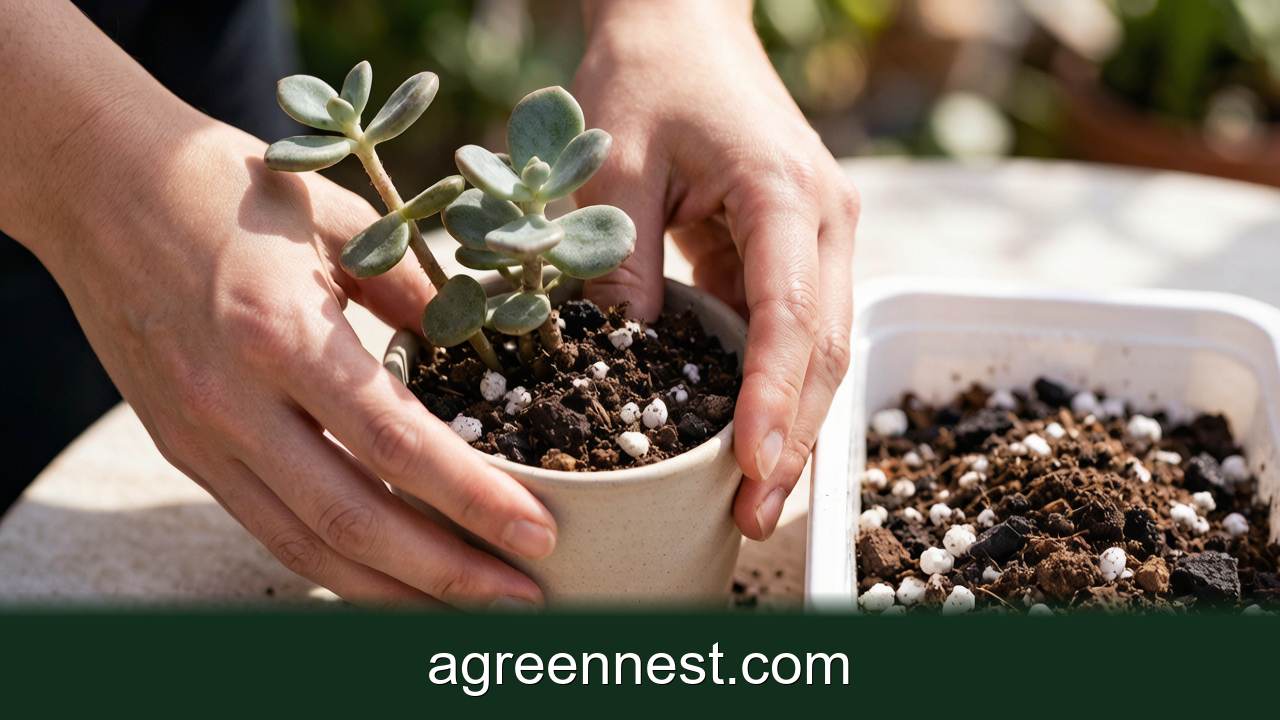
Bagged "cactus soil" from the store is often too rich and too retentive for true succulents. The fix is to mix your own gritty blend at home — it costs less per pot, and you control exactly how fast it drains.
Here is a recipe you can scale to any number of pots, plus what each ingredient actually does.
Why a Gritty Mix Matters
Succulent roots want air as much as water. A dense, peat-heavy mix stays wet for days and invites rot. A gritty mix drains in minutes and only holds the thin film of moisture the plant uses.
Our best soil for succulents guide explains the "why" in depth; this guide is the hands-on "how."
The Base Recipe (by volume)
A reliable all-rounder for most succulents:
- 3 parts inorganic grit: pumice, perlite, or coarse builder's sand
- 2 parts potting soil: a basic, peat-free indoor mix
- 1 part fine gravel or poultry grit: for weight and structure
That 3:2:1 ratio drains fast yet holds enough moisture for healthy roots. For extra-gritty lovers ( lithops, cacti), push to 4:1:1.
A simpler 1:1 version
If you only have two ingredients, 1 part cactus soil + 1 part perlite or pumice is already a massive upgrade over bagged mix. Do not overthink it.
What Each Ingredient Does
- Pumice / perlite: Holds tiny air pockets, light, never compacts. Pumice is heavier and stays put; perlite can float when overwatered.
- Coarse sand / poultry grit: Adds weight so top-heavy plants stand, and keeps pores open. Use coarse — fine play sand packs tight.
- Potting soil: The only part that holds nutrients and a little water. Keep it the minority.
- Calcined clay (turface): Optional premium additive that stays airy and reusable.
Our exact gritty soil recipe gives precise ratios for fussy species if you want to geek out.
Step-by-Step Mixing
- Sterilize if reusing: Bake old soil at 200°F (93°C) for 30 minutes to kill gnats and pathogens.
- Measure by volume, not weight — a scoop or old mug works.
- Mix dry in a tub until evenly blended with no clumps.
- Slightly dampen before potting only if your tap water is soft; otherwise pot dry and water after.
- Store extra in a lidded bin — it keeps for months.
Common Mixing Mistakes
Using fine sand
Play sand or beach sand compacts into concrete. Only coarse horticultural sand or poultry grit belongs in the mix.
Adding peat
Peat stays soggy and hydrophobic when dry. Skip it; use coco coir if you want a renewable base.
Forgetting the pot
Even perfect soil rot in a sealed pot. Pair the mix with drainage holes and, for many succulents, a terracotta pot that wicks excess moisture.
Scaling the Mix
Need 10 pots or 100? Keep the ratio and multiply. A "part" can be a cup for one plant or a bucket for a shelf. The gritty soil mixer tool scales the recipe to your exact pot count so you waste nothing.
Frequently Asked Questions
Q: Can I use garden soil?
A:
No. It compacts, holds too much water, and carries pests and disease. Always use a purpose-made indoor base.
Q: Perlite or pumice — which is better?
A:
Pumice is the better long-term choice; it stays in the pot and adds structure. Perlite is cheaper and fine, just expect some float after heavy watering.
Q: How do I know if my mix drains fast enough?
A:
Water should run straight through with almost no pooling on top. If water sits for minutes, add more grit.
Q: Do cacti need a different mix?
A:
Even grittier. Push toward 4:1:1 (grit:soil:gravel) and consider adding more gravel for weight.
Q: Can I reuse old succulent soil?
A:
Yes, after baking to sterilize and refreshing the grit, which breaks down over time.
Mixing your own gritty soil is the highest-leverage habit for succulent success — it directly prevents the rot that kills most plants. Start with the 1:1 shortcut, scale up with our soil mixer tool, and pair it with the right pot for a setup that almost can't go wrong. See all accessories guides for the rest of the toolkit.
Recommended Tools for Plant Care Accessories Care
Free, no-signup helpers matched to this guide.
Free Ebooks to Explore
Downloadable handbooks — no email required.
Free Ebook
The AGreenNest Succulent Care Handbook
The complete, beginner-to-confident guide to growing fat, happy succulents — 10 chapters and a 20-plant directory.
Free Ebook
Haworthia & Haworthiopsis Care Handbook
A focused guide to the striped, forgiving Haworthia clan.
Join the Conversation
Have a tip or a question about Mix Your Own Gritty Succulent Soil at Home? Share it below — comments are saved on our server.