 AGreenNest
Low-Light Indoor Plants
5 Mistakes That Quietly Kill Low-Light Houseplants
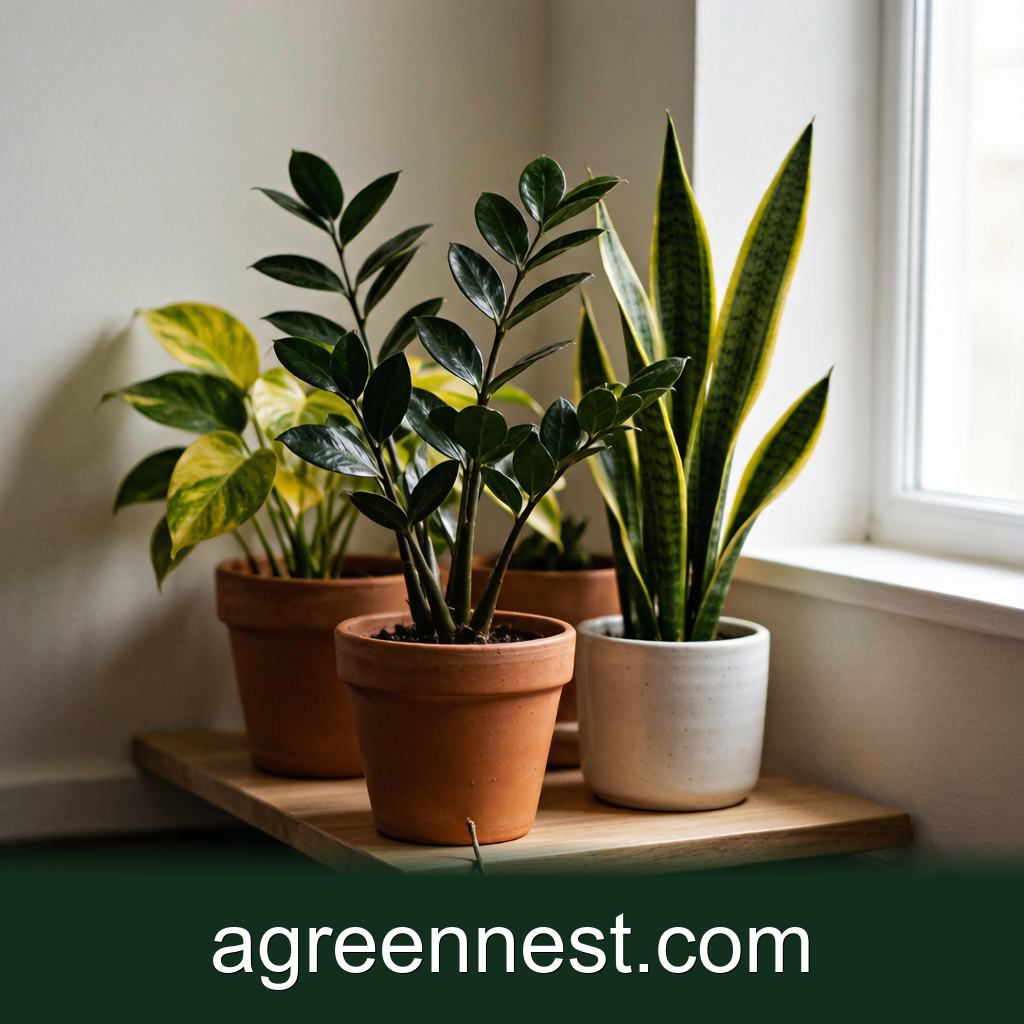
The plant in the dim corner looked fine on Monday. By Friday the lower leaves were yellow and the stem leaned toward the door. Low light does not kill plants quickly. It lets small mistakes compound until there is nothing left to save.
I have watched this happen with Zamioculcas zamiifolia (the ZZ plant), Sansevieria (snake plant), and Aspidistra elatior (cast iron plant), the three plants everyone says you cannot kill. They are hard to kill, not impossible. Here are the five mistakes that do it, and the fix for each.
Mistake 1: Watering on a calendar, not on the soil
This is the big one. A low-light room means the plant uses water slowly, often half as fast as the same plant in a bright window. Water every Saturday and you will drown the roots within a month.
The fix is a finger test. Push your index finger 3 to 4 cm into the soil. If it feels cool and damp, wait. If it is dry to the second knuckle, water. In a cool, dim room a ZZ plant may need water only every 3 to 4 weeks in winter. A Epipremnum aureum (pothos) in the same spot might want it every 10 to 14 days. The room decides, not the date. Read how to water indoor plants correctly for the full method.
Mistake 2: Believing "low light" means "no light"
People hear "low light plant" and put it in a windowless bathroom or a north-facing hallway with the door shut. That is not low light. That is a closet.
True low light is a bright north window or a spot 2 to 3 meters from a south or west window, where you can read a book at noon without turning on a lamp. Plants like Aglaonema (Chinese evergreen) and the cast iron plant handle this. A windowless room handles nothing green for long. If you only have a dark corner, pick from the best low-light houseplants and still give them the brightest indirect light you have.
Mistake 3: Fearing the one north window you own
The other extreme: a beginner with a north window assumes it is useless and shoves every plant into a darker room. North light is soft and steady, which is exactly what low-light species want. A Chlorophytum comosum (spider plant) and a snake plant will sit happily 30 cm from a north pane all year.
The fix is to move your most tolerant plants to that window and keep the fussier ones farther back. Compare low light versus direct sun before you rearrange, because a few hours of hot afternoon sun will scorch a Chinese evergreen that a north window would have kept perfect.
Mistake 4: Crowding plants so air never moves
A shelf packed with eleven plants looks great in a photo and terrible in practice. Still air plus damp soil is how fungal leaf spots and root rot start, and low-light rooms are already slow to dry. I have lost more pothos to a crowded, stuffy corner than to any other cause.
Give each pot a finger's width of space and run a ceiling fan on low for an hour a day. You do not need a humidifier. You need movement. If you see the first yellow leaf, check the roots before you water, because overwatering in low light shows up as yellowing from the bottom first.
Mistake 5: Feeding a plant that is barely growing
Low light means slow growth, and slow growth means the plant needs almost no food. A monthly dose of fertilizer in winter is how you burn roots that were never asking for anything.
Feed only in spring and summer, at quarter strength, and only when the plant is actively putting out new leaves. A ZZ plant in a dim room may need fertilizer twice a year, not twelve times. If leaves go yellow for no clear reason, stop feeding and check water before you add more.
The one habit that catches all five
Walk past your plants once a day and actually look. Low-light rooms fail quietly, so the early warning signs (a leaning stem, one yellow leaf, soil that never dries) are your only chance. Ten seconds of looking beats any fertilizer or gadget.
Low light is forgiving, but it is not a free pass. Water by feel, give the brightest indirect light you have, and let air move. If you want a shortlist of species that actually thrive in these rooms, start with the best low-light houseplants for 2026; every plant on that list has proven itself in a dim corner.
Recommended Tools for Low-Light Indoor Plants Care
Free, no-signup helpers matched to this guide.
Free Ebooks to Explore
Downloadable handbooks — no email required.
Join the Conversation
Have a tip or a question about 5 Mistakes That Quietly Kill Low-Light Houseplants? Share it below — comments are saved on our server.