 AGreenNest
Hydroponic Growing
Diagnose Hydroponic Nutrient Deficiencies by Leaf Symptoms
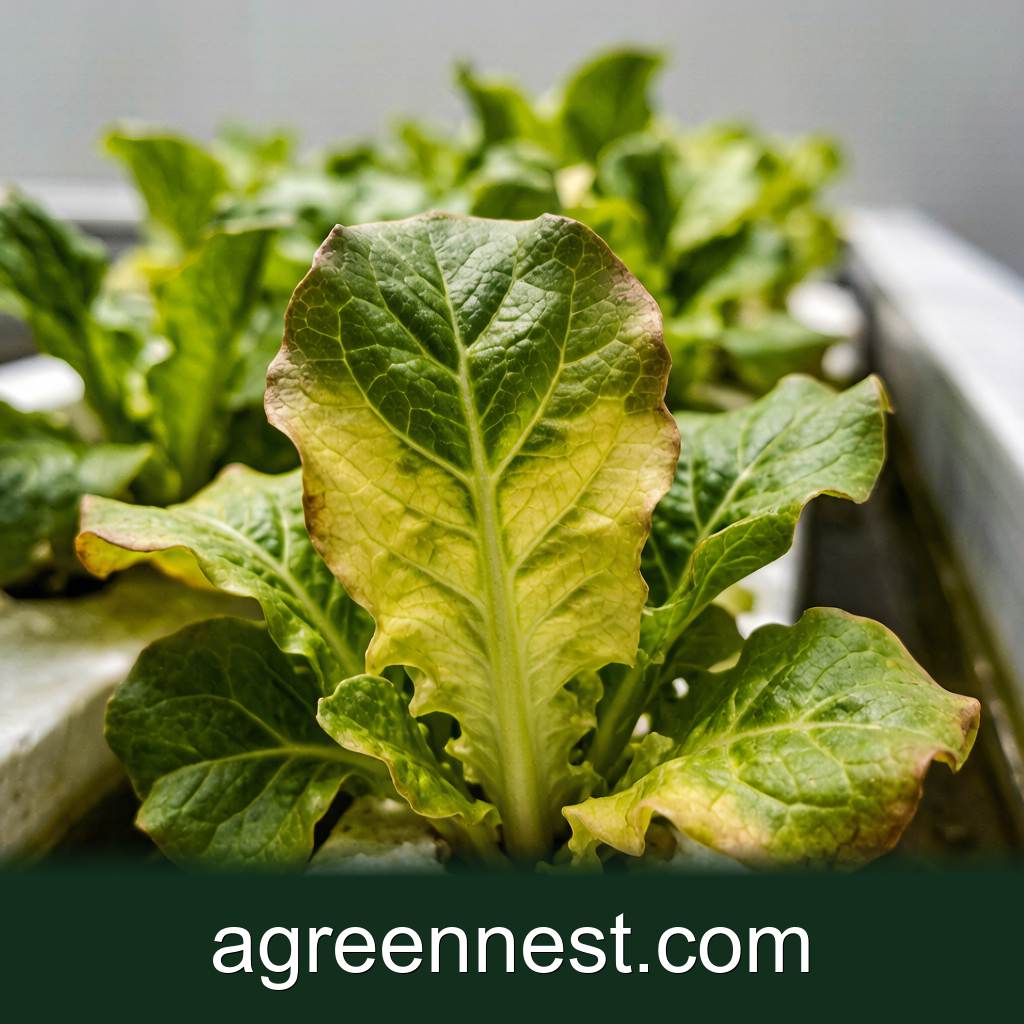
A yellow leaf in a hydroponic system is a message, not a mystery, once you know which leaf changed first. The plant moves some nutrients around its body and locks others in place, so the location of the damage tells you the culprit before you ever touch a bottle. I keep a notebook of leaf photos next to the reservoir, and after a season the patterns become hard to miss.
Start With pH Before You Blame the Nutrients
Before you reach for a bottle, check pH. Most shortages I see in home systems are actually lockouts caused by the wrong pH, not missing fertilizer. Hydroponic crops take up nutrients across a narrow window, and when pH climbs above 6.5 the micronutrients start to clump and the plant cannot grab them. I keep a pH meter floating in the reservoir and log the reading each morning. Our pH basics article walks through how to correct drift without overshooting.
The first fix is almost always a pH nudge, not a new nutrient. Drop the reading back into range and wait a few days before assuming the feed is wrong.
Nitrogen: Older Leaves Yellow First
Nitrogen moves inside the plant, so a shortage shows on the oldest leaves first. They fade from green to a uniform pale yellow and the whole plant looks tired. Cilantro, lettuce, and basil all flag nitrogen this way.
Keep the reservoir in the EC 1.2-2.0 band for leafy crops and you will rarely see it. If you do, raise the strength by 0.2-0.3 EC using a balanced vegetative formula from the hydroponic nutrients guide. Do not jump straight to maximum strength. A sudden spike burns roots and makes the problem worse.
Iron: Pale New Growth, Green Veins
Iron is immobile, so a shortage hits the new leaves. They turn yellow between the veins while the veins stay green, a pattern called interveinal chlorosis. It shows up most often when pH drifts above 7.0, which locks iron even if plenty is in the tank.
Target pH 5.5-6.5 to keep iron available, and confirm your mix includes chelated iron, usually Fe-EDDHA or Fe-DTPA. The ABC of hydroponic nutrients explains why chelation matters in warm reservoirs. Drop pH back toward 6.0 and new growth greens up within five to seven days.
Magnesium: Yellow Between the Veins on Old Leaves
Magnesium sits at the center of the chlorophyll molecule, and like nitrogen it moves to new growth when supply runs low. The result is interveinal yellowing on the older, lower leaves, sometimes with reddish or purple tints at the leaf base. You can mistake it for iron, but iron hits new growth and magnesium hits old growth.
Correct it with a magnesium sulfate addition, about 1-2 g per 10 L of reservoir, or use a cal-mag supplement. Keep pH near 6.0-6.5 so uptake stays steady, and the lower leaves should darken within a week.
Calcium: Tip Burn and Blossom-End Rot
Calcium is immobile and the plant moves it with water flow, so a shortage appears at the growing tips and young leaves. You get necrotic leaf tip burn, and in fruiting crops like tomatoes you get blossom-end rot, the black sunken patch on the bottom of the fruit. In Solanum lycopersicum this is rarely about absent calcium in the feed and more about uneven watering that stops transport.
Hold calcium in the solution at 40-80 ppm and keep EC steady so the plant transpires evenly. Our guide to growing tomatoes hydroponically covers the watering rhythm that prevents tip burn. Also keep humidity moderate, because very dry air slows calcium movement to the tips.
Potassium: Scorched Leaf Edges
Potassium regulates water and sugar movement, and a shortage shows as brown, scorched edges on older leaves that spread inward. It often follows heavy fruiting, when the plant pulls potassium into the fruit. Lettuce shows it as limp, burnt margins. Peppers and tomatoes drop lower leaves.
Maintain potassium at 150-250 ppm in a vegetative mix and bump it during flowering and fruiting. If you run a two-part A/B nutrient, the B part usually carries most of the potassium. The common mistakes article notes how topping off with plain water for weeks dilutes potassium and triggers this exact symptom.
A Quick Table and Next Steps
Here is the short version I keep on the wall:
- Nitrogen: old leaves uniform yellow, mobile, EC 1.2-2.0
- Iron: new leaves yellow between green veins, pH 5.5-6.5
- Magnesium: old leaves interveinal yellow, add MgSO4
- Calcium: young leaf tip burn, blossom-end rot, 40-80 ppm
- Potassium: old leaf edge scorch, 150-250 ppm
If two symptoms appear together, fix pH first, then adjust one nutrient at a time and wait a week. Algae in the reservoir competes for the same minerals, so keep light off the solution as described in the algae prevention guide.
Frequently Asked Questions
Q: How do I tell iron deficiency from magnesium deficiency?
A:
Iron hits the newest leaves with yellow tissue between green veins. Magnesium hits the oldest leaves the same way. Check which leaves changed first and you have your answer.
Q: Can high pH cause deficiencies even with full nutrients?
A:
Yes. Above pH 6.5 iron and manganese lock out, and above 7.0 phosphorus drops. Always fix pH before adding more fertilizer.
Q: Why are only the leaf tips burning on my young seedlings?
A:
That points to calcium, an immobile nutrient. Keep EC steady and calcium at 40-80 ppm, and avoid wild humidity swings that stall transport to the tips.
Q: My older leaves have brown crispy edges but the rest looks fine. What is it?
A:
That is potassium, usually from weeks of topping off with plain water that dilutes it. Raise potassium to 150-250 ppm and the new growth should be clean.
Q: Should I fix pH or add nutrients first when I see yellow leaves?
A:
Fix pH first and wait a few days. Many yellowing cases clear once uptake unlocks, and you avoid overfeeding burned roots.
Q: Does algae in the reservoir cause deficiencies?
A:
It can. Algae compete for iron and other micronutrients and swing pH. Block light from the solution as shown in the algae guide.
Leaf symptoms are a language once you learn the patterns, and most fixes come down to pH and steady EC rather than buying more bottles. Keep a log of your readings and the hydroponic nutrients guide handy, and you will catch problems while they are still cheap to fix.
Recommended Tools for Hydroponic Growing Care
Free, no-signup helpers matched to this guide.
Free Ebooks to Explore
Downloadable handbooks — no email required.
Free Ebook
The AGreenNest Succulent Care Handbook
The complete, beginner-to-confident guide to growing fat, happy succulents — 10 chapters and a 20-plant directory.
Free Ebook
Haworthia & Haworthiopsis Care Handbook
A focused guide to the striped, forgiving Haworthia clan.


Join the Conversation
Have a tip or a question about Diagnose Hydroponic Nutrient Deficiencies by Leaf Symptoms? Share it below — comments are saved on our server.