 AGreenNest
Hydroponic Growing
Grow Radishes Hydroponically in 30 Days
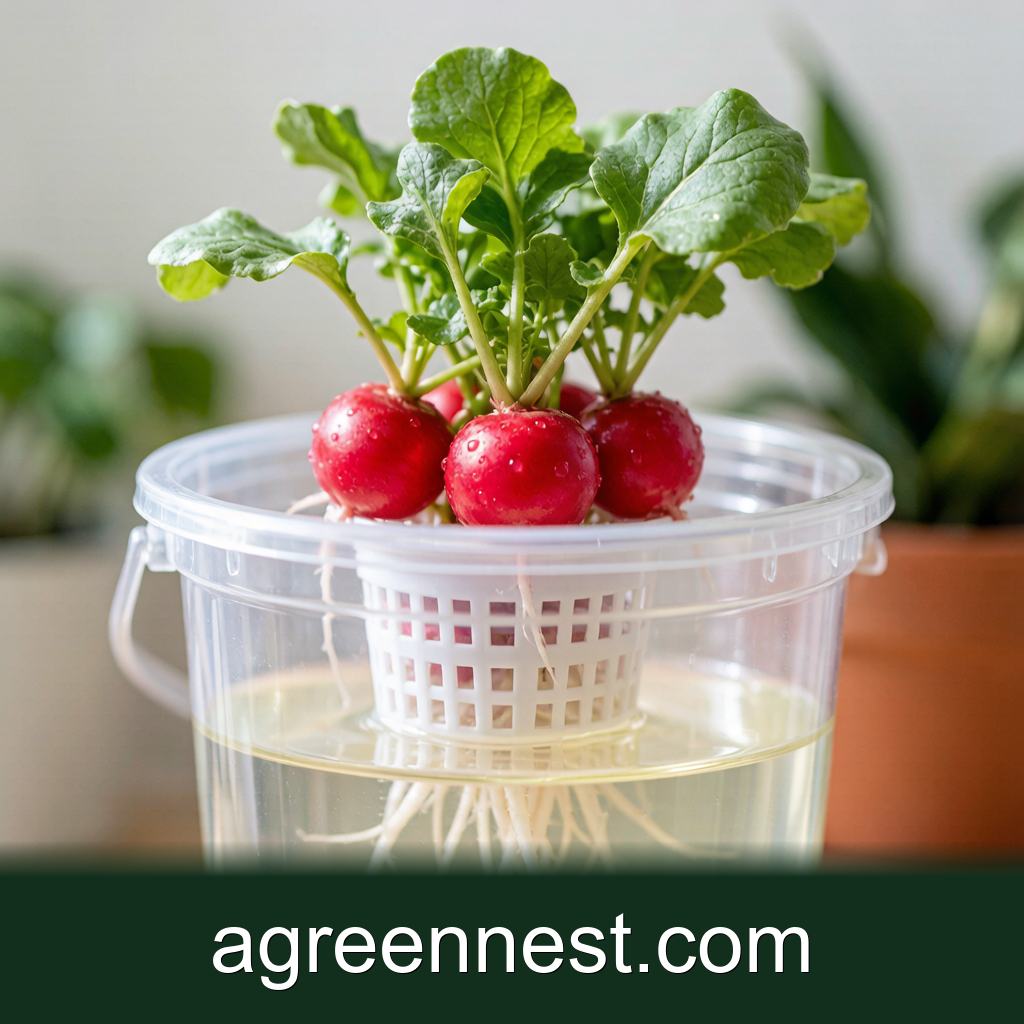
Grow radishes in a deep water culture or Kratky bucket with a pH of 5.8 to 6.2 and an EC of 1.0 to 1.4. Sow seeds 2.5cm apart, keep the root zone at 15 to 20°C, and harvest 25 to 30 days after sowing when roots reach 2 to 3cm across.
A radish you pull from water in under a month tastes nothing like the woody, hollow ones that sit too long in a supermarket crate. Most growers reach for lettuce or basil first, but radishes are the fastest honest win in a hydroponic system. They are ready before a basil cutting has rooted, and they teach you the whole rhythm of water, nutrients, and timing in one short cycle.
Why radishes suit water
Radishes (Raphanus sativus) are a root crop with a short life. They do not need a deep substrate or a long season, and because the edible part forms in three to four weeks, a small mistake costs you days, not months. In soil they split and get spicy when the weather turns hot. In water you control the temperature and the feed, so the roots stay crisp and mild.
If you already run a deep water culture setup or a Kratky bucket, radishes drop straight into the same reservoir you use for greens. That is the path most beginners should take rather than building something new.
Pick the right variety
Skip the long winter keepers. For hydroponics you want fast, round types that bulk up in cool water.
- Cherry Belle: red globe, 22 to 28 days, mild flavor, the safest first choice.
- French Breakfast: oblong red and white, 25 to 30 days, holds longer in the heat.
- White Icicle: tapered, 30 days, a little spice, good if you want something different.
- Sparkler: red top with white tip, 24 to 28 days, very forgiving of uneven light.
Avoid daikon and other long types. They need more depth than a net pot and a standard 10 to 15cm reservoir gives them, and they are slower to show results.
Set up the system
You can grow radishes in either of two simple systems, and both work with the same numbers.
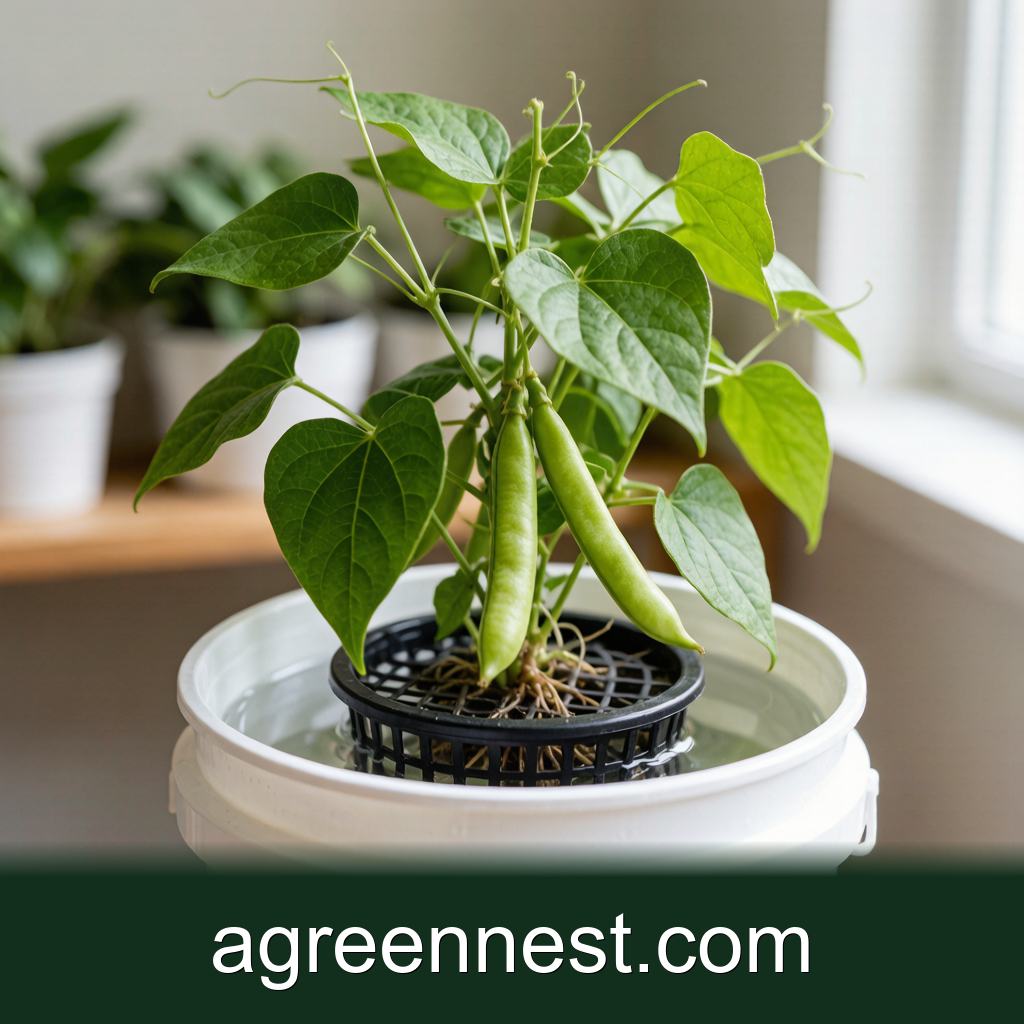
A DWC rig uses a pump and air stone to keep the nutrient moving and oxygenated. A Kratky jar is passive: the roots hang into still nutrient, and you top it up as the level drops. Radishes are small enough that a passive Kratky bucket is plenty, and it is the cheaper way to learn.
Use a 5 to 10 liter reservoir, a lid with 3 to 5cm net pots, and a grow medium of coarse perlite or clay pebbles. Sow two seeds per net pot and thin to one strong seedling after the first true leaves appear.
The numbers that matter
This is where hydroponics stops being guesswork. Write these down and check them twice a week.
- pH: 5.8 to 6.2. Above 6.5 the plants stall and the leaves yellow at the edges.
- EC: 1.0 to 1.4 mS/cm. Radishes are light feeders; a strong vegetative mix burns the tips.
- Root zone temperature: 15 to 20°C. Warmer water pushes leafy tops and thin roots; cooler water fattens the bulb.
- Air temperature: 16 to 22°C by day. They bolt (flower and go spicy) above 24°C.
A pH meter and a basic nutrient schedule are the only instruments you really need. The complete nutrients guide explains how to mix a 1.2 EC solution from a two-part A and B feed without throwing the balance off.
Light and daily care
Radishes want 12 to 14 hours of light a day. A south window in spring is enough for a slow crop, but a full-spectrum grow light at 150 to 250 µmol/m²/s gives even results year round. Watch for the tops stretching or the roots staying pencil-thin: that is almost always too little light.
Top the reservoir with plain pH-corrected water as it drops, and change the whole solution every 10 to 14 days so the salts do not drift. Radishes are in and out before algae becomes a real problem, but a dark lid stops most of it. Our guide to keeping algae out covers the few cases where it still shows up.
Harvest at the right moment
Pull the first radish at day 25 and check the bulb. It should be 2 to 3cm across and firm. Wait much past day 32 and the root gets pithy and hot, the same flaw that ruins store-bought ones left too long. Because you grew it, you get to pick the exact day.
After harvest, the same reservoir runs a second round. Just rinse the net pots, refresh the solution, and sow again. Compared with hydroponic lettuce, radishes give you a finished crop in about two thirds of the time.
The one mistake that wastes the cycle
The classic slip is overfeeding. A beginner reads the label on a vegetative nutrient and mixes it to 2.0 EC, then wonders why the leaves scorch and the root stays thin. Radishes want a lean diet. If you see brown leaf tips, cut the strength in half and flush with clean water. Our common hydroponic mistakes write-up lists the other slips, but strength is the one that bites radish growers first.
Radishes are the best first crop for a new hydroponic setup because they tell you, in three weeks, whether your pH, strength, and temperature are right. Hold the EC lean, keep the root zone cool, and pull at day 25 to taste the difference water-grown makes. If you want the next fast win after this, the hydroponic microgreens guide picks up where radishes leave off and keeps the same reservoir busy.
Recommended Tools for Hydroponic Growing Care
Free, no-signup helpers matched to this guide.
Free Ebooks to Explore
Downloadable handbooks — no email required.
Free Ebook
The AGreenNest Succulent Care Handbook
The complete, beginner-to-confident guide to growing fat, happy succulents — 10 chapters and a 20-plant directory.
Free Ebook
Haworthia & Haworthiopsis Care Handbook
A focused guide to the striped, forgiving Haworthia clan.
Join the Conversation
Have a tip or a question about Grow Radishes Hydroponically in 30 Days? Share it below — comments are saved on our server.