 AGreenNest
Hydroponic Growing
Grow Green Beans Hydroponically: A Step-by-Step Guide
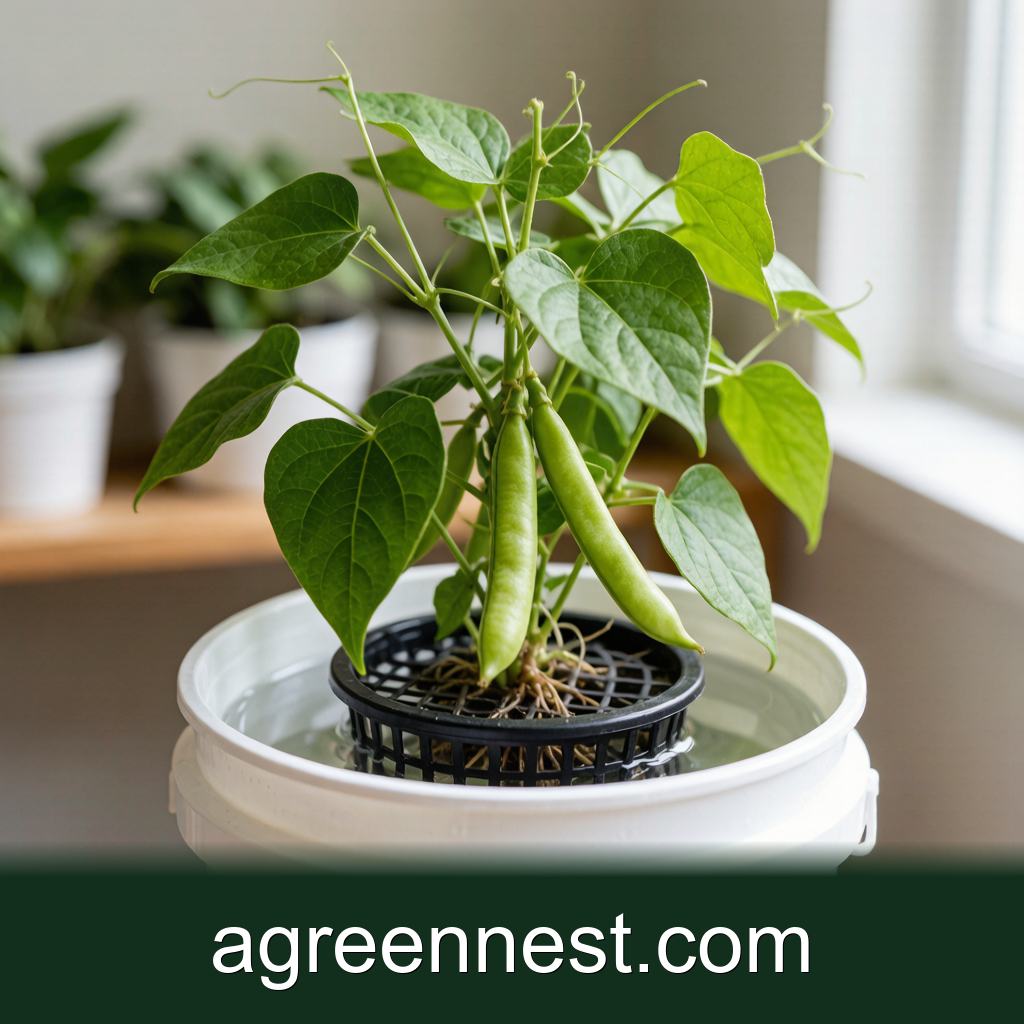
A bush bean goes from soaked seed to snap pod in about nine weeks, and in water it does it in roughly half the floor space of a garden row. I first tried it because a slug kept eating every bean I planted outdoors, and the indoor bucket out-yielded the patch. Beans are self-pollinating and forgiving of small mistakes, which makes them a strong second project after lettuce.
Which beans, and why bush wins indoors
Use a determinate bush variety such as Phaseolus vulgaris 'Provider', 'Contender', or 'Blue Lake 274' rather than a climbing pole bean. Pole beans need a 1.5 to 2 metre trellis and a tall grow space most homes cannot give. A bush bean tops out at 35 to 45cm and still drops pods for two to three weeks once it starts.
Avoid runner beans (Phaseolus coccineus) in water. They are heavier feeders and far more temperamental about temperature than the common snap bean. If you want a vining crop, our hydroponic tomato guide covers the support and pruning work that pole beans also demand.
The numbers that decide success
Get these three right and beans are easy. Miss them and you get flowers that fall without setting pod.
- pH: hold the reservoir at 5.8 to 6.2. Beans lock out iron and manganese above 6.5, which shows as yellow new leaves. Our pH management guide explains how to nudge it back without swinging.
- EC: 1.6 to 2.2 mS/cm through veg, nudging to 2.4 once pods form. Below 1.4 the plants stall; above 2.6 you risk tip burn.
- Temperature: day 21 to 24°C, night 15 to 18°C. Beans abort their flowers above 29°C or below 12°C, so a hot spare room in summer is the biggest failure point.
The hydroponic nutrients guide gives the exact A and B mixing order I use so the two parts never lock up in concentrate.
Starting the seed
Soak the dry seed in room-temperature water for 4 to 8 hours, no longer or it can split. Sow one seed per 3cm rockwool cube, pushed in about 1cm deep, and keep the cube at 21 to 24°C. Sprouts appear in 5 to 8 days.
Do not pre-soak and then leave them in a closed humid dome past day 3, because the stem base rots fast in still wet air. Once the first true leaves open, move the cubes under the grow light.
Planting into the system
By two weeks the seedling has two true leaves and a short root. Set it into your chosen system.
- DWC: one plant per 10 to 15 litre bucket, net pot resting on the lid, roots dangling into 18 to 20cm of nutrient. A single bucket gave me about 600g of pods across the season.
- NFT: 5 to 7cm net pots in a 10cm channel, flow around 1 litre per minute.
- Kratky: a passive bucket with the water line 3 to 5cm below the net pot; no pump. Our Kratky method guide walks through the no-power setup.
Give bush beans a short stake or a loop of string the moment they reach 15cm, since a heavy pod load topples a thin stem. Keep the reservoir out of direct sun so you avoid the algae problems that cloud a warm bucket.
Light, feeding and setting pods
Run the light 14 to 16 hours a day. Beans yield best around 400 to 600 µmol/m²/s, but a home LED at a modest setting still produces a usable crop, just fewer pods.
Feed the full strength from the nutrient guide once true leaves are open. Watch for these tells:
- Honeydew-like sticky leaf with no insects: usually pythium root rot from a warm reservoir, not pests. Drop the temp and add an air stone.
- Yellow new growth with green veins: iron chlorosis from pH drift above 6.3. Correct the pH before adding anything else.
- Flowers dropping: heat above 29°C or humidity over 70 percent. Move the bucket to a cooler spot and run a fan.
Beans self-pollinate, but in still indoor air the pods set better if you brush the flowers with a soft paintbrush or shake the stem gently every morning for a week at flowering.
Harvest and what goes wrong
Start picking 55 to 65 days from sowing, when pods are firm and snap cleanly. Pick every two to three days, because leaving mature pods tells the plant to stop flowering. A steady daily harvest keeps a bush bean producing for up to three weeks.
The common hydroponic mistakes guide covers the reservoir and EC slips that stall a crop mid-season, and the nutrient deficiency chart helps you read leaf colour before it costs you pods.
Frequently Asked Questions
Q: Why did my bean flowers fall off without making pods?
A:
Almost always heat. Beans drop flowers above about 29°C or in still humid air. Move the bucket to a cooler room, run a fan, and the next flush should set.
Q: Can I grow pole beans in a 5 litre DWC bucket?
A:
You can start them, but they outgrow the space by week six and need a 1.5m trellis plus constant tying. A bush variety in the same bucket gives more pods with none of that work.
Q: The new leaves are yellow with green veins, what is wrong?
A:
Iron chlorosis from pH creeping above 6.3. Check the reservoir pH first and bring it back to 5.8 to 6.2 before reaching for a supplement.
Q: Do hydroponic beans need pollinating by hand?
A:
Not strictly, since beans self-pollinate, but a daily brush of the flowers in still indoor air noticeably improves the pod count.
Q: How much light is enough without a PAR meter?
A:
Fourteen to sixteen hours under a decent houseplant LED, positioned so the canopy sits in the bright zone, is enough for a home crop. You will see fewer pods than a commercial 600 µmol setup, not zero.
Beans are the crop I point people to after lettuce, because the harvest is fast and the failures are easy to read. Keep the pH near 6.0, the bucket below 26°C, and pick daily once they start. If you are setting up your first reservoir, the hydroponics for beginners guide is the page I would open before buying a single part.
Recommended Tools for Hydroponic Growing Care
Free, no-signup helpers matched to this guide.
Free Ebooks to Explore
Downloadable handbooks — no email required.
Free Ebook
The AGreenNest Succulent Care Handbook
The complete, beginner-to-confident guide to growing fat, happy succulents — 10 chapters and a 20-plant directory.
Free Ebook
Haworthia & Haworthiopsis Care Handbook
A focused guide to the striped, forgiving Haworthia clan.


Join the Conversation
Have a tip or a question about Grow Green Beans Hydroponically: A Step-by-Step Guide? Share it below — comments are saved on our server.