 AGreenNest
DIY Plant Projects
Make a Bottle Terrarium from a Soda Bottle
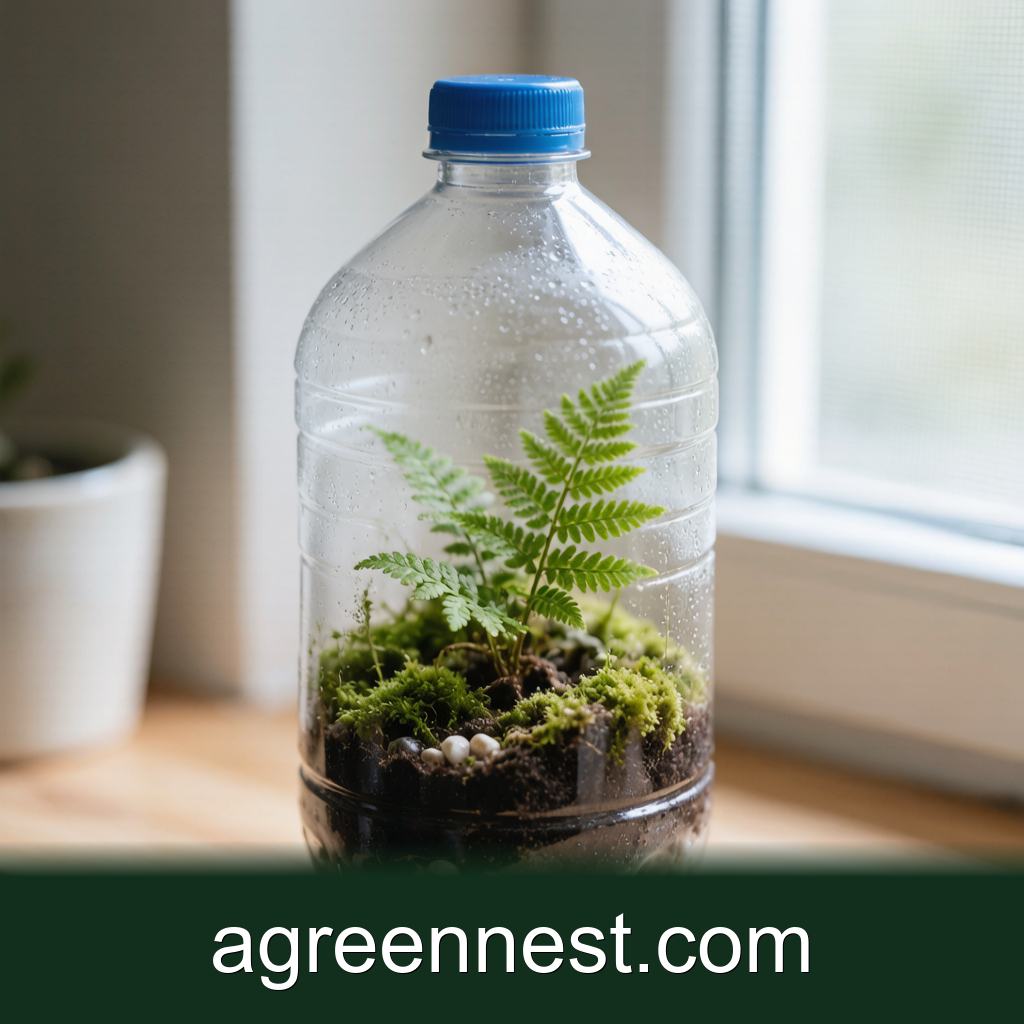
Cut a 2-litre soda bottle into a jar and lid, layer pebbles, mesh, and damp potting soil, then plant a small fern or moss and mist once. Cap it and the closed bottle recycles its own water, so it needs a refill only every few weeks. Keep it in bright indirect light, never direct sun.
I kept a closed bottle terrarium alive on a windowsill for two years with about four waterings total. The trick is that the bottle holds its own humidity, so the plants drink what they sweat out. A 2 litre soda bottle becomes a tiny sealed world, and the build takes one quiet afternoon with a craft knife and a few things you already own. Here is how to make one.
What you need
- A clean 2 litre plastic soda bottle, label removed
- A craft knife or scissors, and a permanent marker
- About 3cm of small pebbles or aquarium gravel for drainage
- A square of mesh, old tights, or a coffee filter to keep soil out of the pebbles
- 2 to 3cm of damp potting soil (not garden soil, which carries pests)
- A small fern, moss, or fittonia seedling from a nursery
- A spray bottle of water and a long tweezers or chopstick for placing plants
That is the whole list. No pump, no light, no power. The kokedama moss ball uses some of the same materials if you want a second build the same day.
Step 1: Cut the bottle into a jar and lid
Mark a line around the bottle about two thirds up from the base, where the straight side meets the shoulder. Cut cleanly along the mark with a craft knife, keeping your fingers clear of the blade. The bottom becomes the jar and the top becomes a dome lid that sits back on top. Smooth the cut edge with the knife or a little tape so it does not slice you later.
The dome lets light in and traps humidity, which is the whole point. A tighter fit between lid and jar means less water escapes, so trim both edges so they meet flush.
Step 2: Build the drainage layer
Pour 3cm of pebbles into the jar base. This false bottom catches excess water so the soil never sits soggy, which is the main cause of rot in a closed bottle. Lay the mesh or filter square over the pebbles and press it flat against the sides so soil cannot wash down into the gravel.
The gap below the mesh is where condensation pools and drains back, so do not skip it. A bottle with no drainage layer turns into a swamp within a week.
Step 3: Add soil and plant
Spoon 2 to 3cm of damp potting soil over the mesh and press it gently to remove air pockets. Dig a small well with the chopstick, settle the plant's roots in, and firm the soil around the stem. Use the tweezers to tuck moss around the base and fill any bare spots. Keep the plant small: a 2 litre bottle fits one fern or a patch of moss, not a full pot.
Work through the bottle mouth, not the cut, so you do not crush the leaves. If soil sticks to the inside plastic, wipe it with a damp brush before you seal.
Step 4: Mist, cap, and place
Mist the soil and leaves until they glisten but do not flood, then set the dome lid on top. Do not screw or glue it; a loose cap lets a little air move and stops mould. Place the bottle in bright indirect light, about 1 to 2 metres from a window, and never in direct sun, which bakes the sealed air.
The closed bottle now recycles its own water. You will see fog on the walls in the morning and clear glass by afternoon, which is normal. Refill only when the soil feels dry at 2cm and the walls stay clear for days.
What plants work in a bottle terrarium?
Small, slow, humidity loving plants suit the sealed bottle best. Good picks:
- Button fern or maidenhair fern: slow growers that love the still, damp air.
- Moss: the easiest of all, it carpets the base and needs almost no root room.
- Fittonia (nerve plant): a small seedling fits and shows off pink or white veins.
- Pilea or peperomia cuttings: a single small rooted cutting fills a corner over a year.
Skip cactus and succulents, which rot in the trapped humidity. For the open, dry cousin of this build, our succulent terrarium project uses the same bottle skills with a different mix.
Why is my bottle terrarium fogging up?
Light fog on the walls each morning is healthy; it is water cycling through the plants. Constant heavy fog with wet soil and no clear periods means too much water. Open the lid for a few hours to let it dry, then mist less next time. If the glass stays fogged and the soil is soggy, you overwatered at the start, so tip the bottle and pour off the excess from the pebbles.
A sealed bottle in a bathroom shelf or on a bright kitchen windowsill is happiest, because the air is already mild. Our watering guide covers the dry down check that also keeps open pots honest.
Frequently Asked Questions
How often do I water a closed bottle terrarium?
Often only every 2 to 4 weeks. Watch the walls: when they stop fogging and the soil feels dry at 2cm, mist lightly. A sealed bottle loses almost no water, so less is the rule.
Can I use a glass jar instead of a plastic bottle?
Yes, any clear sealed container works, from a jam jar to a carboy. A plastic bottle is just free and is easy to cut. The seal, not the material, is what holds the humidity.
My terrarium grew white fuzz on the soil. Is it dead?
Usually mould from too much water and still air. Open the lid for a day, scrape off the fuzz, and mist less. A small charcoal piece in the drainage layer helps, but drying out is the real fix.
Do I need to feed the plants in the bottle?
No. A 2 litre bottle holds one small plant that grows slowly and needs no feed for a year or two. If it outgrows the bottle, move it to a pot rather than fertilise the sealed world.
Can kids build this?
Yes, with an adult on the cutting step. The planting and misting are safe and a good way to show how water cycles. Supervise the knife, then let them place the moss.
A bottle terrarium turns a soda bottle and a fern into a sealed garden that waters itself, for the cost of a craft knife and an afternoon. Cut the bottle, build the drainage layer, plant small, and mist once, then watch the fog cycle do the rest. When you want a different kind of green build, the succulent terrarium is the same hour with a dry mix.
Recommended Tools for DIY Plant Projects Care
Free, no-signup helpers matched to this guide.
Free Ebooks to Explore
Downloadable handbooks — no email required.
Free Ebook
The AGreenNest Succulent Care Handbook
The complete, beginner-to-confident guide to growing fat, happy succulents — 10 chapters and a 20-plant directory.
Free Ebook
Haworthia & Haworthiopsis Care Handbook
A focused guide to the striped, forgiving Haworthia clan.
Join the Conversation
Have a tip or a question about Make a Bottle Terrarium from a Soda Bottle? Share it below — comments are saved on our server.