 AGreenNest
DIY Plant Projects
Build a Propagation Station from a Thrift-Store Rack
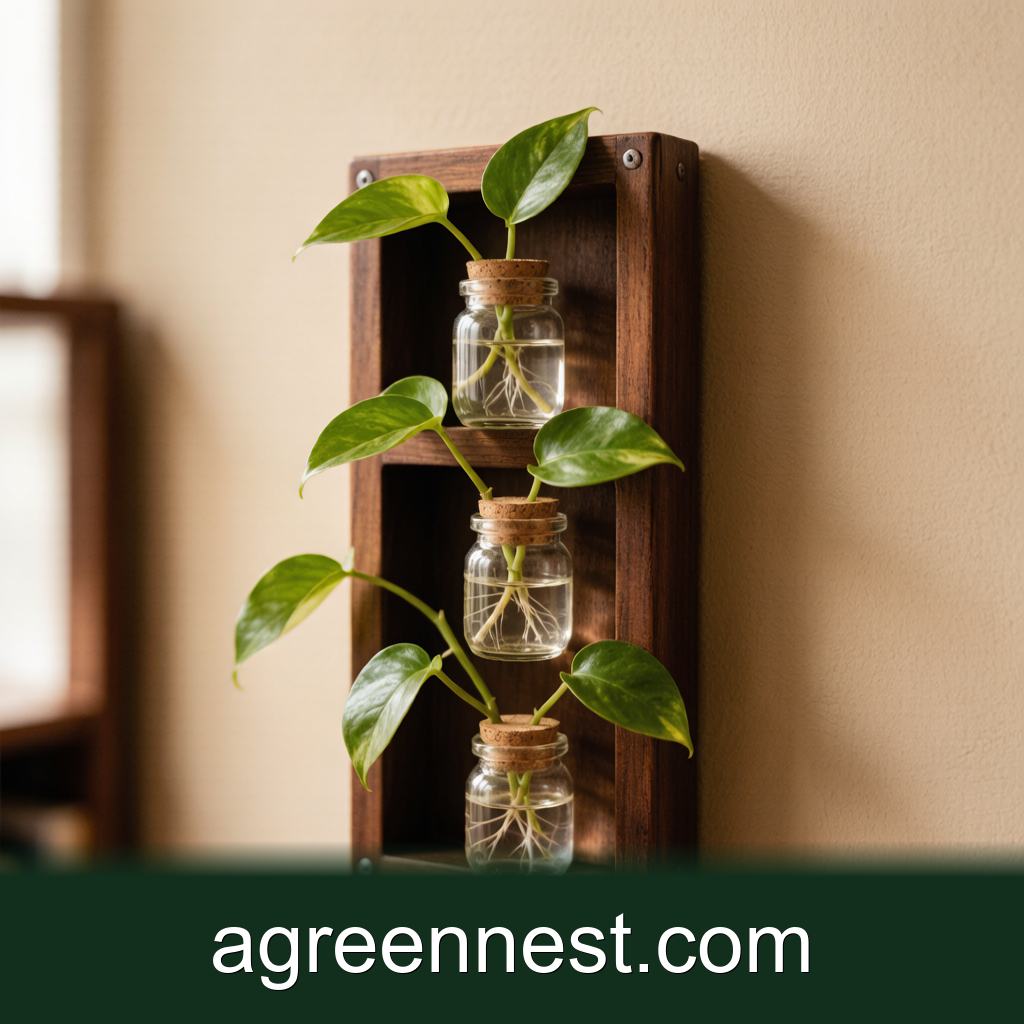
I built mine from a $4 spice rack I found at a thrift store, four small glass jars, and one slow afternoon. A propagation station is just a rack that holds jars of water with plant cuttings in them, and it is the cheapest way I know to fill a bare wall with green. You watch roots appear, which is more satisfying than buying a finished plant.
What you need
- A wall-mounted wooden spice rack, a shallow crate, or an old picture frame with a ledge (anything that can hold 3 to 6 small jars)
- 3 to 6 glass jars, 100 to 250ml each, with mouths wide enough for a stem (baby food jars, jam jars, or test tubes all work)
- A drill and a 3 to 4mm bit, or strong twine and a stapler if you would rather hang the jars
- A pencil, a level, and two wall screws with anchors
- Optional: a small piece of cork or felt to line the rack so jars do not rattle
That is the whole parts list. No pump, no soil, no power. The succulent terrarium project costs about the same if you want a second build the same day.
Pick the frame or rack
Look for something with a flat ledge or two rungs so the jar bases sit level. A spice rack with two or three tiers is ideal because it spreads the jars vertically and leaves headroom for trailing vines. Avoid anything so deep the jars tip forward.
If you use a picture frame, staple a length of twine across the front at two heights and hook the jar rims over it, the way a painter hangs brushes. I went with a spice rack because the wood warms up the wall and the jars sit in the rungs without slipping.
Mount it and hang the jars
- Mark the spot at eye height on a wall that gets bright indirect light, about 1 to 2 metres from a window. A north or east wall is perfect; direct sun cooks the water and the roots.
- Level and drill. Hold the rack, check it with a level, and drill two pilot holes into studs or through anchors. Screw it firm so it will not wobble when you fill the jars.
- Test the fit. Set the empty jars in place. They should sit without rocking. Add a strip of cork or felt under each if there is a gap.
- Fill with water to about 1cm below the rim, using room-temperature tap water left to stand for a few hours so the chlorine off-gasses.
Leave the water a finger-width below the jar mouth so leaves stay dry and only the stem sits in the liquid.
Which cuttings to start
The station suits any plant that roots from a node in water. My reliable starters:
- Pothos and Epipremnum: a 10 to 15cm tip with one node submerged roots in 10 to 14 days.
- Tradescantia: the fastest of all, sometimes showing roots in a week.
- Spider plant babies: pop the little plantlet in and it roots in 2 to 3 weeks.
- Philodendron: a single node with a leaf roots in 2 to 4 weeks.
- Succulent leaves: skip water. Use the leaf propagation method in soil instead, because they rot in a jar.
Take each cutting with at least one node (the bump where a leaf meets the stem) below the waterline, because that is where roots form. Strip the lower leaves so none sit in the water and rot.
Care of the station
Keep it simple and the cuttings do the work.
- Change the water every 5 to 7 days so it stays clear and oxygen-rich. Dump, rinse the jar, refill. Stale brown water is the main cause of failure.
- Light: 12 to 14 hours of bright indirect light. A weak grow light under a shelf works in a dark room.
- Temperature: 18 to 24°C (65 to 75°F) keeps roots coming. Cold slows everything.
- Watch for slime. If a stem goes mushy, pull it, clean the jar, and start fresh with a healthy cutting.
A nearby moisture meter is overkill for water props, but handy once you move rooted cuttings into soil.
What to do when roots appear
Once you see 2 to 4cm of white roots, the cutting is ready for soil, but it does not have to leave yet. Many people keep them in water for months as living decor. If you pot up, use a small container with drainage and keep the mix lightly moist for the first two weeks while the water roots adapt to soil.
Pot the strongest rooted cutting into its own 8 to 10cm pot, and you have turned one plant into three for the price of a jar of water. From there, a kokedama moss ball is a natural next project once you have spare rooted cuttings to display.
Frequently Asked Questions
Q: What plants root fastest in a water station?
A:
Tradescantia and pothos lead, often showing roots in 7 to 14 days. Philodendron and spider plant babies follow at 2 to 4 weeks. Woody herbs like rosemary are slow and fussy in water.
Q: How often should I change the water?
A:
Every 5 to 7 days, or sooner if it turns cloudy. Fresh water is the single biggest factor in clean rooting, more than light or temperature.
Q: Why are my cuttings rotting at the node?
A:
Usually a leaf or two is submerged and decaying, or the water went stale. Strip lower leaves above the waterline, change the water weekly, and keep only the stem in the jar.
Q: When do I move them to soil?
A:
Once roots reach 2 to 4cm, usually 2 to 4 weeks in. You can leave them in water longer as decoration, but pot up if you want a growing plant rather than a display.
Q: Can I keep the station in a bathroom?
A:
Only if the bathroom has a bright window. Bathrooms are humid but often too dark, and low light plus still air invites rot. A bright kitchen wall works better.
A propagation station turns plant trimmings into a living wall for the cost of a few jars and an afternoon. Hang it where you will see it, change the water weekly, and you will have rooted cuttings before you know it. When you are ready for the next build, the succulent terrarium is the same hour and the same small budget.
Recommended Tools for DIY Plant Projects Care
Free, no-signup helpers matched to this guide.
Free Ebooks to Explore
Downloadable handbooks — no email required.
Free Ebook
The AGreenNest Succulent Care Handbook
The complete, beginner-to-confident guide to growing fat, happy succulents — 10 chapters and a 20-plant directory.
Free Ebook
Haworthia & Haworthiopsis Care Handbook
A focused guide to the striped, forgiving Haworthia clan.
Join the Conversation
Have a tip or a question about Build a Propagation Station from a Thrift-Store Rack? Share it below — comments are saved on our server.