 AGreenNest
Low-Light Indoor Plants
Philodendron Micans Care: The Velvet Leaf in Low Light
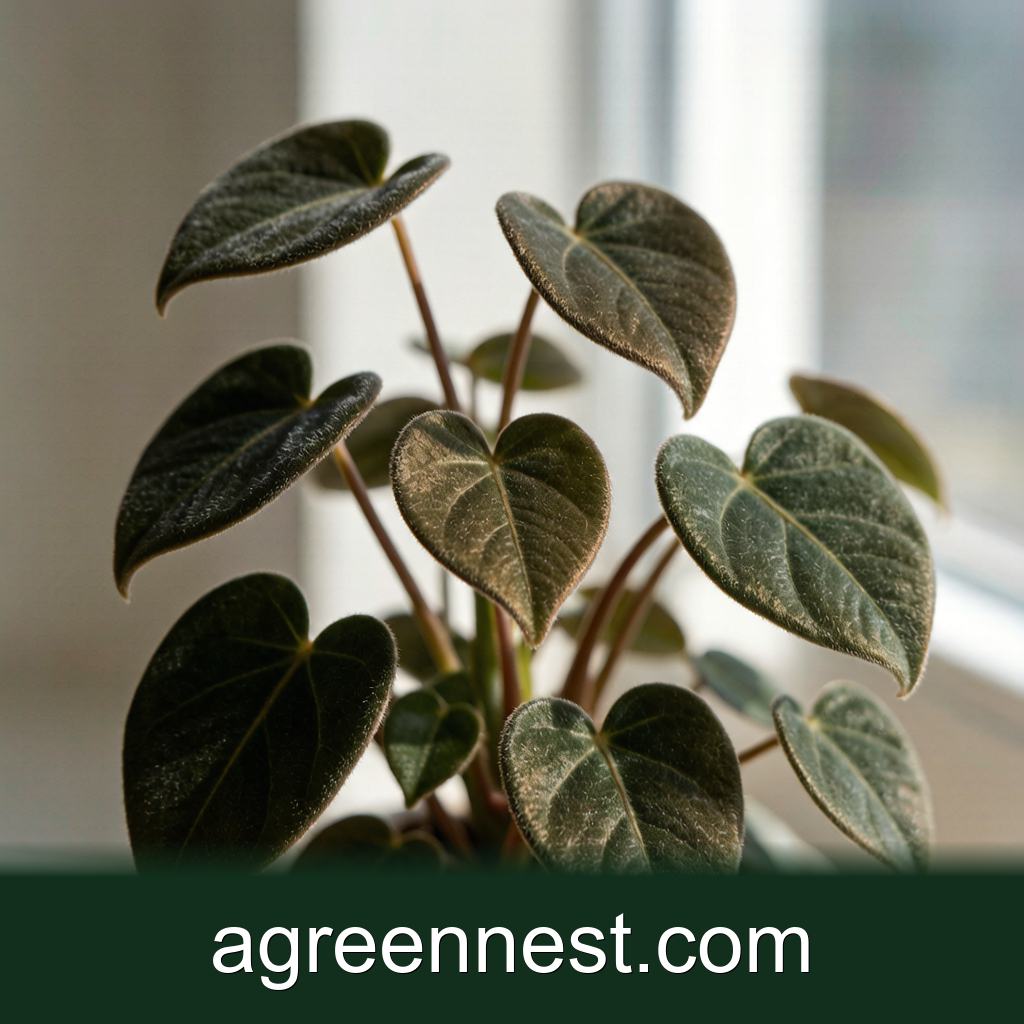
Meet the Velvet Philodendron
A few years ago I picked up a small Philodendron hederaceum 'Micans' at a plant fair, drawn in by leaves that look brushed with bronze and read almost like crushed velvet in the right light. Unlike the plain green Heartleaf Philodendron covered in our Heartleaf Philodendron care guide, the 'Micans' form carries a reddish, iridescent sheen that shifts from deep green to copper as the leaf matures. It is the same species, but the cultivar behaves like a moodier, more decorative sibling.
The plant trails and climbs readily, and a single stem can run 60-90 cm along a shelf or up a moss pole within a year. In my experience it is one of the more satisfying aroids to grow because the new growth arrives in a soft pink-red tone before darkening, so the vine always shows a gradient of colour. If you want an easy vining plant that is a step up from the usual suspects, this one is worth a place on your shelf.
Light: Keeping the Velvet Intact
'Micans' tolerates genuinely dim corners, but the famous sheen depends on light. Give it low to bright indirect light for about 3-5 hours of usable brightness each day. A north or east window works well, and a few feet back from a west window is fine too. In deep shade the leaves stay small, the internodes stretch, and the bronze finish fades to a flat green. The plant survives there, yet it loses the trait that made you buy it.
I keep mine about 120 cm from an east window and it holds colour through the winter. If your room is dark year round, a small grow light on a timer for 4 hours a day restores the sheen without scorching the thin leaves. Direct sun is the real enemy, because even two hours of hot midday light can bleach the foliage.
Watering on a Schedule
The velvet leaves are thinner than those of its cousin, so 'Micans' drinks a touch more often. Let the top 2.5-4 cm of soil dry before you water, which usually means every 7-10 days in spring and summer and closer to every 14 days in winter when growth slows. I use a moisture meter to read the root zone rather than guessing by the surface, because the top can look dry while the lower mix stays wet.
Overwatering is the fastest way to lose this plant, and it shows up first as yellowing on the lower leaves. For a full method on reading soil and adjusting by season, see our watering guide. When you do water, soak until it runs from the drainage hole, then empty the saucer within 30 minutes.
Humidity and Temperature
Average homes sit around 40% humidity, which 'Micans' tolerates, though it prefers 50-60% for plump, unmarked leaves. I run a small humidifier nearby in winter when the heating drops the room below 40%, and the difference in leaf quality is obvious. Brown, papery edges usually point to dry air rather than a watering fault.
Keep temperatures between 18-27°C (65-80°F). It sulks below 13°C and will drop leaves if a cold draft hits it. A spot away from open windows in January and clear of air conditioning vents in July keeps it steady.
Soil and Potting
Use a peat-free aroid mix built around bark and coco coir with 20-30% perlite for air. Dense, water-holding peat compacts and stays cold and wet, exactly what this plant hates in a low-light room. I repot every 12-18 months into a pot just 2-3 cm wider than the root ball, because going too large means more soil holding moisture than the roots can use.
A terracotta pot helps by wicking excess water from the mix, which suits a plant grown in shade. Always confirm a drainage hole, since sitting in a saucer of water for a day or two is what turns the lower stems soft.
Propagation in Water
'Micans' roots from node cuttings almost without fail. Cut a stem with at least one node (the bump where a leaf meets the vine) and one or two leaves, then drop it in a glass of water. Keep the node submerged and the leaves above the surface. Roots usually appear in 2-3 weeks at 21-24°C, and I move the cutting to soil once they reach 3-4 cm.
The pink new leaves on a fresh cutting make this one of the most rewarding plants to share with friends. If you enjoy propagation, the Philodendron Brasil (Philodendron hederaceum 'Brasil') and Golden Pothos (Epipremnum aureum) root the same way, so you can build a whole trailing collection from a few snips.
Frequently Asked Questions
Q: Why are my Micans leaves turning plain green?
A:
Almost always too little light. The bronze sheen needs 3-5 hours of indirect brightness, so move it closer to a window or add a 4-hour grow light timer.
Q: How do I know when to water Micans exactly?
A:
Check the top 2.5-4 cm with a finger or a moisture meter. If it feels dry, water; in winter that may be only every two weeks.
Q: Can Micans grow in a fully dark room?
A:
No plant grows in true darkness. It tolerates low light but needs some indirect brightness to keep colour and avoid stretched, weak growth.
Q: Is Philodendron Micans toxic to cats and dogs?
A:
Yes, like all philodendrons it contains calcium oxalates. Keep it on a high shelf or hanging planter away from pets that chew.
Q: Why are the stems soft near the soil?
A:
That signals overwatering and likely rot at the base. Stop watering, let the top dry, and check the roots for black, mushy sections.
Q: Should I mist Micans for humidity?
A:
Misting gives a brief bump but little lasting humidity. A humidifier or pebble tray holds 50-60% far more reliably.
'Micans' is a relaxed trailer that puts up with the occasional missed watering and rewards a bright-ish corner with colour most low-light plants cannot match. Start with the basics in our complete low-light houseplant roundup if you want more shade-loving options.
Recommended Tools for Low-Light Indoor Plants Care
Free, no-signup helpers matched to this guide.
Free Ebooks to Explore
Downloadable handbooks — no email required.

Join the Conversation
Have a tip or a question about Philodendron Micans Care: The Velvet Leaf in Low Light? Share it below — comments are saved on our server.