 AGreenNest
Plant Styling & Display
Style a Cozy Reading-Nook Plant Corner
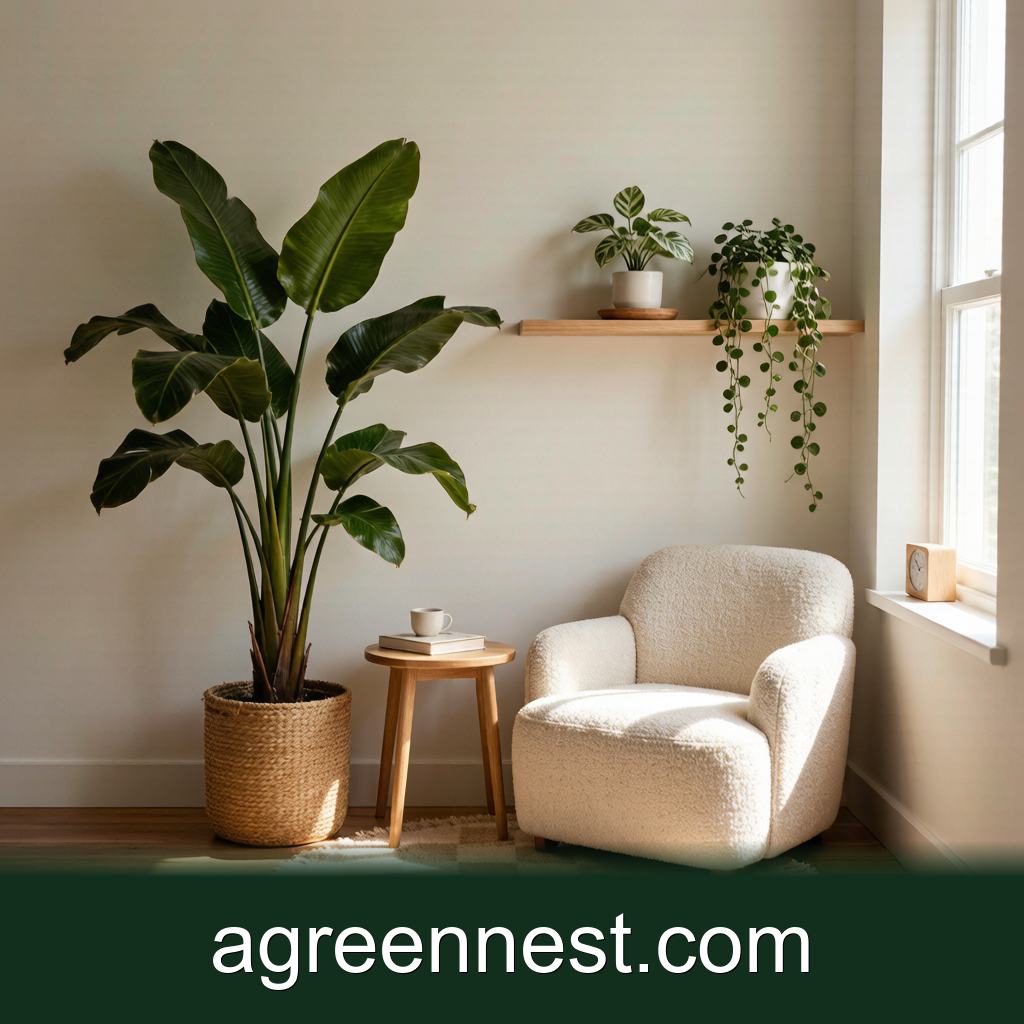
My reading chair sits under a north-facing window, so the corner beside it never gets direct sun. That turned out to be the perfect spot for a small plant cluster, and I spent a winter working out which plants and pots actually made the nook feel calm instead of cluttered.
Start With Three Heights, Not Five
A reading corner reads as intentional when the plants form a clear vertical line. I settled on three levels: a floor plant at roughly 120cm, a shelf plant around 30cm, and a hanging trailer that drops about 60cm. Three is enough to create rhythm without crowding a small chair and side table. If your nook is roomy, you can add a fourth at a different height, but keep an odd count so the eye has a clear anchor rather than a balanced, lifeless row.
The 120cm floor plant needs low light and an upright shape. Sansevieria trifasciata fits this exactly: its sword leaves reach straight up and hold a strong shape even in dim corners. I keep mine in a 25cm black nursery-style pot on a short wooden stool, which lifts the base to about chair-arm height. For the watering rhythm that keeps those leaves firm, our snake plant care guide covers the schedule I follow.
The 30cm Shelf Plant
On the narrow wall shelf above the chair I wanted something with patterned leaves rather than plain green. A Calathea (I grow Calathea orbifolia) sits in a 12cm cream pot and fills the 30cm space with broad, striped foliage. Calatheas are picky about water, so I use filtered water and never let the soil dry fully. They like the same indirect light the nook already has, which is why this corner works for them. Our low-light houseplants list for 2026 lists several Calathea types if you want a different pattern.
The 60cm Trailing Hanger
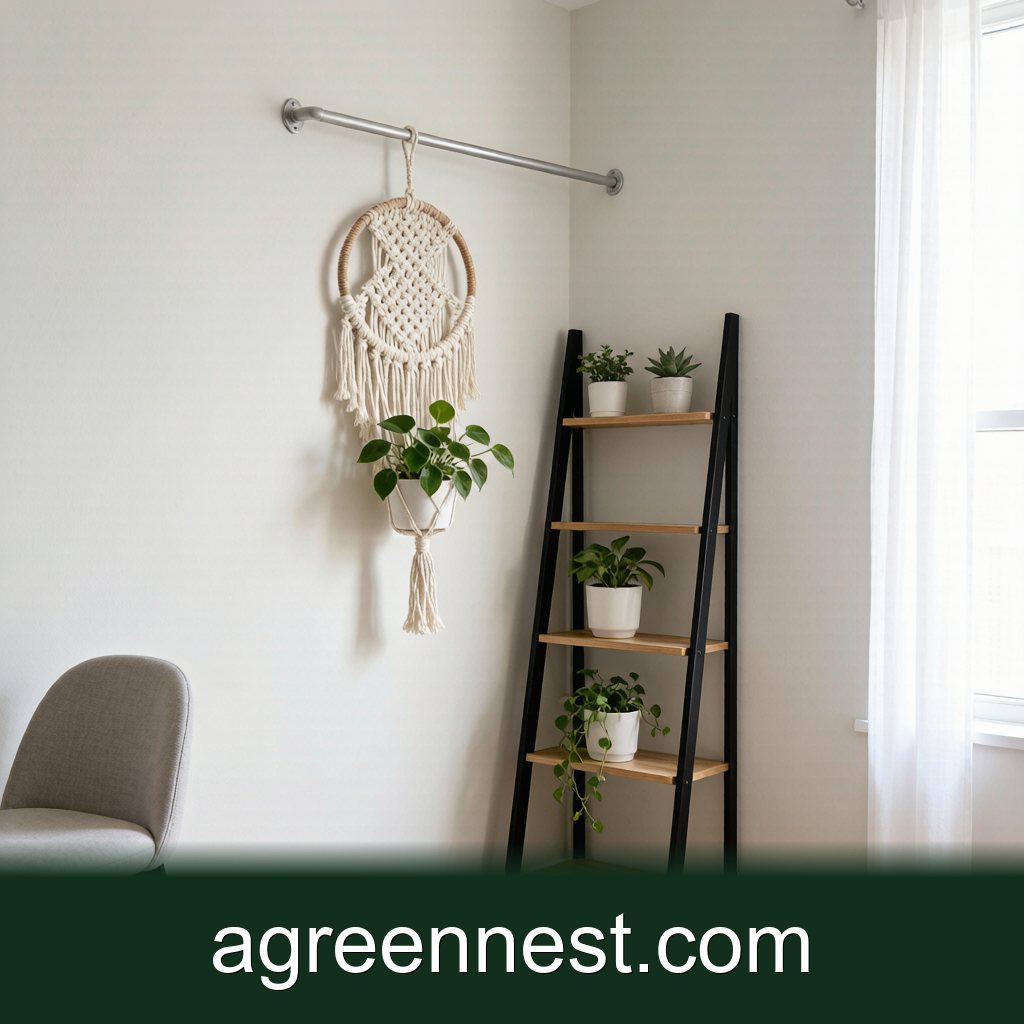
Above the shelf, a macrame hanger holds a trailing plant that falls about 60cm toward the chair back. Epipremnum aureum (golden pothos) is my pick: it shrugs off low light and the variegated leaves catch what little sun comes through. A 15cm terracotta pot keeps the hanging weight manageable and the clay tone ties the cluster together. Pothos is the kind of plant you can train to trail or pinch back for bushiness, and our golden pothos low-care guide explains the pruning I use to keep the length at 60cm.
If you want more hanging options, our trailing plants for shelves rounds up species that behave well in a small hanger.
Keep the Pots to Three Colors
Color cohesion is what makes a cluster look styled rather than random. I used only terracotta, cream, and black across all three pots. The black floor pot anchors the bottom, the cream shelf pot adds lightness at eye level, and the terracotta hanger warms the whole group. Terracotta also breathes, which suits pothos and snake plant because the soil dries a little faster and root rot is less likely. Matching the saucers to the pots, same color and same finish, removes the visual noise that mixed plastics create.
Add a Rug and a Stool
The floor plant looked bare standing alone, so I slid a 90cm by 60cm jute rug under the chair and stool. The rug frames the plant feet and quiets the floor echo in a small room. The stool does double duty: it lifts the snake plant to the right height and holds my tea mug when I read. Pick a stool about 40cm tall so the 25cm pot sits near 65cm, then the plant's leaf tips reach the 120cm line I was after. A second stool in the same wood would work if you later add a second floor plant, but one is enough for a chair-side nook.
Light and Watering in a Real Corner
North light means I water less than the labels suggest. The snake plant gets a full soak only when the top 5cm of soil is bone dry, about every three weeks in winter. The pothos in terracotta dries faster, roughly every ten days. The Calathea sits between. Grouping them by similar thirst, the two clay pots together and the cream glazed pot separate, keeps my watering rounds short. For a deeper read on the ZZ plant, another 120cm-capable low-light floor option, see our ZZ plant care guide. And if you want to build the shelf itself, our plant shelf styling piece has the bracket and spacing details I copied.
Frequently Asked Questions
Q: Which floor plant reaches 120cm in low light?
A:
Sansevieria trifasciata and Zamioculcas zamiifolia both hit around 120cm under north light. The snake plant holds a tighter vertical shape, while the ZZ spreads wider at the base.
Q: Can I use a 60cm trailer that is not pothos?
A:
Yes. Epipremnum aureum is the easiest, but Philodendron hederaceum trails just as well and tolerates the same dim corner. Both are covered in our trailing plants guide.
Q: Why stick to three pot colors?
A:
Three tones, here terracotta, cream, and black, read as a set. More than that and the eye treats each pot as a separate object, which breaks the styled look.
Q: How tall should the stool under the floor plant be?
A:
About 40cm for a 25cm pot gives a combined height near 65cm at the rim, letting tall leaves reach the 120cm target without the pot touching the floor.
Q: Will a jute rug hurt the plant pots?
A:
No. Jute is thin and breathable, so it will not trap moisture under terracotta. Just keep saucers in place so water stays off the fibers.
Q: How often do these three plants need water in a north corner?
A:
Snake plant every three weeks, pothos in terracotta every ten days, Calathea about weekly with filtered water. Adjust by feeling the soil, not the calendar.
A reading-nook plant corner does not need a greenhouse worth of light, just three heights, three pot colors, and a rug to ground them. Start with the snake plant on a stool and build out from there. For more shade-tolerant options, browse the low-light plant list.
Recommended Tools for Plant Styling & Display Care
Free, no-signup helpers matched to this guide.
Free Ebooks to Explore
Downloadable handbooks — no email required.
Free Ebook
The AGreenNest Succulent Care Handbook
The complete, beginner-to-confident guide to growing fat, happy succulents — 10 chapters and a 20-plant directory.
Join the Conversation
Have a tip or a question about Style a Cozy Reading-Nook Plant Corner? Share it below — comments are saved on our server.