 AGreenNest
Plant Care Accessories
Pruning Shears for Succulents: Types and Safe Use
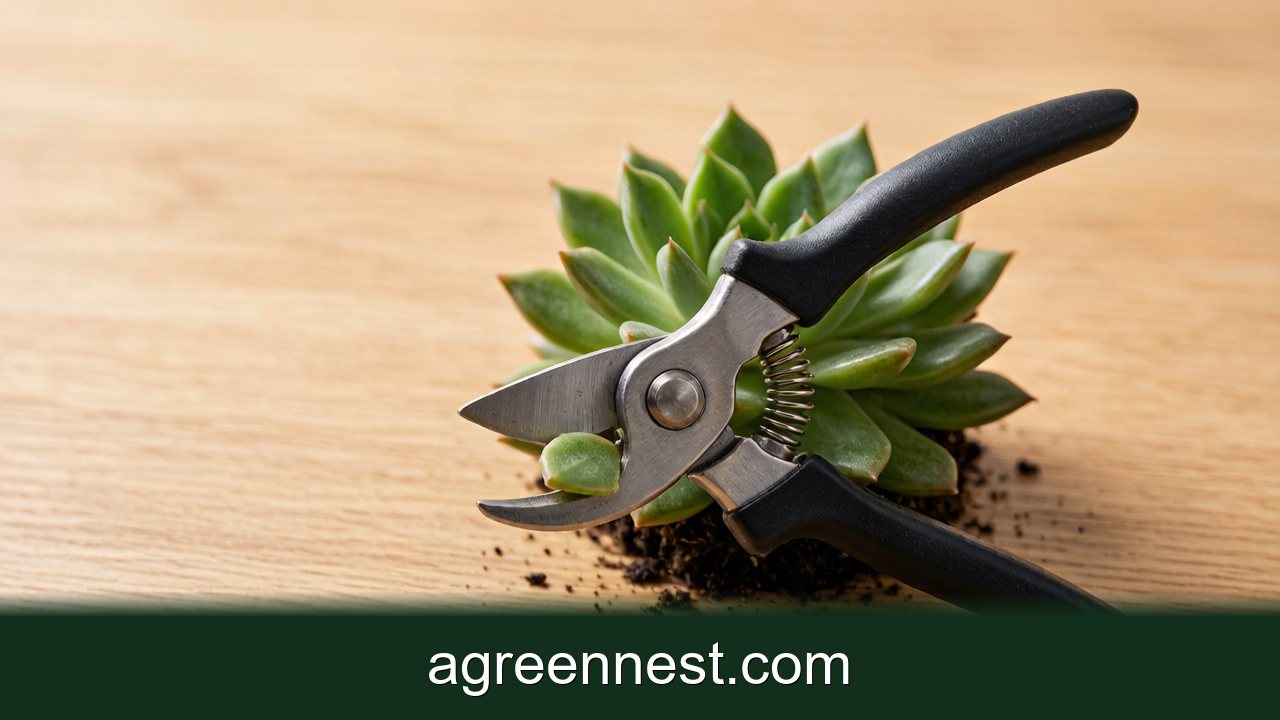
A good pair of pruning shears is the one tool that turns "I'm afraid to cut it" into "that took two seconds." Succulents in particular need clean, decisive cuts — ragged tears invite rot — so the right snip matters.
Here is how to choose shears for succulents and use them without hurting the plant.
Why Regular Scissors Fall Short
Kitchen scissors crush thick succulent tissue and leave a bruised, wet wound that stays open to rot. Dedicated pruning shears (secateurs) have a bypass blade that slices past a counter-blade, leaving a clean cut that calluses fast.
For most houseplant work you want bypass pruners, not anvil-style (which crush). Thin succulent leaves can even be taken with sharp micro-tip snips.
Types to Consider
Micro-tip snips
Small, precise, ideal for removing individual succulent leaves for leaf propagation or trimming a jade's tip. Cheap and easy to control.
Bypass pruning shears (secateurs)
The workhorse. Cuts stems up to roughly ¾ inch (2 cm). Choose a comfortable grip and a lock that stays shut in the drawer.
Floral / bonsai shears
Fine, short blades for detailed work on jade and other woody succulents. Great when precision matters more than reach.
Disinfecting wipes or alcohol
Not a cutter, but essential — wipe blades between plants to stop spreading rot or pests.
What to Cut (and Why)
Succulents reward pruning more than people expect:
- Remove dead or mushy leaves at the base — they trap moisture and start rot.
- Behead a stretched (etiolated) plant and re-root the top; the bottom will sprout pups. This pairs with 3 easy succulent propagation methods.
- Thin crowded rosettes to improve airflow and light to the center.
- Take cuttings for propagation with a single clean snip at a node.
Safe Cutting Steps
- Disinfect the blade with isopropyl alcohol before you start and between plants.
- Cut at an angle just above a node or leaf joint — never tear.
- Let the wound dry (callus) for a day or two before replanting a cutting; this prevents rot at the cut.
- Discard mushy material — do not compost active rot.
- Wipe again after the job.
A clean cut heals in days; a crush wound weeps for weeks. The difference is the tool.
Keeping Shears Sharp and Clean
- Wipe dry after every use — moisture is the enemy of the hinge.
- A light oil on the pivot every month keeps the action smooth.
- Sharpen with a small diamond file when cuts start to crush instead of slice.
- Store locked and dry so the blade stays true.
Common Pruning Mistakes
Cutting with dirty blades
This is how rot jumps from one plant to five. Alcohol between plants takes ten seconds.
Tearing instead of cutting
If you are pulling a leaf off, wiggle it side to side at the base; if it resists, use snips. Torn tissue invites infection.
Over-pruning a stressed plant
A plant already recovering from pests or rot should be trimmed minimally — remove only dead material, not healthy growth.
Frequently Asked Questions
Q: Can I use regular scissors on succulents?
A:
Only for the thinnest leaves, and even then they crush. Bypass snips give a clean cut that heals fast and resists rot.
Q: How do I sterilize shears?
A:
Wipe the blades with 70% isopropyl alcohol before and after, and between plants. It takes seconds and prevents spreading disease.
Q: Should I cut a stretched succulent?
A:
Yes — behead it above the stretched part, let the cut callus, and re-root the top. The base usually pupps. It is the fastest fix for legginess.
Q: My shears are crushing now. What's wrong?
A:
They are dull or the pivot is loose. Sharpen with a diamond file and tighten the pivot; a clean slice should feel effortless.
Q: Do I need different shears for cacti?
A:
For spiny cacti use long-handled tongs and a dedicated cactus knife; standard shears are fine for soft succulents.
A clean cut is a kindness to a succulent — it heals fast and stays rot-free. Pair sharp bypass snips with good step-by-step repotting technique and you have the core of a succulent toolkit. See all of our accessories guides for the rest, and keep our propagation guides handy for the cuttings you will inevitably make.
Recommended Tools for Plant Care Accessories Care
Free, no-signup helpers matched to this guide.
Free Ebooks to Explore
Downloadable handbooks — no email required.
Free Ebook
The AGreenNest Succulent Care Handbook
The complete, beginner-to-confident guide to growing fat, happy succulents — 10 chapters and a 20-plant directory.
Free Ebook
Haworthia & Haworthiopsis Care Handbook
A focused guide to the striped, forgiving Haworthia clan.

Join the Conversation
Have a tip or a question about Pruning Shears for Succulents: Types and Safe Use? Share it below — comments are saved on our server.