 AGreenNest
Succulent Care
Echeveria vs Graptopetalum: Which Rosette Should You Buy?
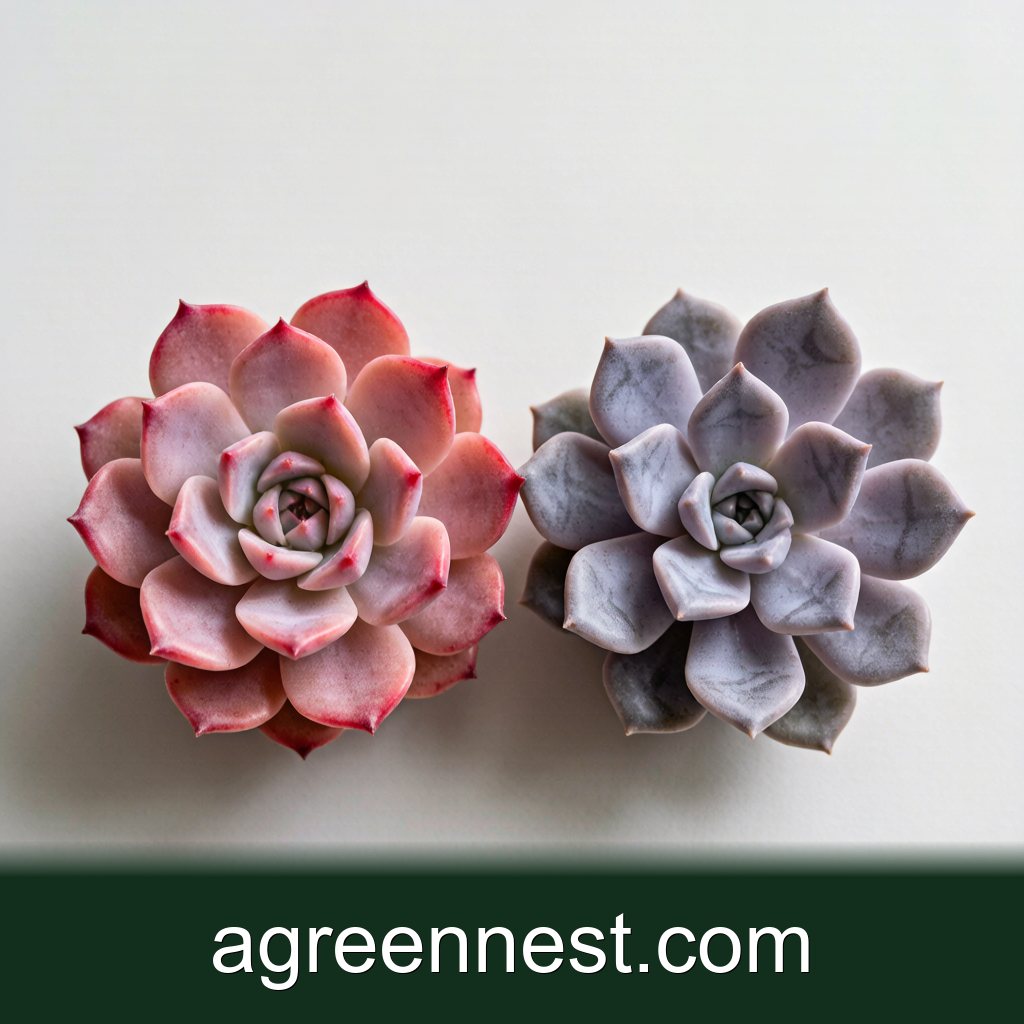
Most of the pink and blue rosettes sold as "Echeveria" at the supermarket are not Echeveria at all. A lot of them are Graptopetalum, a close cousin that looks almost identical in a 6cm pot but behaves differently once it lives on your shelf for a year. I only learned the difference after I killed two "Echeveria" by following Echeveria advice on a plant that wanted something else.
The family mix-up
Echeveria is a large genus from Mexico and parts of South America, known for tight, symmetrical rosettes and waxy leaves. Graptopetalum is a smaller genus, also Mexican, with looser rosettes and a powdery farina that gives many species a lavender or pink cast. They hybridise freely, which is why the Graptoveria crosses you also see in shops blur the lines further and the labels lie.
The confusion matters because the two want slightly different conditions. Treat a Graptopetalum like a sun-loving Echeveria and you can scorch it. Treat an Echeveria like a shade Graptopetalum and it stretches and loses its shape. Our Echeveria care guide assumes a true Echeveria, so if your plant is the paler, looser one, read on.
Side by side: what you actually see
Hold the two next to each other and the differences show up fast once you know them.
- Leaf shape: Echeveria leaves are broad, rounded, and cupped, like a cabbage rose. Graptopetalum leaves are thinner, more pointed, and flatter.
- Color: Echeveria runs pink, red-edged, and green. Graptopetalum runs lavender, gray-pink, and sometimes near white.
- Rosette tightness: Echeveria holds a drum-tight ball. Graptopetalum spreads its leaves like an open hand.
- Farina: Both can have a dusty coating, but Graptopetalum's is heavier and rubs off to show plain green underneath.
If your plant is the pale lavender one that looks like it was dipped in flour, you probably own a Graptopetalum, most likely Graptopetalum paraguayense (ghost plant) or a Graptoveria.
Light: one tolerates more shade
This is the biggest practical gap. Echeveria wants strong light, 4 to 6 hours of direct sun or 12 to 14 hours under a bright grow light, or the rosette opens and the color fades. Graptopetalum takes the same light but also tolerates more shade, doing fine with 3 to 4 hours of gentle morning sun or bright indirect light for most of the day.
I keep my ghost plant 60cm from an east window and it stays compact and blue. The Echeveria on the same shelf needs the south sill to keep its red tips. If your only bright spot is a north window, Graptopetalum is the safer bet. A moisture and light check helps you read the room before you commit a spot.
Water and soil: nearly identical
Both store water in their leaves and both rot from the base if the mix stays wet. Water when the bottom leaves just start to soften, about every 7 to 10 days in summer and every 14 to 21 days in winter for a small pot. Soak the soil, let it drain, and do not let the saucer hold water.
Use a gritty mix with at least 50 percent inorganic material, pumice or perlite, so water clears the pot in a couple of seconds. Our best soil for succulents guide gives a mix that works for both, and the gritty soil recipe is the cheaper version if you buy in bulk.
Color: why Graptopetalum goes lavender
Graptopetalum gets its signature color from a waxy coating plus cool nights. Drop the night temperature to 10 to 15°C (50 to 59°F) and the leaves flush pink and purple within two weeks. Warm, still air pushes them back to gray-green. Echeveria also colors up with cool nights and bright sun, but it shows red and orange edges rather than full lavender.
Keep in mind that a plant shipped from a greenhouse often arrives deeply colored and then fades in your living room. That is normal, not a problem, and the color returns with seasonal light. The common succulent myths piece covers why "more sun always equals more color" is only half true.
Propagation: both easy, different speed
Both drop leaves that root, but Graptopetalum is the faster teacher. A Graptopetalum leaf laid on dry soil sprouts roots and a tiny rosette in 3 to 4 weeks. Echeveria leaves take 4 to 6 weeks and fail more often if the air is humid. Our leaf propagation guide walks through the method that works for both.
Graptopetalum also sends out long bare stems as it ages, which you can chop and re-root. Echeveria stays low and compact and is better started from offsets at the base. Either way, a shallow pot with a real drainage hole is what the new roots want.
Verdict: which one for your shelf
Pick Echeveria if you have a bright south or west window and want the tightest, most colorful rosette, and you are happy to chase the light. Pick Graptopetalum if your light is weaker, you want the ghostly lavender look, and you would rather not lose a plant to a dull winter windowsill. For most indoor shelves with average light, Graptopetalum is the safer choice for a normal shelf.
If you are building a mixed dish, the two sit well together because their water needs match. Just give the Echeveria the front of the shelf where the light is strongest.
Frequently Asked Questions
Q: Why does my "Echeveria" turn plain green in summer?
A:
If it is actually a Graptopetalum, warm still air and weaker light wash the lavender out. Cool nights around 12°C and more sun bring the color back over a couple of weeks.
Q: Can Graptopetalum live outdoors through winter?
A:
Graptopetalum paraguayense tolerates brief dips to about -3°C if the soil is dry, but most shop plants are tender. Keep it above 5°C and dry, or bring it in before the first frost.
Q: Which is the better first succulent for a beginner?
A:
Graptopetalum. It accepts lower light and recovers from a missed watering better than a sun-hungry Echeveria, which stretches and looks unhappy fast in a dim room.
Q: Do both want the same potting mix?
A:
Yes. A gritty 50 percent inorganic mix suits them equally. The difference is light, not soil, so do not overthink the recipe.
Q: Why are my Graptopetalum leaves going flat and dropping?
A:
Usually too little light plus too much water. The stem stretches, leaves splay, then drop. Move it to brighter light and let the soil dry fully before the next soak.
The label on the pot is the least reliable part of buying a succulent, so learn the leaf shape and you will never wonder again. Both are rewarding, but Graptopetalum earns its spot on a normal shelf while Echeveria wants the sunny sill. Start with the right soil and pot and the rest is just light and patience.
Recommended Tools for Succulent Care
Free, no-signup helpers matched to this guide.
Free Ebooks to Explore
Downloadable handbooks — no email required.
Free Ebook
Sedum, Graptopetalum & Graptosedum Care Handbook
Easy trailing and rosy succulents for shelves and wreaths.
Free Ebook
The AGreenNest Succulent Care Handbook
The complete, beginner-to-confident guide to growing fat, happy succulents — 10 chapters and a 20-plant directory.
Join the Conversation
Have a tip or a question about Echeveria vs Graptopetalum: Which Rosette Should You Buy?? Share it below — comments are saved on our server.