 AGreenNest
DIY Plant Projects
Make a Moss Pole for Climbing Plants
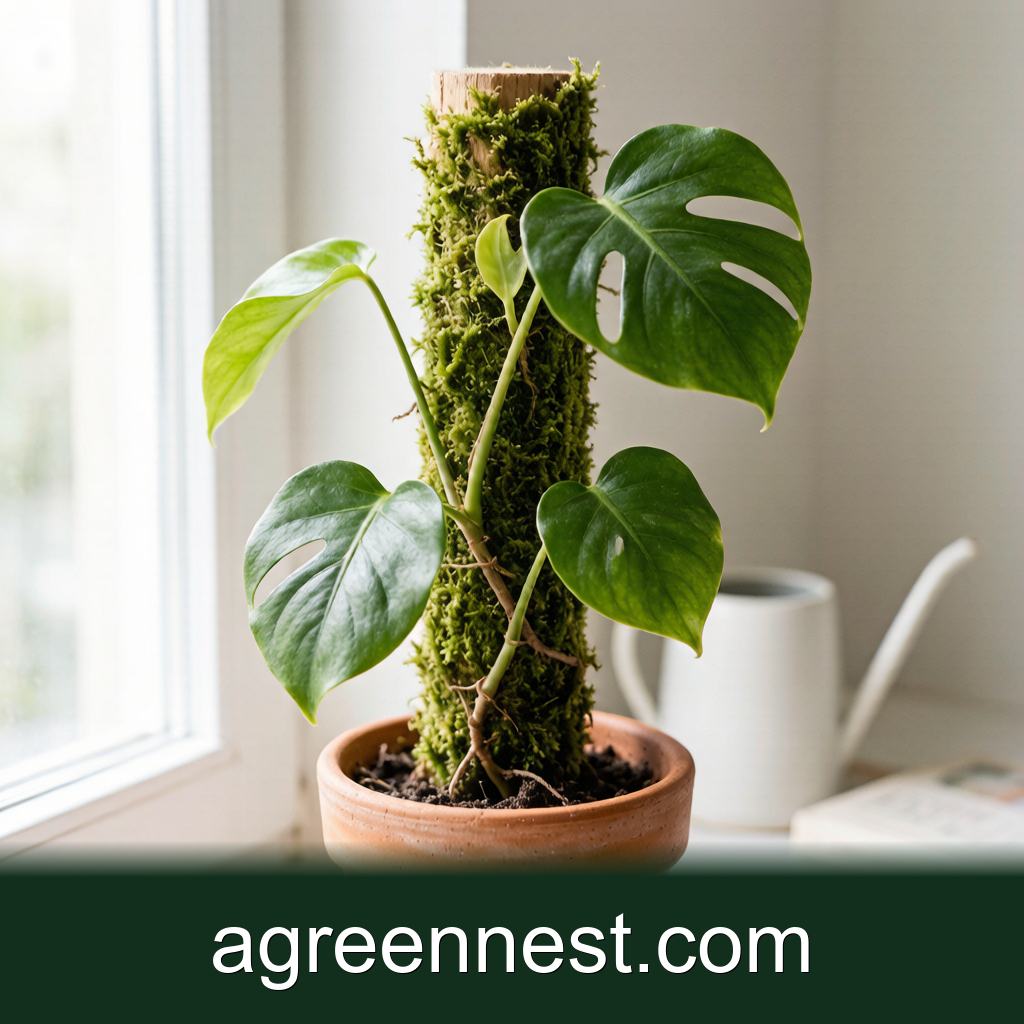
A moss pole is a column of sphagnum moss wrapped around a core that climbing aroids grip as they grow. Build one from a 60 to 90cm stake, soaked moss, and zip ties, then tie the main stem to it every 8 to 10cm. Mist the pole daily so aerial roots stay active and the plant climbs.
The first Monstera deliciosa I owned spent a year flopped across a bookshelf because I never gave it anything to climb. The leaves stayed small and the stems ran sideways. The fix was not a bigger pot or more fertilizer. It was a stick with moss on it. Climbing aroids are built to scale trees, and a moss pole gives them that vertical path, which is why the leaves get bigger and the gaps between them shrink.
What you need
Keep the list short. You can buy all of it in one hardware and garden run.
- One stake as the core: a 60 to 90cm length of 2 to 3cm diameter PVC pipe, bamboo cane, or a wooden dowel. Use 45cm for a small pot.
- Sphagnum moss, about 40 to 60g dry, enough to pack a 4 to 5cm thick sleeve around the core.
- Optional coco coir fabric or an old pair of tights to hold the moss in.
- Zip ties, 5 to 8 of them, and a pair of scissors.
- Soft plant ties or strips of old T-shirt for the stem.
- A bowl of water to soak the moss.
Total cost runs 5 to 10 dollars if you already own scissors, and the pole lasts the life of the plant.
Step 1: Soak and pack the moss
Submerge the sphagnum in water for 10 minutes, then squeeze it out so it is damp, not dripping. Wind it around the core in a tight sausage, 4 to 5cm thick, from 5cm above the bottom to 5cm below the top. If it keeps falling apart, wrap the coir fabric or a leg of tights around the outside and that holds the shape. A loose, dry pole sheds moss every time you water, so pack it firm.
Step 2: Tie the sleeve to the core
Slide a zip tie around the moss and core every 8 to 10cm and pull it snug. Three to four ties on a 60cm pole is enough. Trim the tails flush so they do not scratch your hand later. The ties do the structural work; the moss is just the grip surface the roots want, which is the part a bare bamboo cane cannot give you.
Step 3: Plant the pole in the pot
Push the bare bottom 5cm of the core into the soil at the back of the pot, beside the plant, and firm the mix around it so it stands vertical. For a top-heavy plant, lean the core against the pot rim or brace it with the rootball. The pole should sit 2 to 3cm behind the main stem, not through the centre of the crown, or you will split new growth as it rises.
Step 4: Attach the stem
Take the longest stem and lay it against the pole, then tie it with a soft loop every 8 to 10cm. Do not cinch tight. The tie should hold the stem to the moss without biting the tissue, because a cut stem rots at the wound. On a Monstera or Philodendron hederaceum the nodes sit close together, so two ties low down is often enough to start. New stems you train later just get added to the same pole.
Step 5: Keep the pole damp
This is the step people skip, and it is the one that decides if the plant actually climbs. Mist the moss every day, or pour a cup of water down the top of the pole twice a week so it wicks down. Dry moss does nothing, and the aerial roots just hang in the air. A damp pole pulls the roots in, and that is what makes the leaf size jump on the next three or four nodes. In a warm room a grow light on a timer pairs with the pole to keep growth steady through winter.
What Plants Actually Need a Moss Pole?
The climbers do. Monstera deliciosa, Monstera adansonii, Philodendron hederaceum, Epipremnum aureum, and Rhaphidophora tetrasperma all grip with aerial roots and respond with bigger leaves. A Pothos will climb a pole happily, though the difference is less dramatic than on a true Monstera. Skip the pole for rosette plants, succulents, and trailers you want spilling, because they have nothing to gain and just get in the way.
If you are choosing a plant to go on the pole, the climbing low-light options and the pothos versus philodendron comparison both point to good candidates that take to a support fast.
How Do I Move a Plant to a Bigger Pole Later?
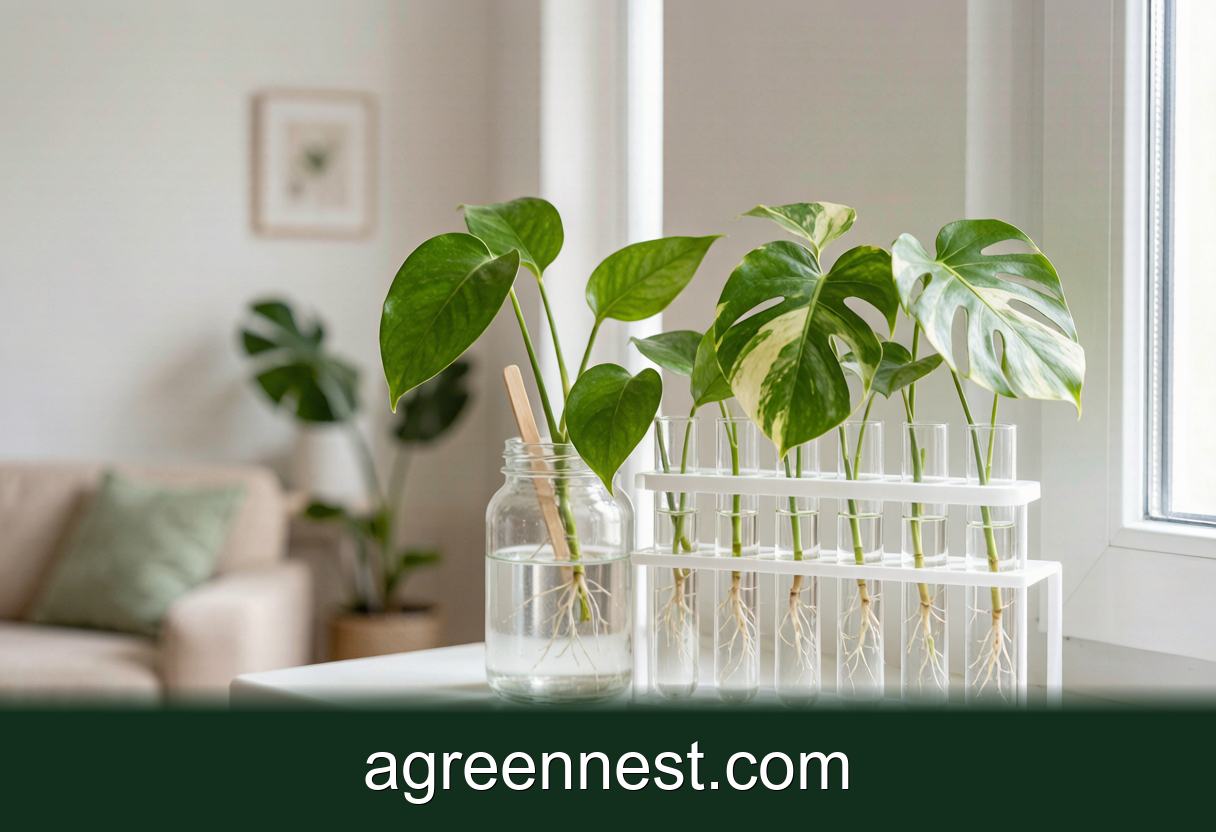
Let the plant tell you. When the stem reaches the top of the pole, add a second core above the first and extend the moss, then keep tying upward. Do not pull the old ties off unless the stem has fused to the moss, which can take a year. For most home plants one 90cm pole is the end of the story, and the propagation station build is the natural next project for the cuttings you trim while training.
Frequently Asked Questions
Can I use a plain bamboo cane instead of moss?
You can, and many people do, but the plant will not grip it the way it grips moss. A cane guides the stem; a moss pole grows roots into it. If you want the bigger-leaf response, moss is the part that earns its keep.
How often do I really need to mist the pole?
Daily is ideal, but twice-weekly deep watering of the moss gets the same result for most homes. The test is touch: if the moss feels dry past the surface, the roots are not interested yet.
My pole grew mould on the moss. Is that a problem?
Surface algae or a little fuzz is normal on a damp pole and harmless to the plant. If it smells sour or the stem at the tie point goes soft, the moss is too wet and you should let it dry between waters.
Will the zip ties cut into the plant?
Only if they cross a stem. Keep ties on the core and the moss, and use soft ties for the stem itself. The zip ties are structural, not plant ties, so they should never touch living tissue.
Can I make a pole for a hanging basket plant?
Yes, a short 30 to 45cm pole in a hanging pot lets a Pothos or Philodendron climb upward instead of just trailing, which fills the basket with upright growth. The same build works, just scaled down.
A moss pole turns a flopping climber into a plant that grows the way it is built to, with leaves that get visibly larger as it rises. Thirty minutes of packing moss onto a stake and a daily mist is all it takes, and the payoff shows up within a few nodes. For the surrounding space, the wall planter build covers the same do-it-yourself instinct on a bigger scale.
Recommended Tools for DIY Plant Projects Care
Free, no-signup helpers matched to this guide.
Free Ebooks to Explore
Downloadable handbooks — no email required.
Free Ebook
The AGreenNest Succulent Care Handbook
The complete, beginner-to-confident guide to growing fat, happy succulents — 10 chapters and a 20-plant directory.
Sources & further reading
GreenNest authors research and write every guide independently. The external links below are reputable references we recommend for deeper reading — they are not the sources we copied from.
- Michigan State University — CANR — Michigan State University
- NC State Extension — Plant Toolbox — NC State Extension
- University of Minnesota Extension — U Minnesota Extension
Join the Conversation
Have a tip or a question about Make a Moss Pole for Climbing Plants? Share it below — comments are saved on our server.