 AGreenNest
Plant Care Accessories
Best Grow Lights for 2026 (and How to Pick)
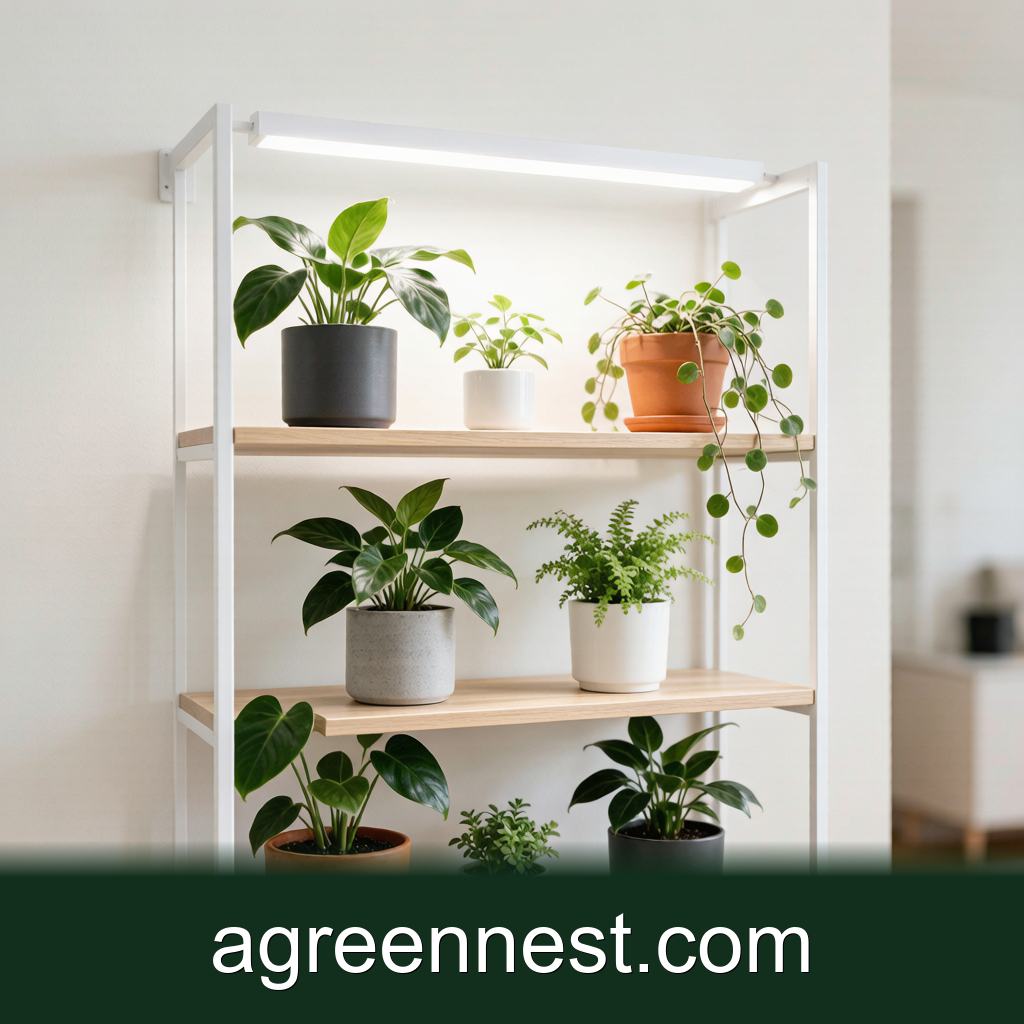
Full-spectrum LED grow lights are the safe pick for 2026: they run cool, draw about 20 to 40 watts for a shelf, and cost $15 to $120. Choose a bar or panel that covers the whole plant row, not just one pot, set it 15 to 30cm above the leaves, and run it 12 to 14 hours a day.
The corner of my living room gets two hours of weak winter sun, and my pothos started reaching for the desk lamp instead of the window. A $25 LED bar fixed it in a week. Grow lights are no longer a greenhouse luxury. For indoor plant keepers in dim flats, they are the difference between a plant that survives and one that actually grows.
Why bother with a grow light?
A plant on a north sill or three metres from a window is living on scraps. It photosynthesises, but slowly, so new leaves come smaller and the stem stretches toward any light it can find. A grow light closes that gap. You do not need a sunny country house to keep a calathea happy; you need the right bulb overhead for part of the day.
Our low-light plant shortlist covers species that cope with shade, but even those stall without some brightness in a dark room. A light is the cheapest way to add it.
What kind of light do plants need?
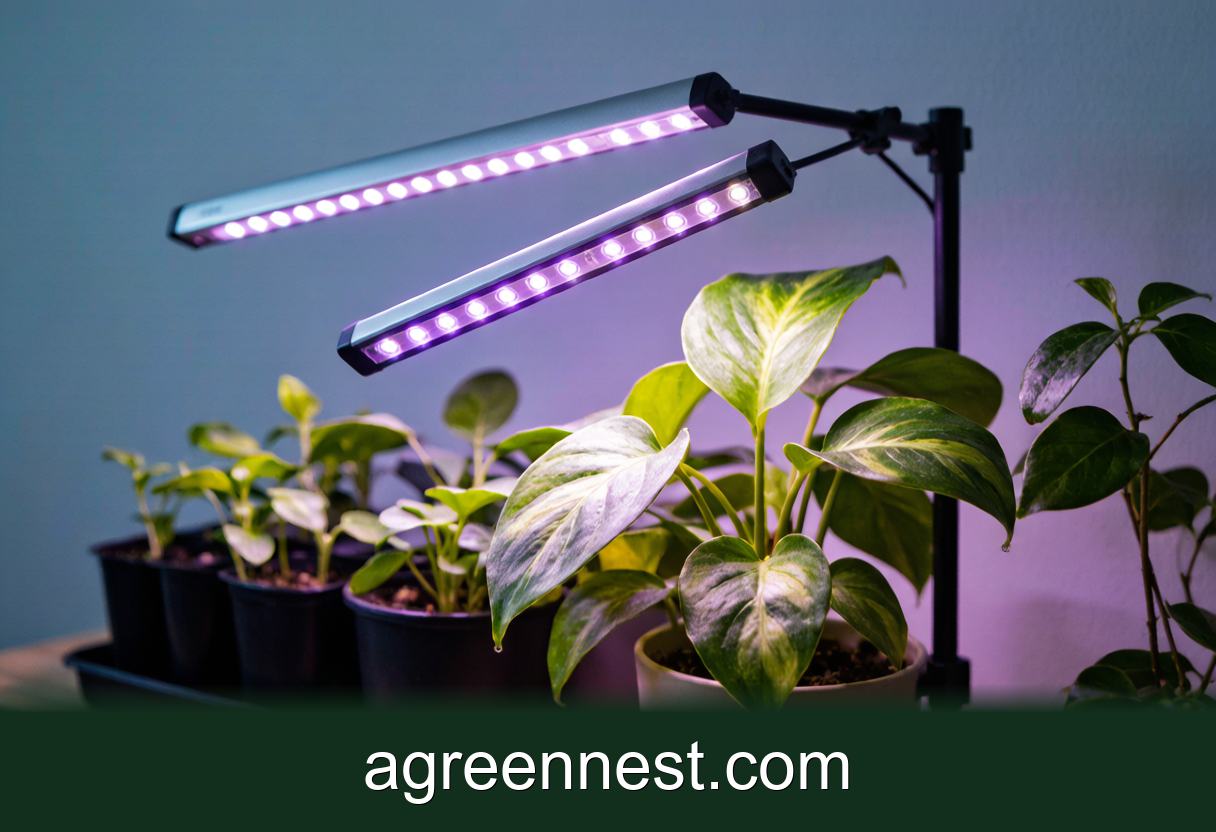
Plants use the blue and red ends of the spectrum most. Blue drives leaf growth, red drives stems and flowering. A "full-spectrum" white LED gives a usable spread of both, which is why it is the default pick now. You do not need a purple disco light; the white panels grow plants just as well and look less odd in a living room.
Skip hardware-store bulbs sold as "daylight" for reading. They are often 4000K, too warm and too dim for a plant two feet away. Look for a label that says "grow light" or lists a PPFD number, and pick 5000K to 6500K white for leafy greens.
Which grow light should I buy in 2026?
Start with the space, not the brand. A single desk plant needs one clip bar. A whole shelf of herbs needs a panel that spans the row. Match the light to the footprint, because a bright spot over one pot does nothing for the plant two pots down.
LED has won. It runs cool enough to touch, pulls 20 to 40 watts across a shelf, and lasts years. The old fluorescent vs LED question is settled for most homes: LEDs cost more up front and save it back in power and bulb life.
Best grow lights by space (2026 shortlist)
- One pot on a desk: a clamp LED bar, 10 to 15 watts, $15 to $30. Clip it to the shelf edge and aim down.
- A bookshelf or seed shelf: a 30 to 60cm panel, 20 to 40 watts, $35 to $70, with a timer built in.
- A cabinet or terrarium: a stick-on strip, 5 to 10 watts, $12 to $25, taped to the back panel.
- A full grow rack: two 60cm bars per shelf on a wire rack, 40 to 80 watts total, $90 to $160.
- Floor specimens: a free-standing gooseneck lamp, 15 watts, $25 to $45, that you swing over a corner.
Avoid no-name panels that list only "watts" with no spectrum. A real grow light states the colour temperature and the coverage area in square centimetres.
How far should the light sit from the leaves?
This is the step most people get wrong. Too close and the tips bleach white; too far and the plant stretches. For a 20 to 40 watt LED, 15 to 30cm above the top leaf is the sweet spot. Seedlings want it closer, about 10cm, because they are weak. Mature leafy plants are fine at 30cm.
Raise the light as the plant grows. I check the gap every two weeks and lift the bar a notch when the tallest leaf gets within 10cm. A grow-light timer handles the on and off, so you are not flipping a switch at 6am.
Do grow lights raise my power bill much?
Barely. A 30 watt panel running 14 hours a day uses about 0.42 kilowatt hours, which is a few cents. Running four shelves of LEDs for a month costs less than a coffee. The real expense is the unit itself, and a good one lasts five years or more.
One habit beats any efficient bulb: turn the light off at night. Plants rest in darkness, and a light that runs 24 hours confuses their cycle and wastes power. Twelve to fourteen hours on is plenty for most species.
Frequently Asked Questions
Can I use a normal LED bulb from the hardware shop?
Only if it is bright and white, around 6500K, and close to the plant, within 15cm. Regular room bulbs are usually too dim and too warm to grow anything but the toughest ZZ. A labelled grow bar is the safer bet.
My succulent grew tall and pale under the light. Why?
The light is too far or too weak, so the plant stretches for it. Lower the bar to 15cm and give 14 hours a day. Our succulent care guide explains the stretch and how to prune it back.
How do I know if the light is strong enough?
Watch new growth. Compact leaves spaced closely mean it is right. Long gaps between leaves and a lean to one side mean more light is needed. A phone lux app gives a rough read if you want numbers.
Should the light be on during the day or at night?
During the day, on a timer, so the plant keeps a normal rhythm. Night light disturbs its rest and can slow growth. Match it to your room's weak daylight hours.
Will a grow light hurt my eyes or furniture?
Full-spectrum white LEDs are soft, not the old purple kind. They are safe to sit near, though direct stare into any bright light is unwise. They give off little heat, so books and paint are fine.
Pick a full-spectrum LED sized to the row of plants you actually have, hang it 15 to 30cm above the leaves, and run it on a timer for 12 to 14 hours. The right grow light setup turns a dim corner into a spot where calatheas and herbs grow instead of merely hanging on.
Recommended Tools for Plant Care Accessories Care
Free, no-signup helpers matched to this guide.
Free Ebooks to Explore
Downloadable handbooks — no email required.
Free Ebook
The AGreenNest Succulent Care Handbook
The complete, beginner-to-confident guide to growing fat, happy succulents — 10 chapters and a 20-plant directory.
Free Ebook
Haworthia & Haworthiopsis Care Handbook
A focused guide to the striped, forgiving Haworthia clan.
Join the Conversation
Have a tip or a question about Best Grow Lights for 2026 (and How to Pick)? Share it below — comments are saved on our server.