 AGreenNest
DIY Plant Projects
Mount a Staghorn Fern on a Wood Board
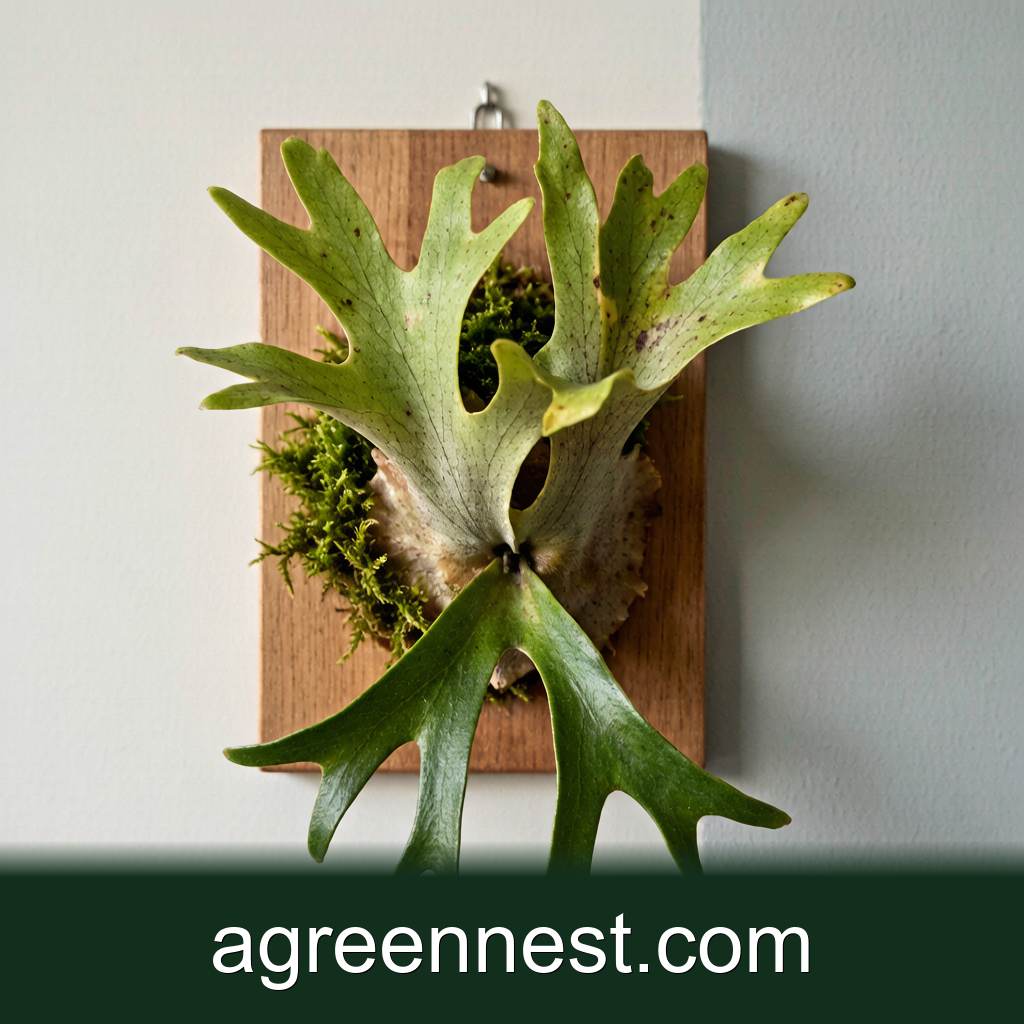
The first time I saw a Platycerium bolted to a slab of bark, I assumed it was glued down and doomed. It was neither, and mounting one myself became the most satisfying wall project I have done with a plant. A staghorn fern grows from a central crown with two frond types, and a board lets both hang free the way they do on a tree trunk.
Why Mount Instead of Pot
In a pot, a staghorn fern sits in mix it never chose and often rots at the base. Mounting copies its native habit: the round basal fronds press against rough wood and grab moisture from the air, while the antler fronds arch outward. The mount also reads as sculpture, not houseplant. A mounted fern draws the eye upward and frees the sill for smaller pots. If your home runs humid, the fern joins the best plants for bathroom humidity as a showpiece on the wall.
Materials You Will Need
- A Platycerium specimen, small to medium, with at least two antler fronds
- A wood board, 20-30cm tall and 15-20cm wide, untreated cedar or oak
- Long-fiber sphagnum moss, one handful per mount
- Monofilament fishing line, 20-30lb test, or nylon string
- A shallow basin large enough to submerge the board
- A hook, picture wire, or two screws for hanging
- Scissors and a pencil
Mounting the Fern, Step by Step
- Soak the sphagnum moss in room-temperature water for 10 minutes, then squeeze out the excess. It should feel like a wrung-out sponge, damp but not dripping.
- Pick your board and mark a hang point 3-4cm from the top edge on the back. This keeps the mount level once it carries a wet fern.
- Pile a 2-3cm pad of moss on the board where the fern crown will sit.
- Set the fern on the pad with its basal fronds flat against the wood. The crown, where fronds meet, must stay above the moss, not buried in it.
- Wrap monofilament around the board and crown in a figure-eight, crossing the front and back, and pull it snug. Tie off at the back with three half knots. The line should hold the fern without cutting the fronds.
- Tuck a little more moss around the sides so the root ball stays covered, then shake the board gently. If nothing shifts, the mount is secure.
I skipped a commercial mount bracket here and used line and moss alone. The fern cares nothing for the hardware, only for steady moisture at its roots.
Hanging and Light Placement
Hang the board where it gets bright indirect light for most of the day. An east or north window works well. Keep it out of direct midday sun, which scorches the fronds within hours. If your brightest spot is a south window, set the mount 60-90cm back from the glass or filter the light with a sheer curtain. The fern shares the calm light needs of the best low-light houseplants for 2026, though it still wants more brightness than a true shade plant.
The Weekly Soak Routine
Once a week, carry the whole board to a basin and submerge it for 10 minutes. The moss and root ball drink through the back, the way rain would hit a tree. Lift it out and let it drip-dry for 15-20 minutes before rehanging, so water does not streak the wall. In winter, cut back to every 10-14 days as growth slows.
Mist the antler fronds every 2-3 days between soaks if your air is dry. This is the one job a basin soak does not cover, since misting wets the leaves, not the roots. A mounted fern in a dry room drinks through its fronds as much as its moss, so the mist matters in winter when the heat runs. Our notes on watering indoor plants correctly explain why leaf and root watering are different jobs, and the mister versus humidifier piece helps you pick a tool.
Troubleshooting Your Mount
Brown tips on the antler fronds usually mean dry air, not dry roots. Increase misting before you soak more often. Yellowing basal fronds signal rot from a buried crown, so lift the moss and check that the center stays open. If the line cuts into a frond after a growth spurt, loosen it and rewrap. A mount that sheds moss onto the floor needs a tighter figure-eight or a second pass of line.
When the fern outgrows the board, move it to a larger slab rather than a pot. The golden pothos low-care guide covers an easier trailing neighbor if you want something for the shelf below the mount.
Frequently Asked Questions
Q: Can I use a potting mix instead of sphagnum?
A:
No. Mix stays wet and rots the crown. Long-fiber sphagnum drains fast and holds just enough moisture for the roots.
Q: How long does the fishing line last outdoors?
A:
UV breaks monofilament within a season. Indoors it holds for years, but check the knots each time you soak.
Q: My basal fronds turned papery and brown. Is that normal?
A:
Older basal fronds dry to a protective shell and stay on the plant. Soft brown at the crown is rot, which is not normal.
Q: Can I mount a very small *Platycerium* pup?
A:
Wait until it has two antler fronds and a visible crown. A tiny pup lacks the root mass to hold the board.
Q: Should I fertilize the mount?
A:
Yes, lightly. Add a quarter-strength liquid feed to the soak once a month in spring and summer, never in winter.
Q: What wood is safe for the board?
A:
Untreated cedar, oak, or cork bark. Avoid pressure-treated or painted wood, which leaches chemicals into the moss.
Mounting a staghorn fern turns a flat wall into a living relief, and the weekly soak becomes a small ritual rather than a chore. Give it bright indirect light and a board it can grip, and it will reward you for years. For an easier trailing plant to pair below it, see the golden pothos care guide.
Recommended Tools for DIY Plant Projects Care
Free, no-signup helpers matched to this guide.
Free Ebooks to Explore
Downloadable handbooks — no email required.
Free Ebook
The AGreenNest Succulent Care Handbook
The complete, beginner-to-confident guide to growing fat, happy succulents — 10 chapters and a 20-plant directory.
Free Ebook
Haworthia & Haworthiopsis Care Handbook
A focused guide to the striped, forgiving Haworthia clan.


Join the Conversation
Have a tip or a question about Mount a Staghorn Fern on a Wood Board? Share it below — comments are saved on our server.