 AGreenNest
DIY Plant Projects
How to Build a Desert Succulent Dish Garden
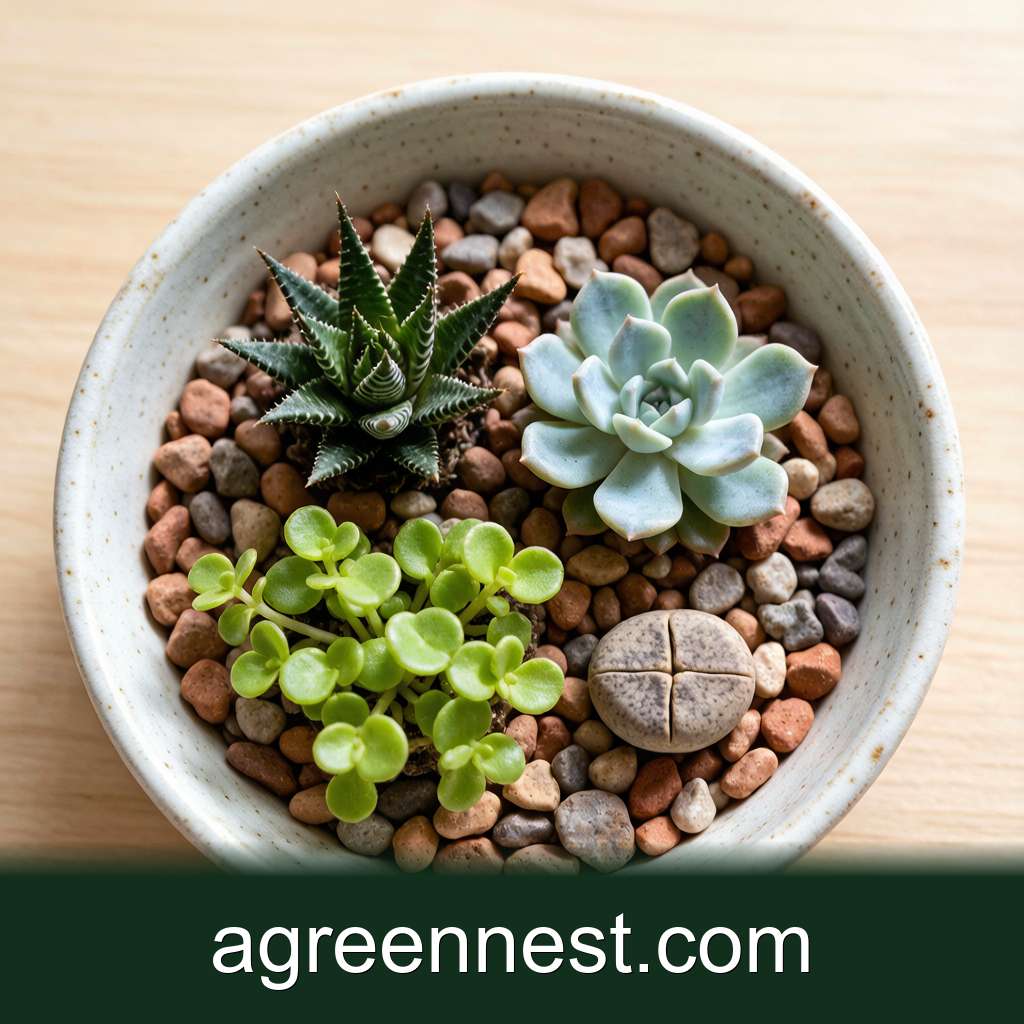
A wide, shallow bowl with no drainage hole makes a fine stage for a small desert arrangement, provided you stack the layers a pot would normally handle for you. The trick is mimicking fast-draining ground so the roots never sit in wet soil. I have killed more than one succulent in a sealed container before I learned to build from the bottom up, and the method below is the one I now trust.
Why a No-Drainage Bowl Can Work
Succulents fail in sealed bowls for one reason: trapped water around the roots. In a garden bed or a drilled pot, excess water drains away. In a solid bowl it has nowhere to go, so you have to engineer that escape path with materials. A thin base of horticultural charcoal keeps the tiny air pockets from souring, and a deep top layer of grit lets any moisture fall through to the bottom rather than clinging to the roots. Choose gritty, mineral soil over bagged potting mix, and read our guide on the best soil for succulents before you shop. The plants you pick matter just as much as the bowl. Glazed ceramic and glass hold the grit without weeping, while unglazed clay would pull moisture from the layers and dry the roots too fast. Pick a bowl you can lift with one hand, since a heavy one makes the three-day wait before the first water awkward to manage.
What You Will Need
- A shallow, wide ceramic or glazed bowl, 20-30cm across and 6-8cm deep, with no drainage hole
- Horticultural charcoal, enough to cover the base 1-2cm deep
- Cactus and succulent grit mix, or a homemade blend from our gritty soil recipe, about 4-5cm deep
- Three small succulents: a Haworthia, a dwarf Echeveria, and a Lithops
- Decorative top dressing, such as 3-5mm pea gravel or crushed granite
- A small soft brush and a narrow watering can or syringe
Layering the Bowl, Step by Step
- Wipe the bowl clean and dry it. A dry base keeps the charcoal from clumping.
- Spread horticultural charcoal across the bottom to a depth of 1-2cm. Tap the bowl so it settles flat.
- Add your cactus grit mix on top of the charcoal until the layer reaches 4-5cm. Do not pack it down. Loose grit drains faster than firm soil.
- With your fingers or a small spoon, press three shallow wells into the grit where each plant will sit. Keep the wells at least 5cm apart so the rosettes have room.
- Set the plants in, firm the grit gently around each root ball, and check that the soil line sits slightly below the bowl rim.
- Top-dress with a 1cm blanket of pebbles. This hides the soil, slows evaporation, and stops splash-back when you water.
Near this step I keep a few spare unglazed terracotta pots on hand for any offcuts, though the bowl itself stays glazed to hold the grit. If a plant outgrows the arrangement, move it to its own pot rather than crowding the bowl.
Choosing and Placing Your Three Plants
The Haworthia (think Haworthia cooperi or Haworthia truncata) stays under 8cm and tolerates the lower light of a shelf, so I place it at the back. A small Echeveria, such as Echeveria elegans, gives the bowl a rosette centerpiece and wants the brightest spot you can offer. The Lithops, a pair of living stones, sits at the front where you can watch its split. For the care details on each, see our Haworthia care guide, the Echeveria care guide, and the living stones care guide. These three share a dislike of overwatering, which is exactly why the layered bowl suits them.
Watering and Long-Term Care
Wait three full days after planting before the first watering. This lets any damaged roots callus over so they do not rot. Then give a light drink: tilt the bowl and add roughly 50-80ml of water around the grit, not over the leaves. After that, water only every 2-3 weeks, and stretch it to every 3-4 weeks in winter when the plants rest.
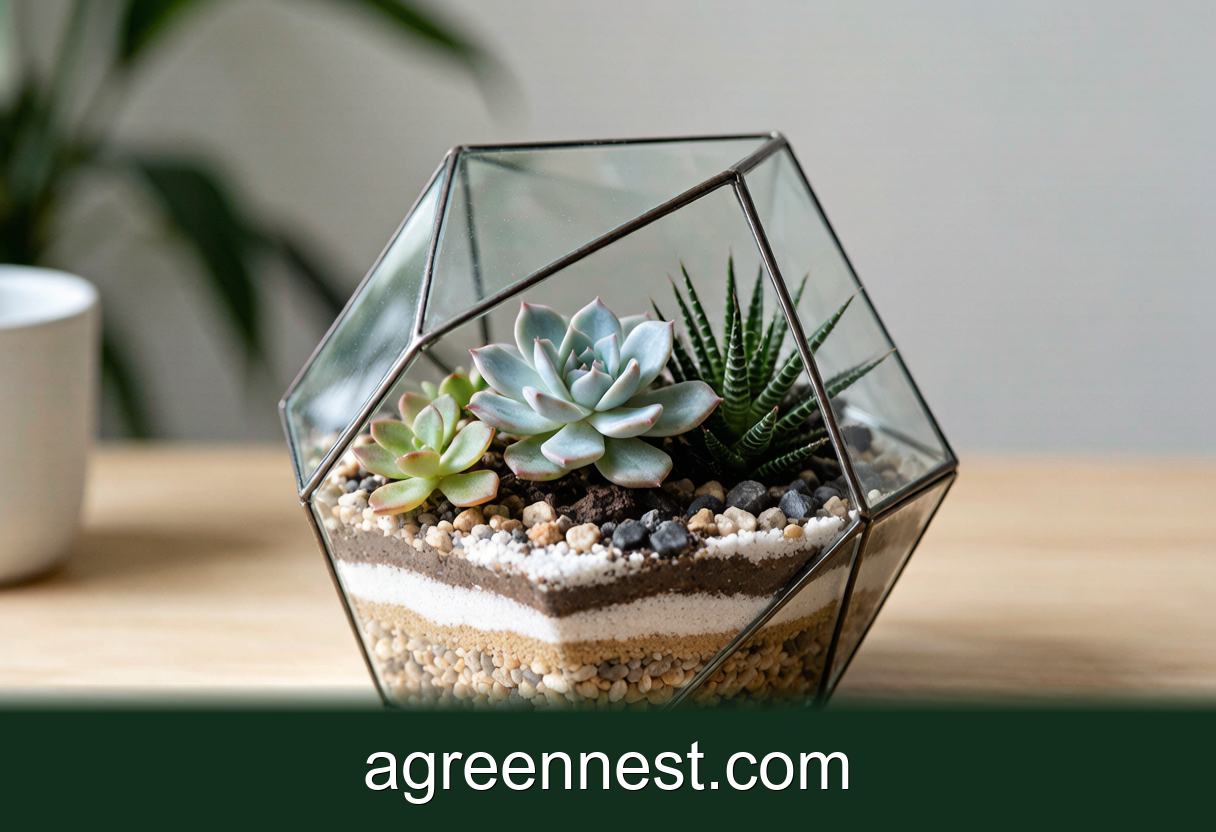
Place the bowl in a south or west window for at least 4-5 hours of bright light daily. If the Echeveria starts to stretch, it needs more sun. If you want a second project in the same spirit, our succulent terrarium build shows a closed version for humidity lovers.
Check the grit monthly. If it has packed down or smells musty, lift the plants, refresh the charcoal, and re-layer. A desert bowl tolerates neglect but not standing water. Watch for puffy, translucent leaves on the Haworthia as a sign of too much water, and a shriveled Lithops as a sign of too little. The Echeveria tells you the truth about light, not water, so read its stretch before you reach for the can.
Frequently Asked Questions
Q: Can I use a bowl with a drainage hole instead?
A:
Yes, and it is safer. A hole removes the need for the charcoal layer, but the layered grit still helps. Most shallow decorative bowls lack one, which is why this method exists.
Q: Why wait three days before the first watering?
A:
Moving plants disturbs fine roots. A three-day wait lets cuts dry and callus, which prevents rot once moisture returns.
Q: How do I know if I am overwatering a *Lithops*?
A:
The paired leaves will wrinkle or split oddly and may yellow at the base. Cut water back to once a month and let the grit dry fully between drinks.
Q: Should the pebble top dressing touch the plant stems?
A:
Keep it a few millimeters clear of the stems. Gravel against a moist stem invites rot. A small brush lifts stray pebbles away.
Q: Can I add a fourth succulent later?
A:
Only if the bowl is at the 30cm end and you have 5cm gaps. Crowding traps humidity and spreads pests.
A no-drainage desert bowl rewards patience more than effort. Build the layers, place three quiet companions, and water on a slow schedule. For a closed, humidity-loving twist, try the succulent terrarium project.
Recommended Tools for DIY Plant Projects Care
Free, no-signup helpers matched to this guide.
Free Ebooks to Explore
Downloadable handbooks — no email required.
Free Ebook
The AGreenNest Succulent Care Handbook
The complete, beginner-to-confident guide to growing fat, happy succulents — 10 chapters and a 20-plant directory.
Free Ebook
Haworthia & Haworthiopsis Care Handbook
A focused guide to the striped, forgiving Haworthia clan.

Join the Conversation
Have a tip or a question about How to Build a Desert Succulent Dish Garden? Share it below — comments are saved on our server.