 AGreenNest
Succulent Care
Ruby Necklace (Othonna capensis) Care Guide
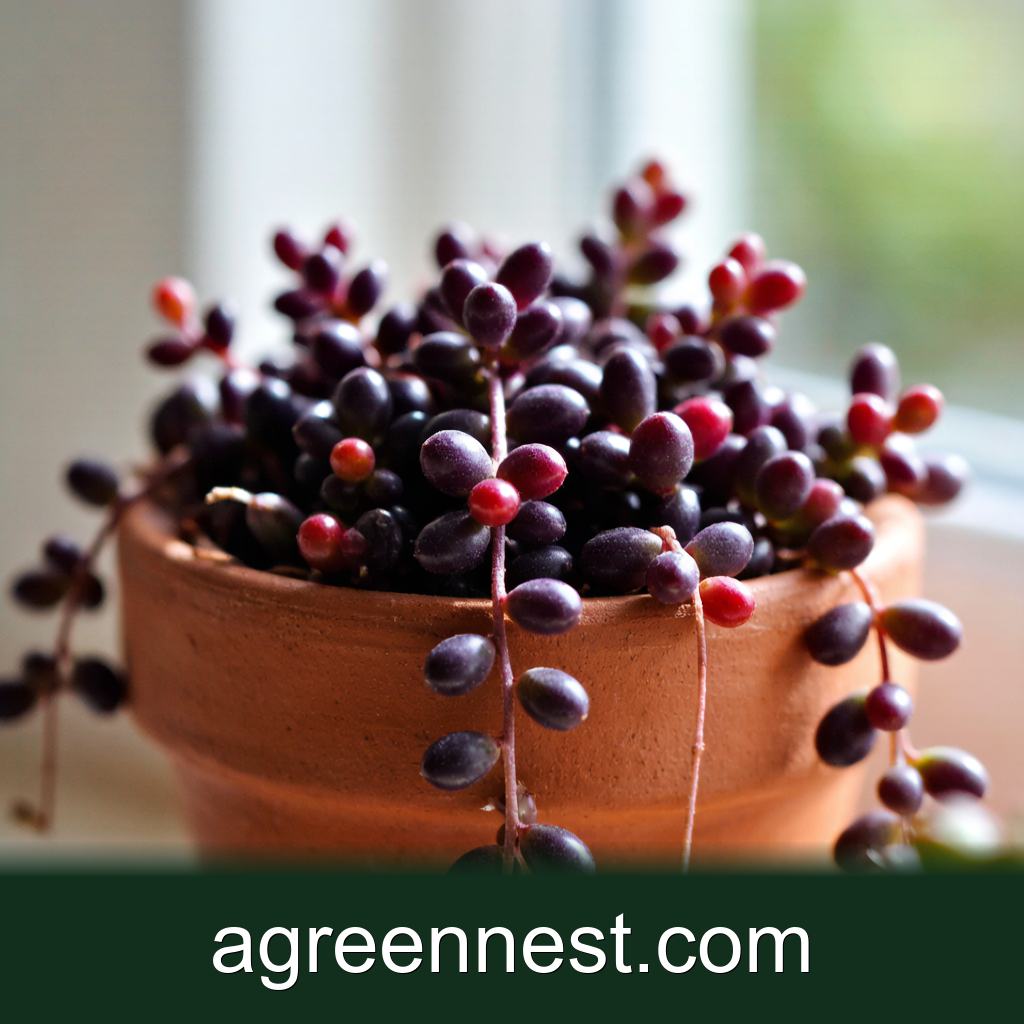
The fastest way to lose a Ruby Necklace is to love it to death with the watering can. This trailing succulent from South Africa's Eastern Cape shrugs off heat and long dry spells, yet it rots within weeks when someone waters it like a house fern. I killed three strands of my own one damp October, and every time the cause was the same: too much water and too little sun. The plant is not difficult, just specific, and most advice treats it like a generic hanging succulent when it is really sun-hungry.
Where Ruby Necklace comes from
Othonna capensis earns the name Ruby Necklace from bead-like leaves on thin trailing stems that turn deep purple and red in strong light. It grows wild across the Eastern Cape of South Africa, spilling over rocky outcrops and dry scrub in full sun. It sits in the Asteraceae family, the same group as daisies, and that link explains its habit: it grows fast, trails long, and wants more light than a windowsill succulent usually gets.
In the wild it copes with hot summers and cool dry winters, so it is built for bright light and sparse rain. If you want the deep colour, copy that light. A pale green, stretched strand means the plant is starved of sun, not food. For the wider family context, our succulent care complete guide covers the habits worth knowing.
The three things it demands
Most failures come from guessing. Ruby Necklace is easier once you fix three numbers.
1. Bright, near-direct light for the colour
Ruby Necklace earns its name only in bright light. Aim for 4 to 6 hours of direct or near-direct sun each day, or run a strong grow light 12 hours a day if your window is weak. I keep mine on a south-facing sill and it holds a wine-red colour through summer. Move it back from the glass in a fierce heatwave since leaf tips can scorch, but keep it out of dim corners. The exact red depends on how much sun the plant sees each day.
Low light is the trap. In shade the stems stretch, the spacing between leaves widens, and the purple fades to a washed-out green. A stretched strand can reach 40cm before it looks thin and leggy, and a trim is then the only fix. If your home is short on sun, treat a grow light as part of the plant, not an optional extra.
2. Sparse water on a real interval
Water every 10 to 14 days through spring and summer, and cut that roughly in half in winter when growth slows. I water mine on a fixed Monday slot and skip a week if the soil still feels cool at 3cm deep. The leaves wrinkle slightly when thirsty and plump back within a day of a drink. Soak the pot until water runs from the drainage hole, then let it dry fully before the next round.
This is the opposite of the daily misting some guides suggest. Ruby Necklace stores water in those bead leaves, and a wet schedule drowns the roots. If you are unsure, our how to water indoor plants correctly page walks through the dry-down check that keeps succulents alive.
3. Gritty, fast-draining soil
Use a mix of 2 parts cactus or succulent soil to 1 part pumice, and add coarse sand if your bagged mix feels heavy. The goal is a mix that sheds water in seconds. I repotted mine into this ratio last spring and the firmer strands were obvious within a month.
The pot matters as much as the mix. Unglazed terracotta pots pull moisture from the root zone and suit this plant better than glazed ceramic, which stays wet. For a trailing plant a shallow wide pot beats a deep one, since the roots are shallow.
The one mistake that kills it
Overwatering on its own is risky, but the real killer is overwatering plus low light. Put the two together and the plant does exactly what you do not want: the nodes where leaves meet the stem sit in damp soil and cold shade, and rot from the inside out. A strand that looked fine on Sunday is a soft, black mush by Friday, and rot climbs toward the crown if you leave it.
The colour tells the same story: in dim, wet conditions the purple drains away into pale, floppy green growth that snaps where it should be firm, and feeding will not fix it. The fix is light and a dry schedule, set before rot starts.
If a strand does go soft, do not wait for it to recover, because it will not. Cut a few centimetres above the soft spot with clean scissors and let the cut callous for a day. The healthy top roots in the same gritty mix, and you lose only the damaged length. I learned this the hard way. For comparison, string of hearts care covers a trailing plant with similar rot risks but a different watering rhythm.
Quick care summary
Here is the whole routine in one place. Light: 4 to 6 hours of direct or near-direct sun, or a strong grow light for 12 hours. Water: every 10 to 14 days in the growing season and only after the soil dries at 3cm. Soil: 2 parts cactus mix to 1 part pumice in a shallow terracotta pot with a drainage hole. Strands trail 30 to 60cm in good conditions, so give it room to hang or spill. The one rule that overrides the rest: bright light and a dry schedule beat any fancy fertiliser or gadget.
If you want to branch out, Senecio rowleyanus (string of pearls) and Curio repens are close cousins with the same sunny, dry demands and a similar trailing look. They make a good shelf trio once you have the Ruby Necklace rhythm down.
Frequently Asked Questions
Q: Why are my Ruby Necklace leaves turning green instead of purple?
A:
Almost always too little light. The red and purple pigments build up only under 4 to 6 hours of direct sun. Move the plant to a brighter sill or add a grow light, and the colour returns over a few weeks as new growth comes in.
Q: How long do Ruby Necklace strands get before they need a trim?
A:
In good light strands trail 30 to 60cm. Once they get leggy with wide gaps between leaves, usually past 40cm, cut back to a node and root the tip. A light trim keeps the pot full instead of stringy.
Q: Can Ruby Necklace grow under a grow light with no window sun?
A:
Yes, with a strong enough light. Run a full-spectrum grow light 12 hours a day about 15 to 30cm above the plant. Weak, distant lights give the same pale stretch you get from a dim window.
Q: My strand went soft and black at one node, is the whole plant doomed?
A:
No. Cut a few centimetres above the soft spot, discard the rotted part, and let the healthy top callous for a day before rooting it in dry gritty mix. Rot spreads through damp contact, not air, so separate clean strands promptly.
Q: Is Ruby Necklace the same as string of pearls?
A:
No. Ruby Necklace is Othonna capensis in the daisy family with red purple stems; string of pearls is Senecio rowleyanus with rounder green beads. They share light and dry-soil needs but are different species.
Ruby Necklace rewards the grower who treats it like the sun-loving South African it is, not a shade houseplant that wants constant drinks. Give it bright light, a gritty dry pot, and the patience to let the soil run dry, and those ruby strands will trail 30 to 60cm without fuss. For the bigger picture on keeping succulents happy, our complete succulent guide is the page I would read next.
Recommended Tools for Succulent Care
Free, no-signup helpers matched to this guide.
Free Ebooks to Explore
Downloadable handbooks — no email required.
Free Ebook
The AGreenNest Succulent Care Handbook
The complete, beginner-to-confident guide to growing fat, happy succulents — 10 chapters and a 20-plant directory.
Free Ebook
Haworthia & Haworthiopsis Care Handbook
A focused guide to the striped, forgiving Haworthia clan.


Join the Conversation
Have a tip or a question about Ruby Necklace (Othonna capensis) Care Guide? Share it below — comments are saved on our server.