 AGreenNest
Plant Pests & Diseases
Broad Mites: Why New Leaves Come Out Twisted
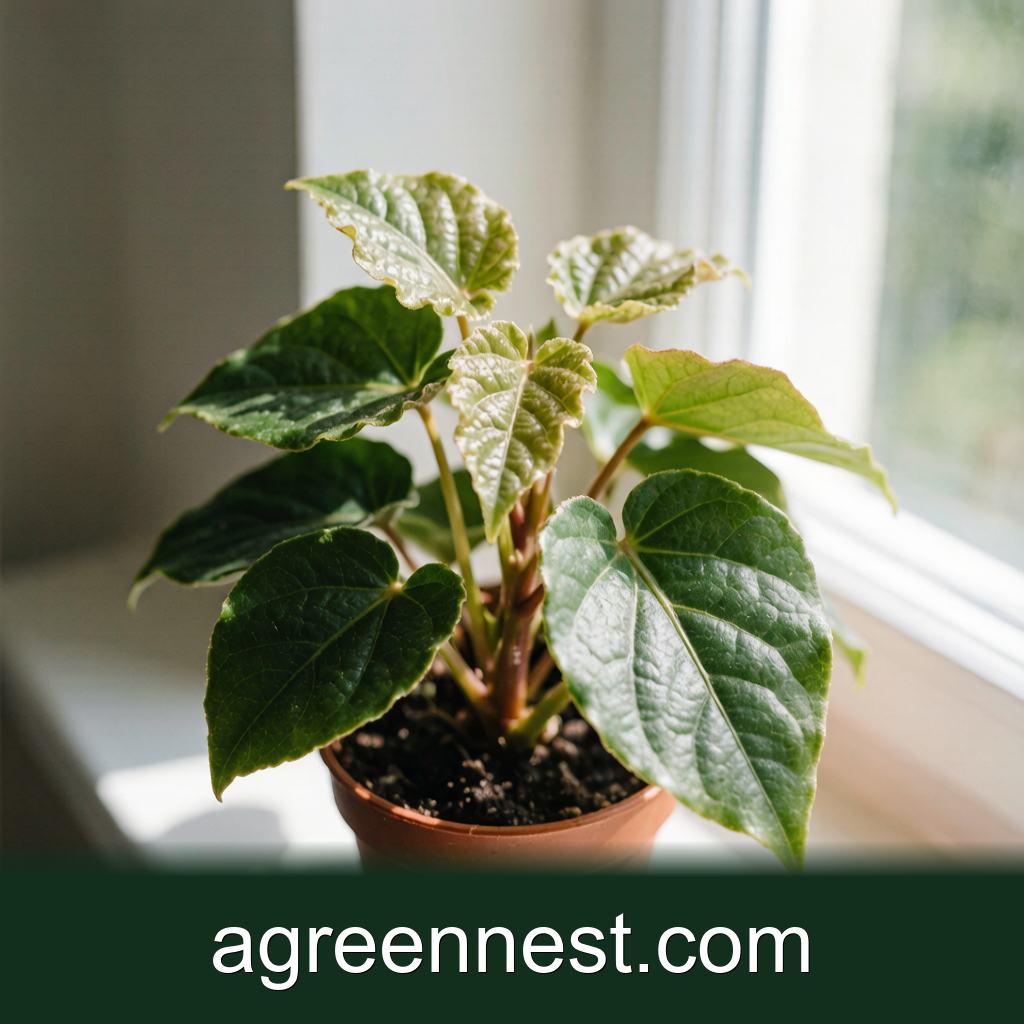
Broad mites are microscopic pests (0.2mm) that hide in new growth and twist leaves into a shiny, blistered mess often mistaken for a virus. Confirm them with a 10x loupe on distorted tips, prune the worst growth, then spray neem or insecticidal soap every 3 to 5 days for three weeks. Isolate the plant and cut nitrogen.
Your Begonia arrived with flawless leaves. A month later every new leaf unfurls crumpled, dark, and with a strange wet sheen, as if someone sprayed varnish on the tip and pressed it flat. You searched "nutrient deficiency" and "plant virus" with no answer. The cause is a pest you cannot see without a magnifier.
I almost did the same. A Saintpaulia ionantha (African violet) on my windowsill threw out buds that browned before opening, and the young leaves looked scorched. The truth sat on the growing tip the whole time, smaller than a speck of dust.
What are broad mites, and why can't I see them?
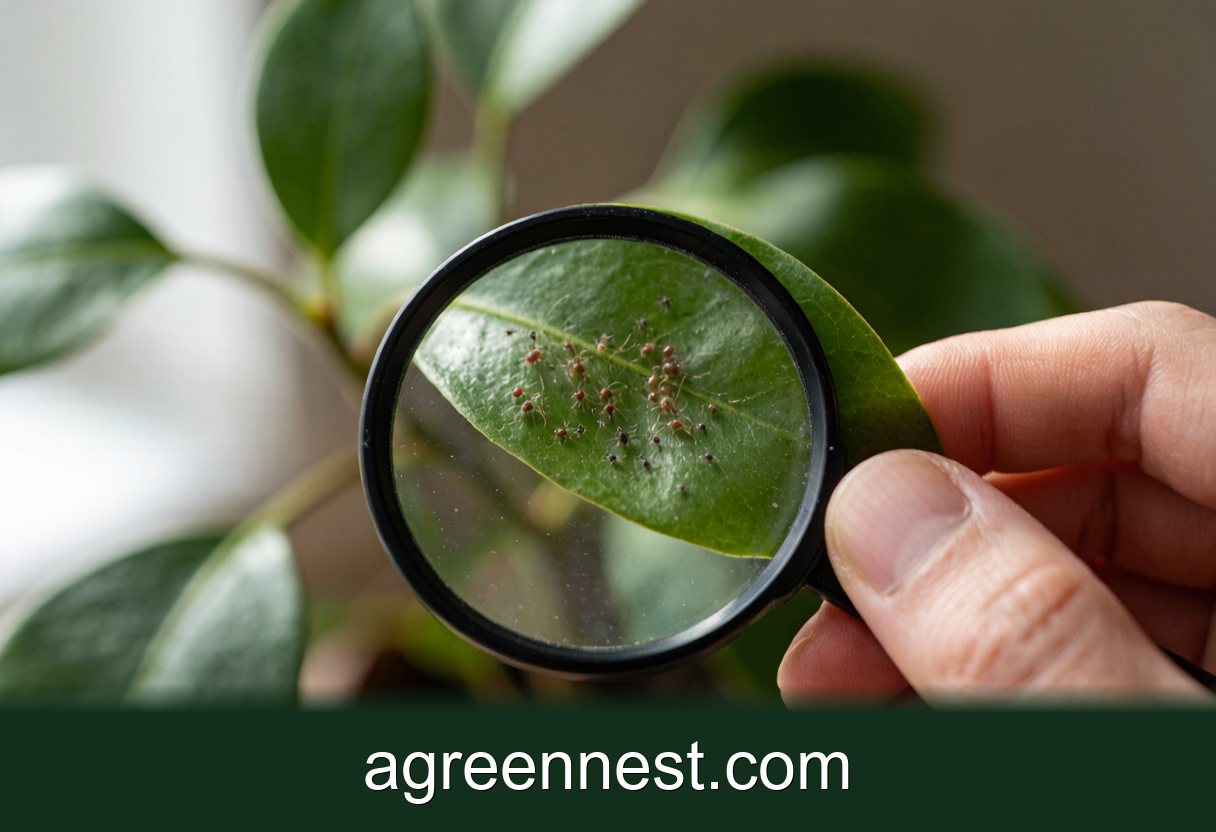
Broad mites are Polyphagotarsonemus latus, a close cousin of the cyclamen mite Phytonemus pallidus that hits Cyclamen, African violets, Begonia, and Impatiens. Adults reach about 0.2mm and are pale, banana shaped, and slow. Your naked eye sees nothing; a 10x lens shows crawling specks, and a 30 to 40x loupe shows them plainly.
They live and breed only in the youngest tissue: unopened leaf rolls, flower buds, and the growing tip. Damage shows at the very top, not scattered through the foliage, because that is the only place they can feed.
The life cycle is fast. In a warm home around 24 to 28C (75 to 82F), an egg becomes an adult in four to five days. A handful of survivors becomes hundreds within a fortnight, which is why a plant looks fine one week and wrecked the next.
Why Do My New Leaves Come Out Crinkled and Shiny?
The mites pierce the cell wall and inject saliva that scrambles leaf growth, so the leaf unfurls blistered, puckered, and small, with a bronze or silvery sheen that looks wet even in a dry room.
Flower buds are a favourite target. They brown, swell, and fail to open. On an African violet the crown can look chewed up, and on a Begonia the new growth stacks into a tight, twisted rosette.
Here is the clue: the damage is on new growth only. The mature leaves below stay normal. If older leaves are also scarred, you are probably dealing with thrips or something else, not broad mites.
Is It Broad Mites, or Am I Looking at a Virus or Herbicide Damage?
Broad mite damage gets mistaken for four other problems, so run the comparison before you spray.
- Virus. Mottled yellow patterning and slow stunting that spreads through the whole plant. Mites concentrate at the tip and leave a shiny twist, not a leaf-wide pattern.
- Herbicide drift. Random distorted leaves anywhere on the plant, often after a neighbour sprayed nearby, with no live pests and no wet sheen at the tip.
- Edema. Shows corky bumps on the underside of older leaves from overwatering, not twisted shiny new growth at the top. See edema and its fixes if that matches.
- Thrips. Leave silver scar streaks on mature leaves plus black frass. Mites do not scar mature leaves at all.
The verdict is simple. Shiny, blistered, twisted new growth at the growing tip is broad or cyclamen mite until proven otherwise.
How Do I Confirm Broad Mites Without a Microscope?
You need magnification, not lab gear. Two methods work at home.
The first is the chill and tap. Bag two or three distorted tips, chill them 20 to 30 minutes so the mites slow, then tap the tip hard over a white sheet of paper. With a 10 to 15x loupe, look for pale, slow crawling specks smaller than a grain of salt.
The second is an extension lab. Many state plant clinics, including the NC State Extension Plant Toolbox, identify mite samples for free or a few dollars. Seal the distorted tip in a bag and mail it. A confirmed ID beats a guess.
A clip-on phone macro lens at 10 to 15x can catch them too, but a loupe is steadier. Confirm before you spray, because the wrong diagnosis wastes three weeks.
How Do I Get Rid of Broad Mites?
The plan is prune, then spray on a tight schedule for three weeks. Skipping either step is why these fail.
- Cut the worst tips. Because mites cluster at the growing points, pruning the distorted top removes most of the population in one cut. Bag the trimmings and bin them, do not compost them beside other plants.
- Spray the survivors on a clock. Use insecticidal soap or neem (azadirachtin) at label strength, coating new growth every 3 to 5 days for three weeks. With no protected egg stage, each round knocks the next generation as it hatches.
- Use sulfur if soap stalls. Wettable sulfur or dust is the old school killer, but do not use it on sulfur sensitive plants, within 30 days of an oil spray, or once temperatures pass 30C (86F) or it scorches foliage. Our neem oil shortlist and insecticidal soap guide cover strengths.
- Try predators in closed cases. Neoseiulus cucumeris or Amblyseius swirskii predatory mites help with cyclamen mite inside a terrarium or cabinet where they cannot wander off.
Isolate the plant the moment you suspect mites. They walk to nearby pots and ride gentle air currents, so a plant on the open shelf shares them fast. Hold back on high nitrogen while you treat, because soft sappy growth draws them in. If you tend to overfeed, the over fertilisation fixes explain moderate feeding that keeps new growth tougher.
Will They Come Back After I Treat?
Only if you stop at week one. Eggs and crawlers hatch on a four to five day cycle, so the three week schedule is the cure, not the spray. Once the plant pushes clean, untwisted leaves for two weeks, you are clear.
Prevention is simple. Check new growth of prone plants weekly with a loupe: Begonia, African violets, Cyclamen, ivy (Hedera helix), and windowsill peppers. Quarantine every new plant for two weeks, and keep nitrogen moderate so tips stay firm.
A severely infested, low value plant is cheaper to bin than salvage once the buds are dead and the crown is ruined. Spend effort on the specimens you care about, and mites stay a minor annoyance rather than a season long fight.
Frequently Asked Questions
Can broad mites live in the soil like root mealybugs?
No. They stay in above ground new growth and buds, never the mix, so you do not need to repot. If you find pests in the root zone, that is a different problem in our root mealybug guide.
Will dish soap and water kill them?
A weak homemade mix misses the tiny crawlers and can burn leaves. A proper insecticidal soap at label strength works because the concentration is right; the splash-and-hope version rarely does.
My plant looks worse two weeks in. Did the spray fail?
Probably not. You are seeing leaves already damaged inside the bud before you started. Clean growth shows from the third week once untouched buds open.
Are broad mites a problem outdoors too, or just houseplants?
Both, but indoors they thrive because predators are absent and homes stay warm. Greenhouse and windowsill peppers and Impatiens are common victims.
Can I use the same spray I use for spider mites?
The contact soaps overlap, but spider mite products lean on oils that barely touch mite eggs. For broad mites the 3 to 5 day cadence matters more than the brand. The spider mite plan covers that if those show up.
Broad mites feel sinister because you cannot see them, but they are beatable once you know the signs. A loupe on the distorted tip, a prune of the worst growth, and soap or neem every three to five days for three weeks clears them, and the shiny twisted leaves give way to normal ones. The habit that keeps them gone is a weekly peek at new growth and a two week quarantine on anything new, the same routine our complete pest overview builds into a habit.
Recommended Tools for Plant Pests & Diseases Care
Free, no-signup helpers matched to this guide.
🔍 Free Tool
Pest & Problem Identifier
Pick the symptoms you see and get the likely culprit plus a fix.
Free Ebooks to Explore
Downloadable handbooks — no email required.
Free Ebook
The AGreenNest Succulent Care Handbook
The complete, beginner-to-confident guide to growing fat, happy succulents — 10 chapters and a 20-plant directory.
Free Ebook
Haworthia & Haworthiopsis Care Handbook
A focused guide to the striped, forgiving Haworthia clan.
Sources & further reading
GreenNest authors research and write every guide independently. The external links below are reputable references we recommend for deeper reading — they are not the sources we copied from.
- US EPA — Safer Pest Control — US EPA
- NC State Extension Plant Toolbox — NC State Extension


Join the Conversation
Have a tip or a question about Broad Mites: Why New Leaves Come Out Twisted? Share it below — comments are saved on our server.