 AGreenNest
Hydroponic Growing
Hydroponic Celery: How to Grow It Year-Round
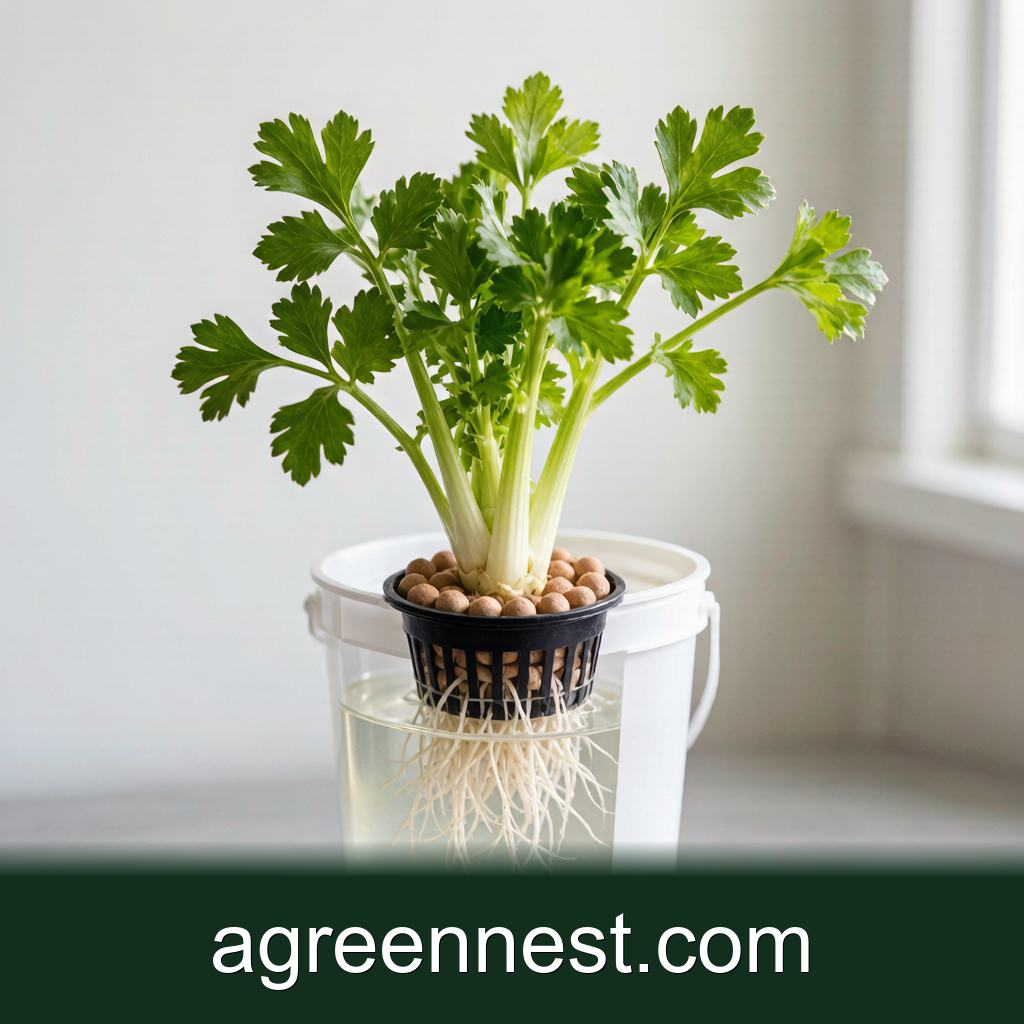
Hydroponic Celery grows fastest with 10 days between waterings at 18-22 C. Aim for 1.5-2.0 EC and pH 5.8-6.2, and give 13-16 hours of grow-light or bright supplemental light (14-16 hours daily). Keep roots dark and aerated, and change the reservoir every 1-2 weeks to avoid salt buildup.
I stuck a celery base in a glass of water on a whim one winter, and two weeks later it had thrown out a fist of pale new stalks. That kitchen trick is real, but for crisp, full sized celery you want a proper hydroponic run. The payoff is a vegetable that supermarket celery never matches: sweet, snapping stalks with none of the stringy bitterness that comes from heat and drought in the field.
Can You Really Regrow Celery From a Base?
Yes, and it is the fastest way to taste hydroponic celery. Cut the stalks 5cm above the base, set the base in 2 to 3cm of water with the cut side up, and keep it on a bright sill. Change the water every two to three days. New leaves and short stalks appear in 7 to 10 days, and you can snip tender stalks for cooking in 2 to 3 weeks.
The catch is size. A regrown base gives a small, sometimes bitter clump because it draws on stored energy, not fresh growth. For full stalks you need to start from seed in a real system, the route the rest of this guide covers.
Which Hydroponic System Suits Celery?
Celery likes its roots cool and wet, so any of the three common systems works.
- Kratky: a still reservoir with the net pot hanging above the nutrient. Easiest and cheapest, great for a single plant on a windowsill. Top up the reservoir as the level drops.
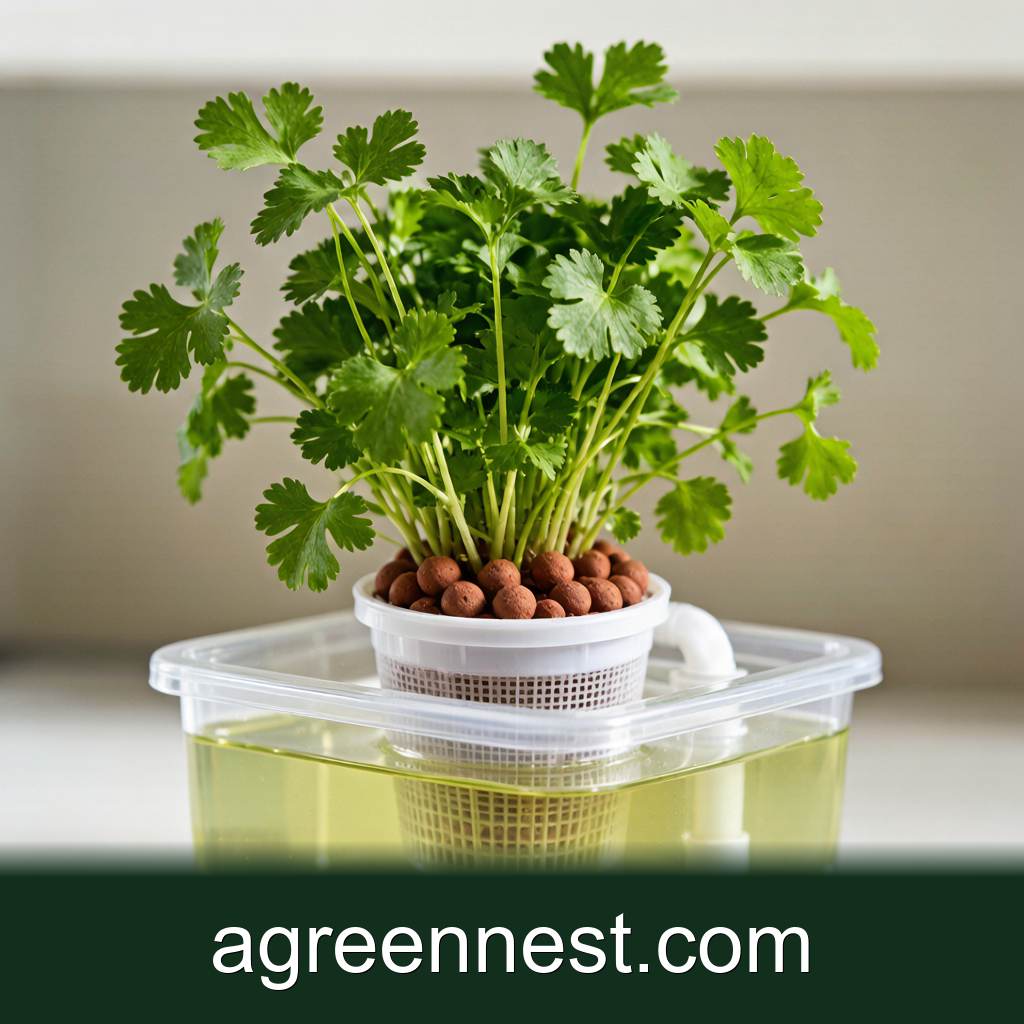
- Deep water culture (DWC): roots sit in an aerated nutrient tank. Steady and productive; an air stone keeps the cool roots from drowning. Our DWC guide walks through the build.
- Nutrient film technique (NFT): a thin stream runs past the roots in a sloped channel. Best for a row of plants, and the NFT explainer covers the slope and flow rates.
The Kratky method is where most people should start, because celery needs very little hardware and the still water stays cool, which celery prefers.
What pH and Nutrients Does Celery Want?
Keep the nutrient pH at 5.8 to 6.2 and the strength at EC 1.6 to 2.0, or about 800 to 1100 parts per million. Celery is a medium feeder, hungrier than lettuce but not as greedy as tomatoes. A standard leafy green recipe works, and the hydroponic nutrients guide explains how to mix and read EC.
Watch the calcium. Celery is prone to tip burn, a brown dead edge on young leaves, when calcium is short or the root zone swings in temperature. Keep the solution steady and the pH on target, and the pH management guide shows the cheap testers that catch drift early.
How Much Light and Heat Does It Need?
Celery wants 12 to 14 hours of light a day at 400 to 600 micromoles of photosynthetically active radiation, or a bright south sill in summer. Day temperatures of 16 to 24C suit it; above 27C the stalks turn thin and bitter, the same fault you see in field celery during a hot spell.
Cool roots matter as much as cool air. In a warm room, shade the reservoir or use a white tank, because warm nutrient above 24C slows growth and invites root rot. A hydroponic herb guide covers the same cooling tricks for other cool weather crops.
When and How Do You Harvest?
From seed, celery is ready in 80 to 100 days. Harvest the outer stalks first, cutting them at the base with a clean knife and leaving the heart to keep growing. This cut and come again method gives you a few stalks every week for a month or two.
Space plants 20 to 25cm apart so the stalks size up instead of crowding. If you grew from a regrown base, skip the wait and cut the tender outer stalks at 2 to 3 weeks, then start a fresh base from the next bunch you buy. The arugula grow guide and the swiss chard guide use the same outer leaf harvest if you want more cut and come again crops.
Why Are My Celery Stalks Thin or Bitter?
Three causes cover most failures. Heat above 27C turns celery stringy and sharp, so cool the root zone and the room. Too little light, under 12 hours or weak winter sun, makes pale, limp stalks, so add a grow light on a timer for 14 hours. Low calcium or a swinging pH causes tip burn on the inner leaves, fixed by steady nutrient.
Bolting is the last risk. A cold shock or long days can send celery to flower, after which the stalks turn woody. Keep temperatures even and you should get a full harvest before it runs up.
Frequently Asked Questions
Why does my hydroponic celery taste stringy when field celery is crisp?
Stringiness is heat and drought stress, and hydroponic celery only goes stringy if the root zone heats above 24C or the light drops. Cool the tank and give 14 hours of light, and the stalks snap instead of fibring.
Can I keep regrowing the same celery base forever?
No. A base has a fixed store of energy and gives one or two flushes of small stalks, then fades. For a steady supply, start seed in a system and treat the regrown base as a quick kitchen bonus, not the main crop.
My celery seedlings flopped after I moved them to the system. What went wrong?
Transplant shock from a root disturbance or a temperature jump. Harden seedlings by lowering the nutrient strength for the first week (EC around 1.0) and keep them at 18 to 22C, then raise to full strength once they stand upright.
Does celery need a dark period to crisp up?
It needs a normal day and night rhythm, not darkness tricks. Twelve to fourteen hours of light followed by dark keeps growth steady. Crispness comes from cool roots and steady water, not from shading the plant.
How do I stop celery from bolting in hydroponics?
Keep day temperatures between 16 and 24C and avoid a sudden cold dip that mimics winter. Steady nutrient and no shock is the whole game; a plant that never thinks it is spring then winter stays in leaf production.
Celery is one of the most rewarding hydroponic vegetables because the home grown stalk tastes nothing like the supermarket one. Start from seed in a Kratky or DWC bucket, hold the pH at 5.8 to 6.2 and the roots cool, and you will cut sweet stalks for months. For the wider picture on getting started, our hydroponics for beginners guide lays out the first system to build.
Recommended Tools for Hydroponic Growing Care
Free, no-signup helpers matched to this guide.
Free Ebooks to Explore
Downloadable handbooks — no email required.
Free Ebook
The AGreenNest Succulent Care Handbook
The complete, beginner-to-confident guide to growing fat, happy succulents — 10 chapters and a 20-plant directory.
Free Ebook
Haworthia & Haworthiopsis Care Handbook
A focused guide to the striped, forgiving Haworthia clan.
Sources & further reading
GreenNest authors research and write every guide independently. The external links below are reputable references we recommend for deeper reading — they are not the sources we copied from.
- NC State Extension — Plant Toolbox — NC State Extension
- UA Controlled Environment Agriculture Center — U Arizona CEAC
- Aggie Horticulture (Texas A&M) — Texas A&M AgriLife


Join the Conversation
Have a tip or a question about Hydroponic Celery: How to Grow It Year-Round? Share it below — comments are saved on our server.