 AGreenNest
Hydroponic Growing
Grow Swiss Chard Hydroponically at Home
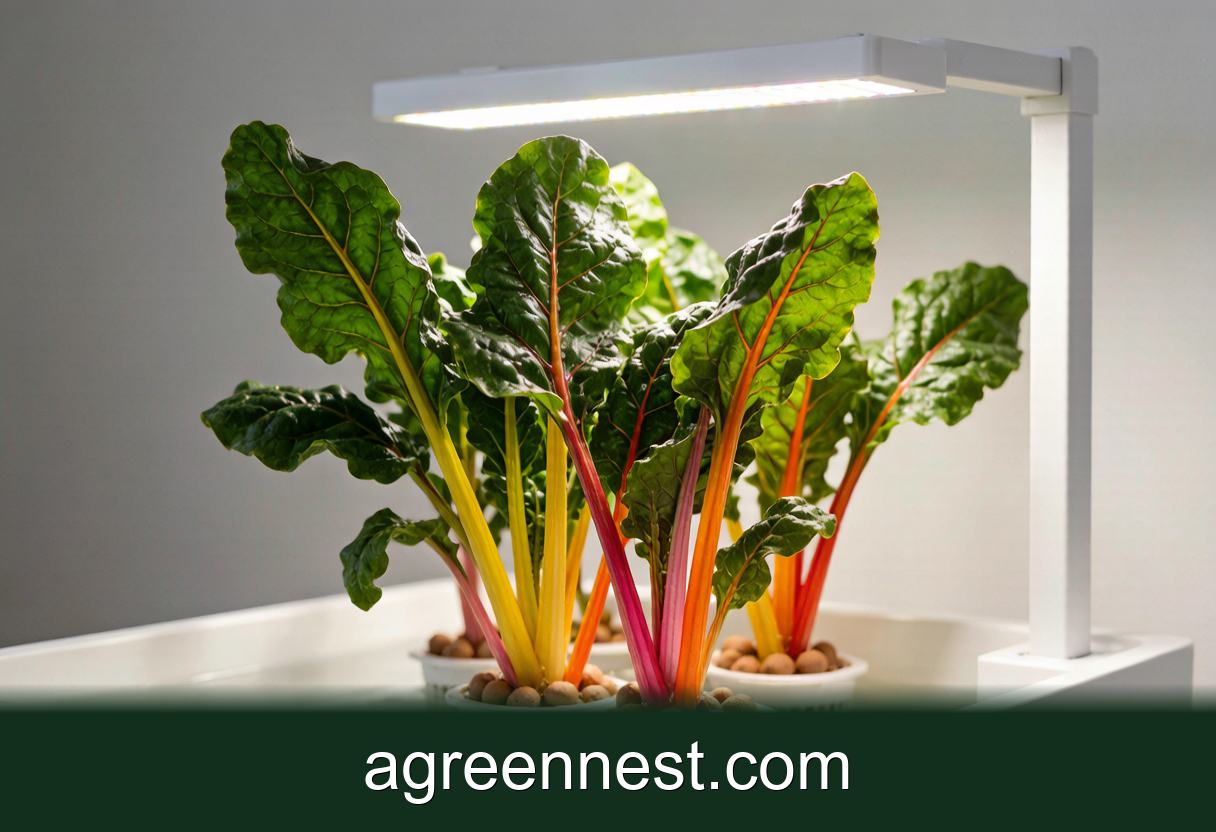
Grow Swiss chard in a deep water culture or NFT system at pH 5.8 to 6.2 and EC 1.8 to 2.3. Give it 12 to 14 hours of light, keep the root zone at 18 to 22°C, and harvest outer leaves from week five onward for a cut-and-come-again crop that runs for months.
Lettuce gets all the beginner attention, but it burns out in a few cuts and turns bitter the moment the water warms up. Swiss chard does the opposite. One plant keeps throwing new leaves for months, it shrugs off warm reservoirs that would bolt a lettuce, and the stems come in colors bright enough to earn a spot on the counter. If you want a leafy crop that pays back a single seeding all season, this is the one.
Why Swiss chard thrives in water
Swiss chard (Beta vulgaris subsp. vulgaris) is a beet bred for leaves instead of roots. It has a strong, fibrous root system that loves the constant oxygen and feed of a hydroponic reservoir, and it grows leaves faster than it can be eaten once it settles in.
Unlike hydroponic lettuce, chard does not give up when the water hits 24°C. It handles a warm room, a bright windowsill, and irregular harvests without sulking. That toughness makes it a good second crop after you have learned the rhythm on something quick, or a reliable partner alongside hydroponic kale in the same system.
Pick the right variety
Choose compact, colorful types that suit an indoor reservoir rather than the giant field cultivars.
- Bright Lights: a mix of yellow, pink, orange, and red stems, 50 to 55 days to full size, the best all-rounder.
- Fordhook Giant: white stems, dark savoyed leaves, vigorous and heavy-yielding.
- Ruby Red (Rhubarb Chard): deep red stems, slightly slower, striking on a shelf.
- Peppermint: pink-and-white striped stems, compact, good where space is tight.
Sow two or three seeds per net pot. Chard seed is actually a cluster, so expect several seedlings from one; thin to the strongest after the first true leaves.
Set up the system
Chard grows well in two setups, and both use the same feed numbers.
A deep water culture rig suits it perfectly: the big roots sit in oxygenated nutrient and the plant grows fast. Follow the step-by-step DWC build if you are starting from scratch. For a row of plants, an NFT channel works too, though chard's size means you want wider spacing than lettuce.
Use a reservoir of at least 10 liters for a few plants, 5cm net pots, and clay pebbles or coarse perlite as the medium. Space plants 18 to 20cm apart; they get bigger than beginners expect and crowded chard grows thin, pale leaves.
The numbers that matter
Chard is a moderate feeder, hungrier than lettuce but not a heavy fruiter. Check these twice a week.
- pH: 5.8 to 6.2. Drift above 6.5 locks out iron and the new leaves yellow between the veins.
- EC: 1.8 to 2.3 mS/cm. Lean toward the lower end for young plants and raise it as they bulk up.
- Root zone temperature: 18 to 22°C. Chard tolerates warmer water than lettuce but still slows above 26°C.
- Air temperature: 15 to 24°C. It grows in cooler rooms too, just more slowly.
A steady pH routine is the single habit that keeps chard green, because interveinal yellowing here is almost always pH-driven iron lockout rather than a true shortage. If the leaves pale despite good pH, the nutrient deficiency guide helps you read the pattern. Mix your feed using the complete nutrients guide.
Light and daily care
Chard wants 12 to 14 hours of light a day at 200 to 300 µmol/m²/s. A bright south window can carry it in summer, but a full-spectrum grow light gives the even, sturdy growth that stops the stems from stretching. Too little light shows up fast as long, floppy petioles and thin leaves.
Top the reservoir with pH-corrected water as the level drops, and change the whole solution every 10 to 14 days. Keep the lid dark and the water shaded so algae does not bloom in the warm, well-lit conditions chard likes.
Harvest cut-and-come-again for months
This is where chard earns its keep. Do not pull the whole plant. From about week five, snap or cut the outer leaves at the base once they reach 20 to 25cm, and leave the inner crown to keep producing. Take no more than a third of the leaves at once so the plant keeps its engine running.
Harvested this way, a single seeding keeps giving for two to three months, often longer, before it tires or bolts. Young leaves are tender and mild for salads; older ones cook down like spinach. Compared with hydroponic microgreens, which you sow and resow constantly, chard is the crop you plant once and keep visiting.
The one mistake that stalls chard
Overcrowding. Beginners sow chard at lettuce spacing and end up with a mat of thin, pale leaves competing for light. Give each plant its 18 to 20cm, thin the seed clusters early, and each one grows into a full, productive clump. If the leaves still yellow between the veins with correct spacing, check pH before you touch the nutrient strength; the common hydroponic mistakes list covers the rest.
Swiss chard is the leafy crop that keeps paying you back. Give it a well-oxygenated reservoir, hold the pH at 5.8 to 6.2, space it properly, and harvest the outer leaves week after week for months from one seeding. If you are lining up your next crops after this, the hydroponics for beginners guide maps out which greens to grow together in the same system.
Recommended Tools for Hydroponic Growing Care
Free, no-signup helpers matched to this guide.
Free Ebooks to Explore
Downloadable handbooks — no email required.
Free Ebook
The AGreenNest Succulent Care Handbook
The complete, beginner-to-confident guide to growing fat, happy succulents — 10 chapters and a 20-plant directory.
Free Ebook
Haworthia & Haworthiopsis Care Handbook
A focused guide to the striped, forgiving Haworthia clan.

Join the Conversation
Have a tip or a question about Grow Swiss Chard Hydroponically at Home? Share it below — comments are saved on our server.