 AGreenNest
Low-Light Indoor Plants
How to Rescue an Overwatered Peace Lily
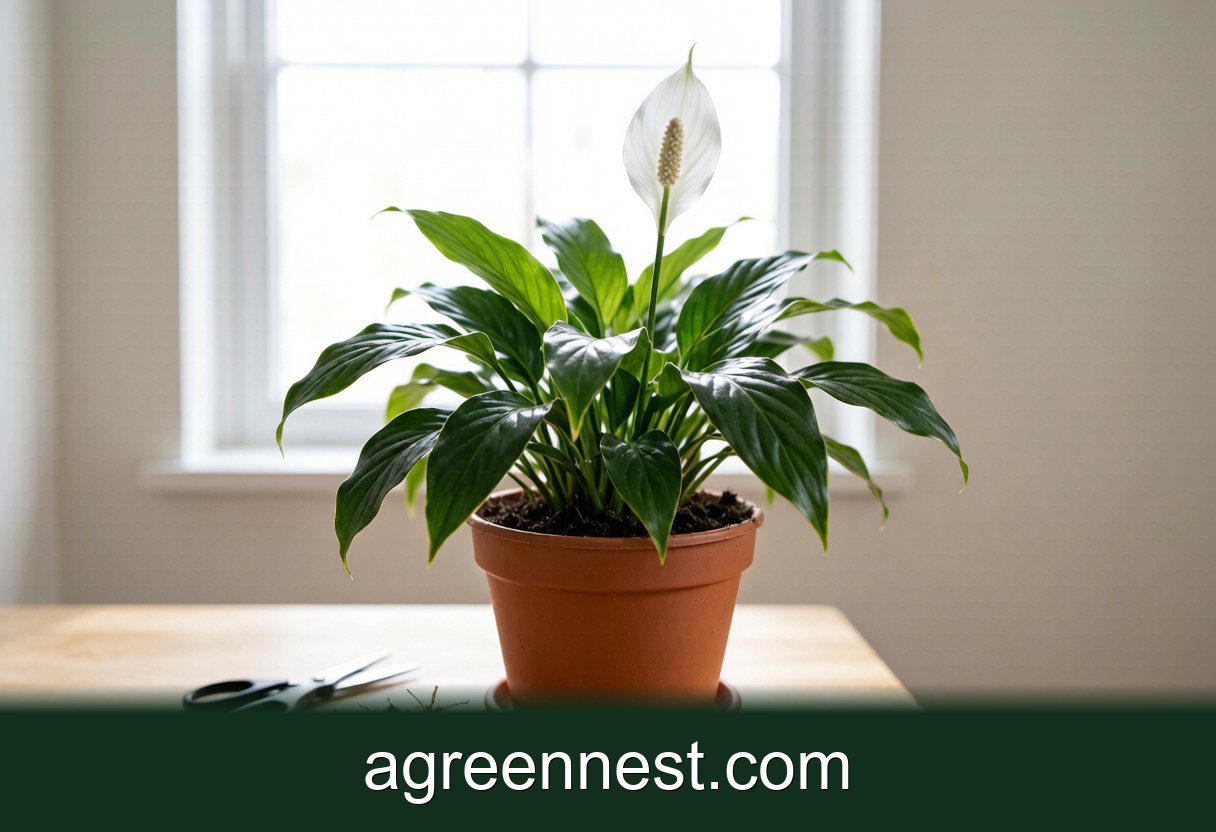
A drooping, yellowing peace lily (*Spathiphyllum wallisii*) usually signals overwatering, not thirst. Unpot it, rinse the roots, and cut away any brown mushy ones. Repot into fresh, airy mix in a pot with drainage, then water only when the top 3 to 4 cm dries out.
The first peace lily I ever owned collapsed on a Sunday morning, every leaf splayed flat over the pot rim like it had fainted. My instinct was to water it, because that is what a wilting plant looks like it wants. I was wrong, and that mistake nearly killed it. The soil was already soaking. What the plant needed was less water, not more, and a fast look at its roots.
If your Spathiphyllum wallisii has gone limp, yellow, or smells faintly sour at the base, this is the rescue I have run a dozen times since. It works most of the time, as long as you catch it before the crown turns to mush.
Why does an overwatered peace lily droop like a thirsty one?
This is the trap. A thirsty peace lily and a drowned one both wilt, and they look almost identical from across the room. The difference is in the soil and the roots.
When roots sit in wet soil too long, they suffocate. Waterlogged soil has no air pockets, and roots need oxygen as much as they need moisture. Starved of air, the fine roots die and rot, and dead roots cannot move water upward, so the leaves droop even though the pot is full of water. It feels backwards, but the plant is dehydrated from the top down while drowning from the bottom up.
The quick test: push a finger 3 to 4 cm into the soil. If it comes out wet and cool and the pot feels heavy, you are looking at overwatering. If the soil is bone dry and the pot is light, it is genuine thirst, and a good soak fixes it in a day. Our guide to overwatering signs in low-light plants walks through the other tells, like translucent stems and a peaty smell.
How do I know if the roots have rotted?
You have to look. Tip the plant out of its pot and brush the soil off the root ball. Healthy peace lily roots are white to pale tan, firm, and springy. Rotted roots are brown or black, thin, and slide apart between your fingers like wet thread. A sour, swampy smell confirms it.
Check the crown too, the point where leaves meet roots. A firm, pale crown means the plant can be saved. If the crown is soft, brown, and squishy all the way through, the rot has reached the growth point and recovery is unlikely. In that case, take a healthy division from the edge if one exists, and start over.
For most cases I see, maybe half the roots are gone and the crown is still solid. That plant will make it.
The week-by-week rescue
Here is the sequence that has worked for me, spread over about two weeks.
Day 1, cut and dry. Rinse the root ball under a slow tap to see clearly. With clean scissors, trim every brown or mushy root back to firm white tissue. Do not be shy, dead roots only spread rot. Remove the worst of the yellow and collapsed leaves too, since the plant cannot support them and they drain energy. Let the bare plant sit on a paper towel out of direct sun for an hour so the cuts dry slightly.
Day 1, repot dry. Move it into fresh, airy mix. I use two parts standard houseplant compost to one part perlite or orchid bark for drainage. Pick a pot only a little bigger than the root ball, with a drainage hole, because an oversized pot holds more wet soil than the shrunken roots can drink. Firm the mix gently and do not water yet. The single best step you can take is choosing the right container, and our notes on when and how to repot houseplants cover pot size and timing.
Day 2 to 3, first light watering. Give it a modest drink, enough to settle the soil, then stop. From here, water only when the top 3 to 4 cm has dried. For a repotted peace lily in average indoor light that usually means every 7 to 10 days, less in winter.
Week 1 to 2, patience. Keep the plant in bright, indirect light, never direct sun, at 18 to 24 C. Expect it to look sad for a week or more. New roots have to grow before the leaves firm up. If the deeper rot spreads despite your cut, our root rot first aid piece has the more aggressive salvage steps.
What should I not do while it recovers?
Do not fertilise. A stressed plant with damaged roots cannot use the nutrients, and the salts burn what few roots remain. Wait until you see firm new leaves, then feed at half strength.
Do not mist to perk it up. Misting does nothing for root-level dehydration and it wets the crown, which invites more rot. If your air is dry, set the pot on a tray of pebbles and water instead.
Do not repot again in a panic. One repot is a rescue; three in a month is a death sentence. Let the plant settle.
And do not move it into blazing sun to dry it out faster. Peace lilies scorch, and a sunburnt plant on top of root damage rarely bounces back. If light is the deeper problem, check the reading with our free light calculator before you relocate it. For long-term placement, the peace lily low-light care guide has the sweet spot.
Frequently Asked Questions
Q: My peace lily perked up an hour after I watered it, so wasn't it just thirsty?
A: Maybe, but be careful. A drowned plant can briefly stiffen after watering because the soil settles around collapsed roots. If it droops again within a day or two, the roots are the problem, not thirst.
Q: How many yellow leaves should I remove during the rescue?
A: Take off any leaf that is more than half yellow or fully collapsed, but leave anything still mostly green. Even a tired green leaf feeds the plant while new roots grow.
Q: Can I use the same pot after root rot?
A: Only if you scrub it with hot soapy water and rinse well, since rot pathogens cling to the walls. I usually switch to a clean pot and a fresh mix to be safe.
Q: My peace lily flowered right before it collapsed. Are the two related?
A: Flowering is a heavy energy draw, and a plant fighting root rot at the same time will crash faster. Cut the spent flower stalk to the base so the plant can put everything into recovery.
Q: How long until it looks normal again?
A: If the crown was firm, expect new central leaves within 3 to 4 weeks and a fuller plant in 2 to 3 months. The old drooped leaves will not stand back up, so judge recovery by the new growth.
An overwatered peace lily looks like a lost cause on the floor of the pot, but a firm crown and a few white roots are all you need to bring it back. Cut the rot, repot dry, water by feel, and wait. The plant does the rest. When you are ready to keep it thriving instead of just surviving, the peace lily low-light care guide is where I would go next.
Recommended Tools for Low-Light Indoor Plants Care
Free, no-signup helpers matched to this guide.
Free Ebooks to Explore
Downloadable handbooks — no email required.
Sources & further reading
GreenNest authors research and write every guide independently. The external links below are reputable references we recommend for deeper reading — they are not the sources we copied from.
- Royal Horticultural Society — Houseplant care — RHS
- Missouri Botanical Garden — Missouri Botanical Garden
- NC State Extension Plant Toolbox — NC State Extension
Share Your Plant Story
Grown something tricky, or found a trick that finally worked? Tell us in the comments, or see what other readers are sharing on our Community page. The best reader tips get folded back into our guides.


Join the Conversation
Have a tip or a question about How to Rescue an Overwatered Peace Lily? Share it below — comments are saved on our server.