 AGreenNest
Plant Pests & Diseases
Scale Insects on Houseplants: Remove Them Fast
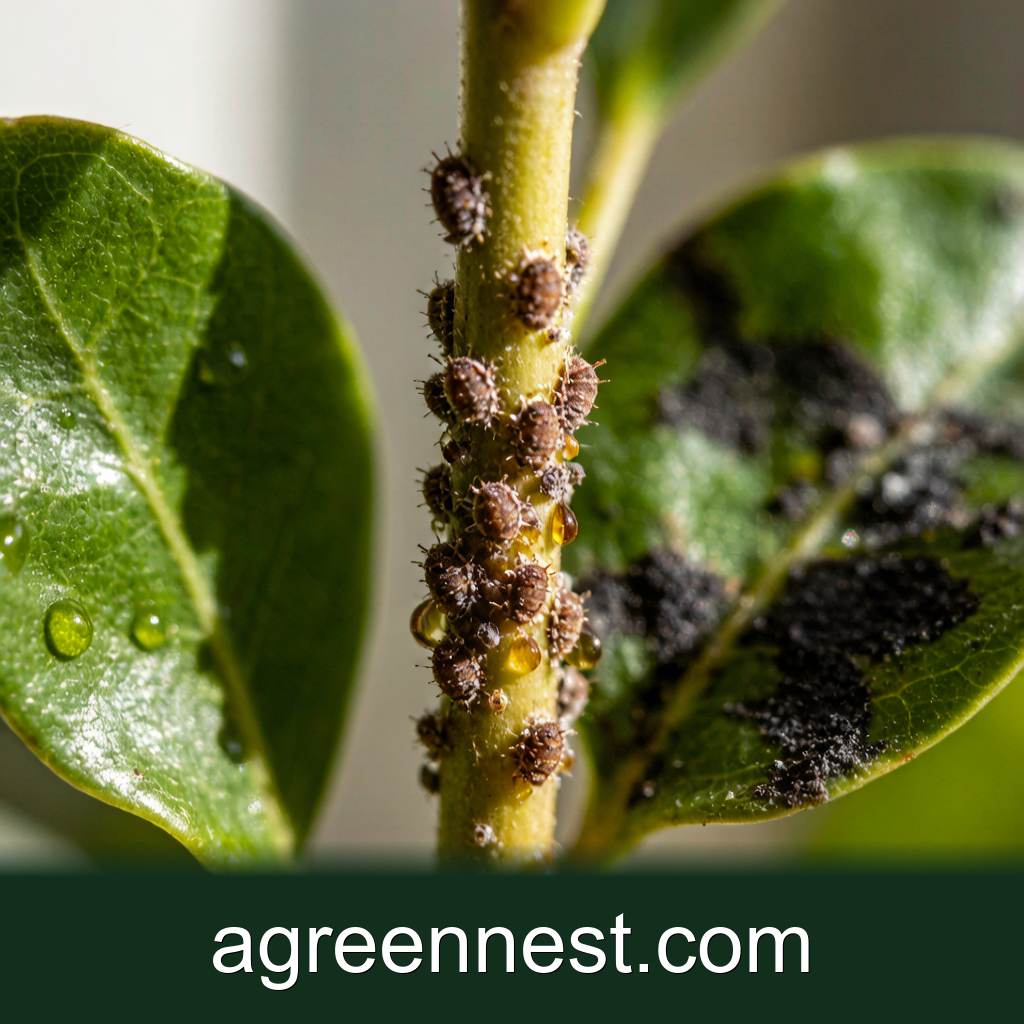
Scale are sap-sucking insects that look like small brown or tan bumps stuck to stems and leaf veins. Wipe them off with a cotton bud dipped in 70% isopropyl alcohol, then spray the plant with horticultural oil or neem every 5 to 7 days for three weeks. Sticky honeydew and black sooty mold clear once the live scale are gone.
You were admiring your plant and your thumb caught on something that did not feel like bark. You looked closer and found a row of tiny brown domes glued along the stem, each one motionless. That is scale, and the bad news is they have probably been there for weeks. The good news is they are slow movers and beatable with a cotton bud and a little patience.
What do scale insects actually look like?
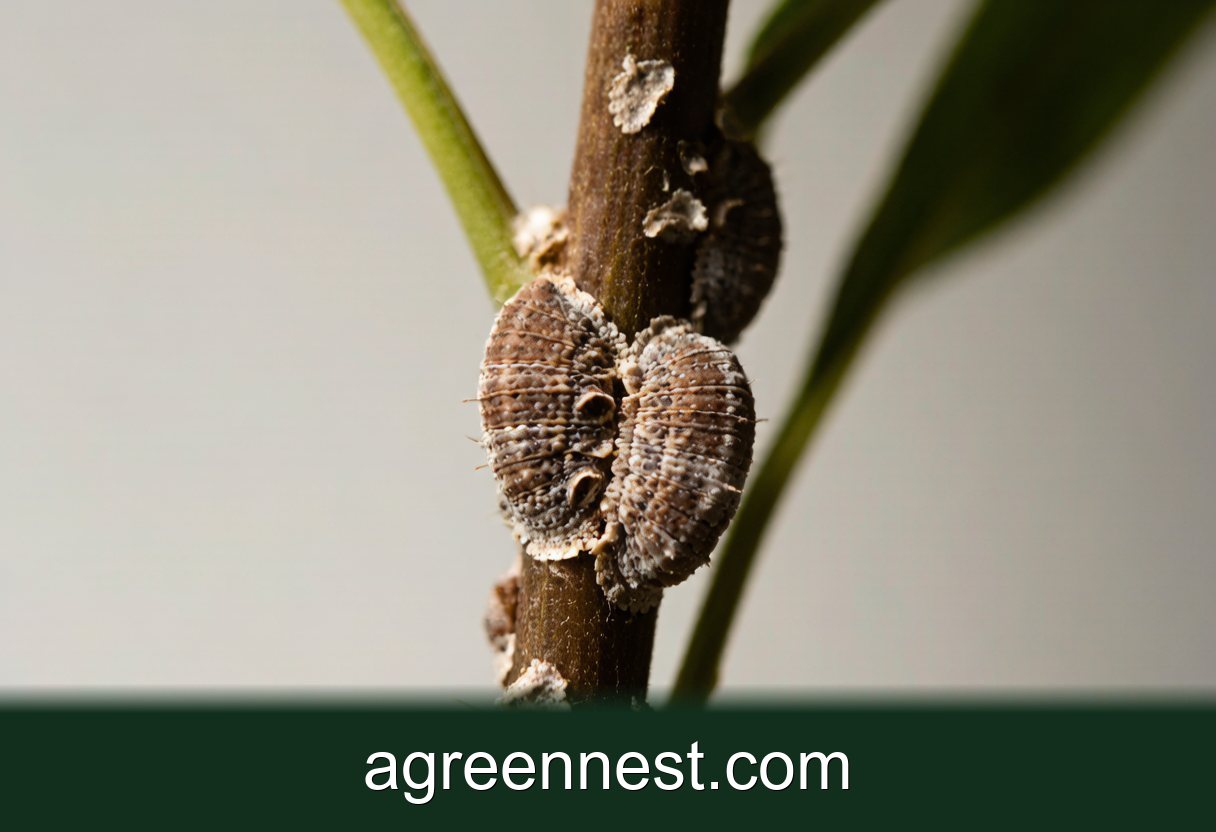
Scale hide in plain sight. They are not the scuttling bugs you picture. Adult females sit under a waxy dome and never move again, so they read as a bump rather than a bug. Two types show up on houseplants.
Soft scale are rounded, tan to brown, and about 3 to 6mm across. They feed in one spot and pump out sticky honeydew as they go. Armored scale are smaller, flatter, and grey to dark brown, with a hard shield they do not produce honeydew from. Both suck sap from stems and the underside of leaf veins, and both are easiest to spot by the damage they leave behind rather than the insect itself.
Why Are There Sticky Drops and Black Soot on My Plant?
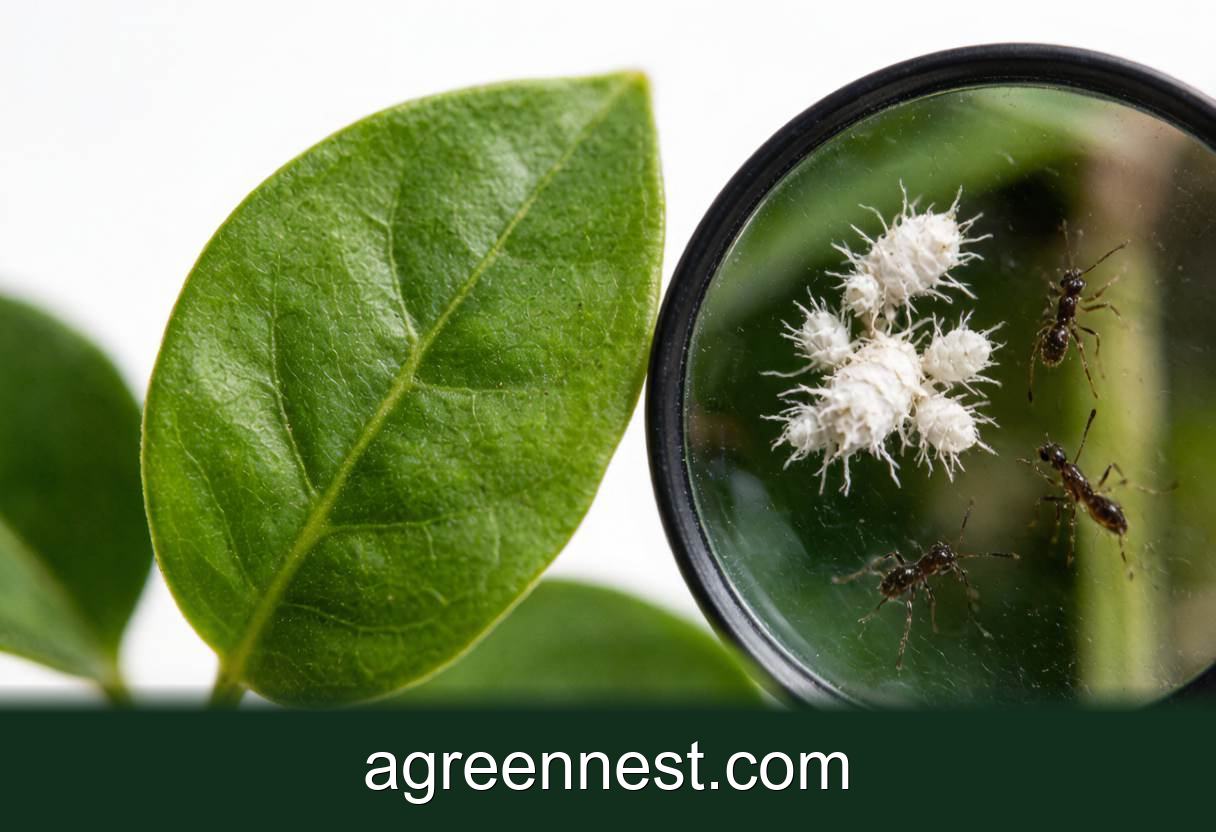
The sticky shine is honeydew, the sugar-rich waste that soft scale drip while they feed. Ants love it and will farm the scale to keep the supply coming, which is why you sometimes find ants running up the stem too. Where honeydew lands, a black, powdery sooty mold grows on the leaf surface.
Sooty mold does not bite the plant, but it blocks light and tells you something has been feeding for a while. Yellowing leaves, stalled growth, and a plant that looks tired despite decent care are the usual signs. If you only see the black film and no bumps, the live scale may already be on a neighbouring pot, so check those too.
How Did Scale Get Onto My Plant?
Scale rarely appear from nowhere. Work down this list; the first cause accounts for most home outbreaks.
- A new plant came in infested. A quarter-sized scale population hides in a nursery pot without a sign, and a single female drops hundreds of crawlers that walk to nearby plants.
- No quarantine on arrival. Most people set a new plant beside the collection for a week before noticing anything. That week is all the crawlers need.
- Low light and soft, overfed growth. Weak, sappy new shoots are easier for crawlers to pierce and settle on. A plant in a dim corner with too much nitrogen is a magnet.
- Ants are farming them. If ants are present, they move crawlers between plants and protect them from predators, so the scale keep winning.
The fix starts with isolation. Move the plant away from everything else the moment you spot bumps, and wipe down the shelf it stood on.
How Do I Get Rid of Scale in 48 Hours?
You cannot spray and walk away. Scale armor shrugs off most contact sprays, so the work is physical first and chemical second. This routine knocks the live population down within two days and finishes them off over three weeks.
- Scrub every bump. Dip a cotton bud in 70% isopropyl alcohol and rub each scale until it lifts off. The alcohol dissolves the wax shield and the bug dies on contact. Hit stems, leaf undersides, and the soil line.
- Spray the whole plant. Use horticultural oil, neem oil, or an insecticidal soap mixed to label strength, and coat every surface, because crawlers hide in leaf axils. Our neem oil shortlist covers ready-to-use and concentrate options.
- Repeat every 5 to 7 days. Eggs hatch on a cycle, so one spray misses the next generation. Three to four rounds, about 21 days, breaks it completely.
- Deal with ants. Wipe their trails and move the pot off any surface they travel, or they will ferry crawlers back.
A soft toothbrush helps on chunky stems, and a moisture meter is handy for checking the root zone is not soggy while you fuss, since wet soil makes the plant softer and more vulnerable.
Will the scale come back after treatment?
Only if you stop too early. The domes you see are the adults; the crawlers are the real problem, and they hatch in waves. Keep spraying on schedule for the full three weeks even when the plant looks clean after round two, because a missed crawler rebuilds the colony in a month.
Once it is clear, quarantine every new plant for two weeks and check the leaf axils with a magnifier before it joins the rest. Scale on a single isolated pot is a nuisance; scale across a shelf is a season-long fight, the same reason we stay sharp with root mealybugs and other slow pests. If you ever find them on a prized specimen, the scale rescue on a fiddle leaf fig walks through a longer week-by-week recovery.
Frequently Asked Questions
Can I just pick the scale off with my fingernail?
You can, and it works for light infestations, but alcohol on a cotton bud kills the bug instead of just relocating it. Fingernail scraping also tears soft stems, so the bud is gentler and more thorough.
Is neem oil enough on its own, or do I need the alcohol step?
Neem alone struggles against the hard shield of adult scale, so scrub first and use neem as the follow-up that catches the crawlers. Skipping the scrub is the main reason people think neem failed.
Are scale dangerous to my other plants, or just the one?
Crawlers walk and blow to nearby pots, so an untreated plant eventually shares them with neighbours. Isolate on sight and you usually contain it to a single pot.
My plant dropped leaves after treatment. Did I kill it?
Probably not. Leaf drop from a heavy scale load is common once feeding stops and the plant revives, and new growth replaces it. If the stem is still firm and green, give it bright light and hold off on fertilizer for a month.
Do I need to throw out the soil?
Usually no. Scale live above ground on stems and leaves, not in the mix, so a top dressing of fresh grit is enough. Repot only if the roots are also soft from the overwatering that let the infestation take hold.
Scale look frightening but they are among the most beatable houseplant pests, because they cannot run. Alcohol on a cotton bud, a thorough spray every five to seven days, and three weeks of follow-through clears them, and the sticky honeydew and sooty film disappear with the live insects. The habit that keeps them gone is a two week quarantine on every new plant, something our complete pest overview builds into a routine.
Recommended Tools for Plant Pests & Diseases Care
Free, no-signup helpers matched to this guide.
🔍 Free Tool
Pest & Problem Identifier
Pick the symptoms you see and get the likely culprit plus a fix.
Free Ebooks to Explore
Downloadable handbooks — no email required.
Free Ebook
The AGreenNest Succulent Care Handbook
The complete, beginner-to-confident guide to growing fat, happy succulents — 10 chapters and a 20-plant directory.
Free Ebook
Haworthia & Haworthiopsis Care Handbook
A focused guide to the striped, forgiving Haworthia clan.
Sources & further reading
GreenNest authors research and write every guide independently. The external links below are reputable references we recommend for deeper reading — they are not the sources we copied from.
- US EPA: Safe pest control — US Environmental Protection Agency
- NC State Extension: Plant Toolbox — NC State Extension
Join the Conversation
Have a tip or a question about Scale Insects on Houseplants: Remove Them Fast? Share it below — comments are saved on our server.