 AGreenNest
Plant Styling & Display
Styling a Floating Shelf with Plants
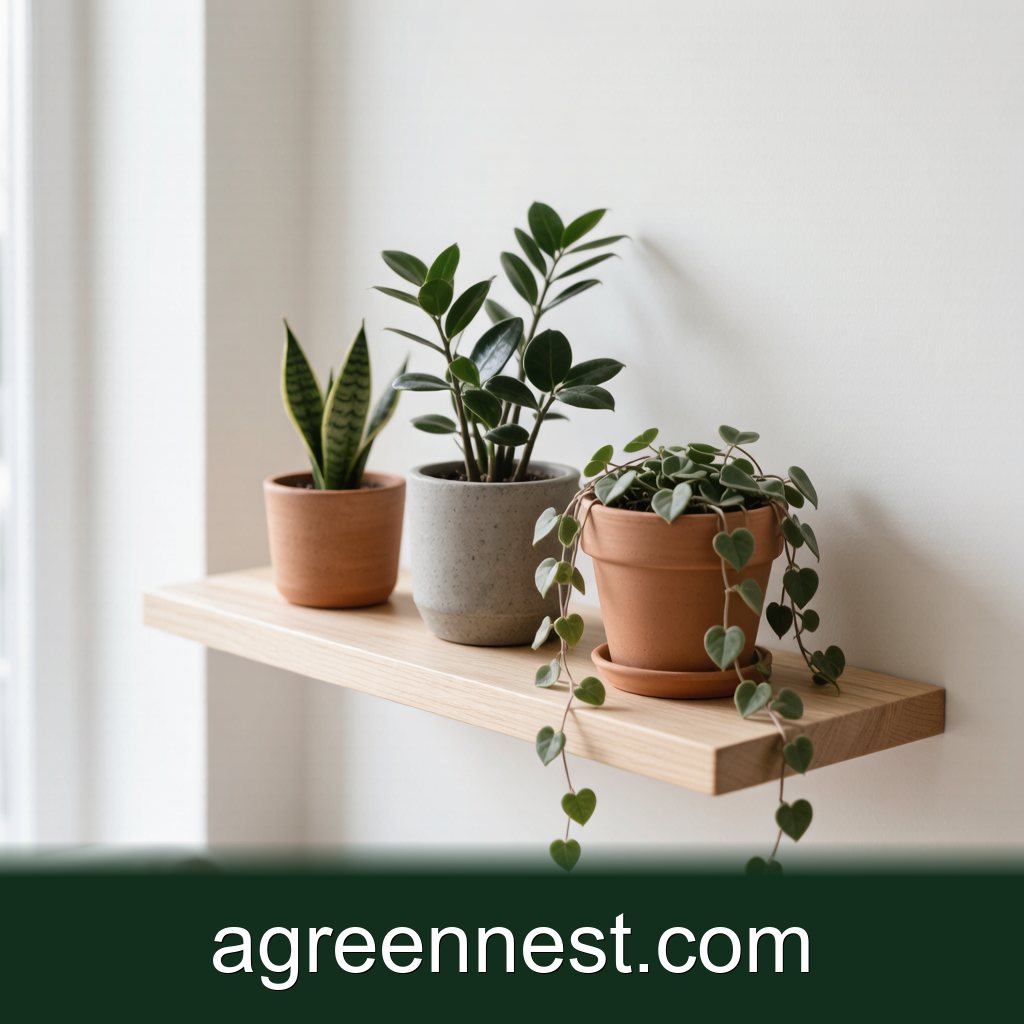
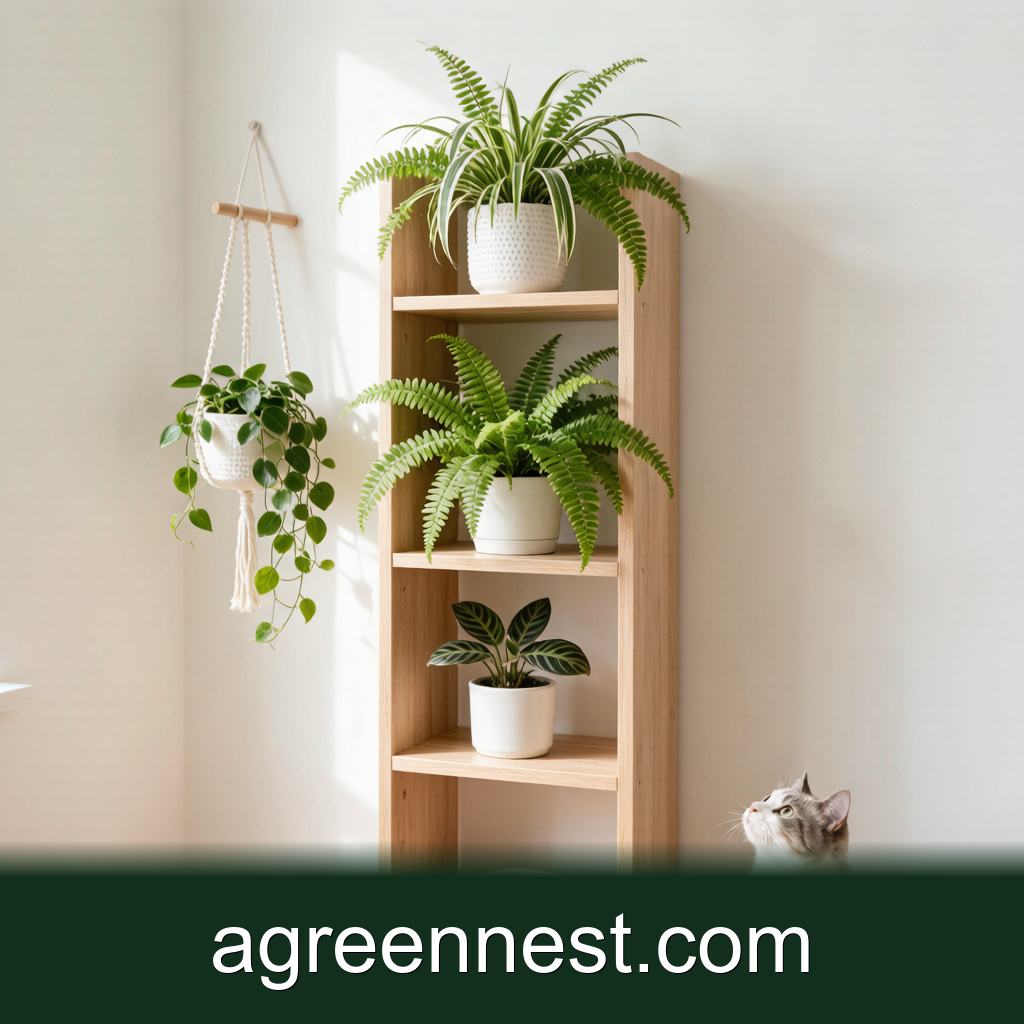
A floating shelf looks styled when you space plants 15 to 25cm apart, mix one trailing plant with two upright ones, and keep pots in one or two calm colors. Mount it at eye to chest height in bright indirect light, and set trailing plants at the ends so vines fall clear of the others.
The shelf went up in an hour, but the plants looked wrong for a week. Too close, all the same height, pots fighting each other. A wall shelf is the easiest way to add green without losing floor space, yet it is the layout most people get wrong on the first try. The fix is not more plants. It is spacing, shape, and restraint.
Pick the shelf before the plants
A shelf 60 to 90cm wide and 15 to 20cm deep holds three small plants without crowding. Wider than 120cm and the eye reads it as a bookcase, so plan for five or more and group them, or it looks like a single lonely row. Wall studs decide where it can go, so find them first with a stud finder or a small magnet; a shelf full of wet pots pulls out of hollow plaster fast.
Mount the bracket so the shelf sits at chest to eye height, roughly 120 to 150cm from the floor. That puts the foliage at a level where you actually see it, not up near the ceiling where a plant becomes a green smudge. If the only good wall is dim, the best low-light houseplants list tells you which species will cope on a shelf a metre from a window.
How Many Plants Belong on One Shelf?
Three on a 60 to 90cm shelf, spaced 15 to 25cm apart, reads as a group. Five on a 120cm shelf works if you stagger heights. Past that, the shelf looks stuffed and every plant loses its shape. The gap between pots is part of the design; do not fill it.
I learned this the hard way with seven plants on a 100cm board. It looked like a yard sale, not a display. I pulled four and the three that remained finally had room to be seen. Odd numbers (three or five) sit better than even ones, and the plant grouping rules explain why an odd count settles a shelf instead of splitting it.
Mix one trailer with two upright plants
The shape that works every time is one trailing plant at an end, two upright plants in the middle. The trailer drops its vines over the shelf edge and frames the group; the upright pair gives the eye a vertical anchor.
Good upright picks that stay small: a Sansevieria in a 12cm pot, a Zamioculcas zamiifolia (ZZ plant) at 20 to 30cm, or a small Chamaedorea elegans (parlour palm). For the trailer, string of hearts or a small pothos spills gently and grows slowly, so it will not swamp the shelf in a season. The trailing plants for shelves guide lists the hang heights that keep vines clear of the pots beside them.
Keep the pots to one or two colors
Busy, clashing pots are the second mistake. Pick one calm material, matte terracotta or soft stone grey, and let the leaves carry the color. A terracotta pot also wicks moisture, which helps if the shelf sits near a window where morning sun warms the soil.
If you want a second tone, make it a neutral, not a pattern. One cream and one charcoal across three pots reads as intentional. Three different patterns reads as random. The eye needs the repetition to read "styled."
Where should the shelf go?
Bright indirect light is the target: a wall 1 to 2 metres from an east or north window, or a south window with a sheer curtain. Direct afternoon sun through glass scorches leaves in summer, and a shelf puts plants right at that risk height. Rotate the pots a quarter turn every two weeks so all sides get light and the plants grow straight instead of leaning.
Avoid a shelf above a radiator or the cooker. Heat there dries soil in days and bakes the lower leaves. A bathroom shelf works only if it gets a window; the humidity alone will not save a plant in a dark corner, as the bedroom plant corner guide also notes about dim rooms.
The three mistakes that make a shelf look stuffed
Mistake one: no gaps. Plants jammed edge to edge hide each plant's shape. Leave 15 to 25cm between pots.
Mistake two: all the same height. A row of equal pots looks like a fence. Vary height with a small riser or by choosing species with different natural forms.
Mistake three: a trailing plant in the middle. Vines in the centre drop onto the pots beside them and tangle. Put the trailer at an end where the fall is clear.
Frequently Asked Questions
Can a floating shelf hold a heavy terracotta pot full of soil?
A small 12 to 14cm terracotta pot with soil weighs about 2 to 3kg, which most wall brackets rated for 10kg plus handle. Anchor into a stud, not just the plaster, and keep the heaviest pot near a bracket.
My shelf plants lean toward the window and look lopsided. Why?
They are reaching for light. Turn each pot a quarter turn every two weeks so growth stays even, and pull the shelf closer to the window if the lean is strong.
Is a wall shelf safe with a cat that jumps?
Not really. Cats knock shelves and pots. Use a high, closed bracket and expect losses, or keep the shelf in a room the cat cannot reach. The pet-safe houseplants list still matters because fallen leaves get chewed.
How often do shelf plants need water compared to floor plants?
Soil on a warm wall dries a little faster, so check by feel every 7 to 10 days in summer rather than on a fixed date. A moisture meter takes the guesswork out on a shelf you cannot tilt to check.
One plant is declining but the others are fine. What do I do?
Move the sick one off the shelf to a brighter or shadier spot depending on the symptom, and check it for pests before it shares them. Our why leaves turn yellow guide helps you read the sign.
A floating shelf looks styled when you stop adding and start spacing. Three plants, one trailer at the end, one or two pot colors, and a wall with steady indirect light. Build the group slowly and the wall does the work. For the wider picture on placing plants in a room, the reading nook plant corner guide extends the same ideas to a seated space.
Recommended Tools for Plant Styling & Display Care
Free, no-signup helpers matched to this guide.
Free Ebooks to Explore
Downloadable handbooks — no email required.
Free Ebook
The AGreenNest Succulent Care Handbook
The complete, beginner-to-confident guide to growing fat, happy succulents — 10 chapters and a 20-plant directory.
Free Ebook
Haworthia & Haworthiopsis Care Handbook
A focused guide to the striped, forgiving Haworthia clan.
Join the Conversation
Have a tip or a question about Styling a Floating Shelf with Plants? Share it below — comments are saved on our server.