 AGreenNest
DIY Plant Projects
Build a Macrame Plant Hanger From Paracord
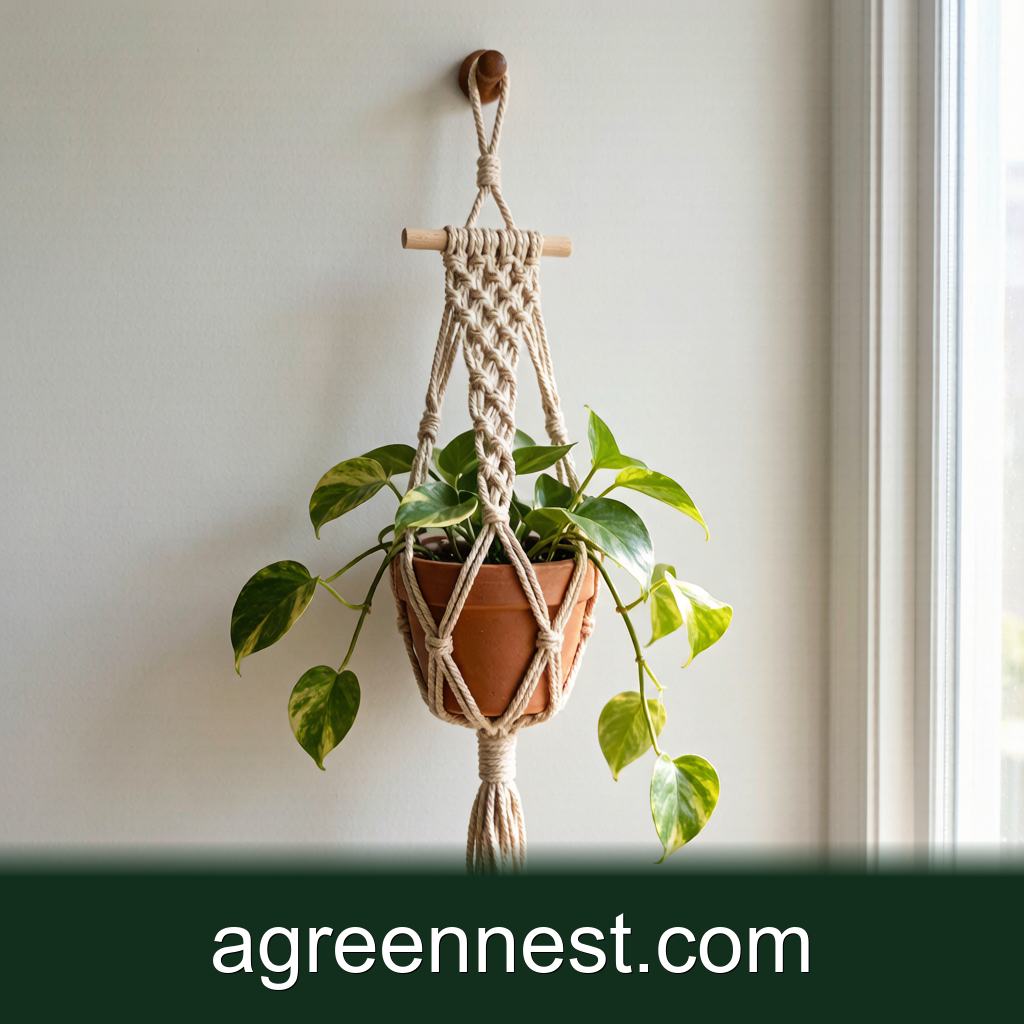
Build a macrame plant hanger by cutting eight 90cm cords, tying them to a 4cm ring with a gather knot, then working square knots in two rows 15cm and 30cm down. Finish with a hanger basket 35cm below the ring and a wrapped knot. A 12 to 15cm pot weighs under 2kg and hangs safe from a screw hook.
Last spring I wanted to lift a trailing pothos off the floor without spending thirty dollars on a woven hanger. The shop versions are fine, but the cord is thin and the ring is plastic. I built my own from paracord in twenty minutes, and it has held a 15cm pot through two apartment moves. Paracord is rated for 250kg per strand, so the strength question is settled before you start. This build uses eight cords and two square knot rows, no fancy tools, and costs about four dollars.
Why Build Your Own Instead of Buying?
A store hanger uses decorative cotton that stretches and rots when it gets wet from watering. Paracord is nylon, does not rot, and resists the drip from a hanging pot. You also control the length, so the plant clears head height in your exact room. A bought hanger is often 70cm long, which is wrong for a low ceiling. Building lets you set 35cm from ring to basket, or 50cm if your ceiling is high.
The cost is the other reason. Eight metres of paracord runs about three dollars, a 4cm steel ring is one dollar, and the screw hook is another dollar. Total under five, versus twenty five for a comparable shop item. The knot work is repetitive, not hard, and the result looks intentional rather than mass produced.
What you need
- 8 metres of 4mm paracord, cut into eight 90cm lengths
- One 4cm diameter steel ring (not plastic) for the top
- One 5kg rated screw hook for the ceiling
- A measuring tape and a pair of sharp scissors
- A lighter to melt the cut cord ends so they do not fray
- A 12 to 15cm pot with a rounded base that sits in the knot basket
Use 4mm cord, not 2mm. Thin cord cuts into the pot rim and looks skimpy. Eight strands of 4mm hold far more than the 2kg a wet pot weighs, so the safety margin is enormous.
How Does the Load Path Actually Work?
The weight travels from the pot up through the four knot pairs to the ring, then into the screw hook and the ceiling joist. Each square knot pair shares the load, so no single cord carries the full 2kg. The gather knot at the top locks all eight cords to the ring so they cannot slip. If one cord is cut, the other seven still hold, which is why eight strands matter more than the look.
The trap in most builds is a weak ring attachment. Tie the gather knot tight and melt the working ends, because a slipped cord drops the pot. Test the finished hanger by pulling down on the basket with both hands before you trust it with a plant.
Step 1: Prepare the cords
Fold each of the eight cords in half and loop it over the steel ring so you have sixteen tail ends hanging down, each about 45cm long. Pull the loop snug against the ring. Melt the very tip of every cut end with the lighter for one second so the nylon does not unravel while you work. Lay the ring on a hook at eye height or hold it under a chair, because you need both hands free for the knots.
Step 2: Tie the gathering knot
Take all sixteen ends and bind them together 4cm below the ring with a separate 30cm cord, wrapping it tightly five times and tucking the end through the loop, then pulling it tight. This is the gather knot and it locks the working cords to the ring. Slide it up so it sits right against the ring. The sixteen tails now hang as eight pairs, each pair made of two cord ends side by side.
Step 3: Work the square knot rows
Split the sixteen tails into eight pairs, then take one pair from the left and one pair from the right and tie a square knot 15cm below the ring. Move one pair to the right and repeat so you make four square knots across, using each cord once. Drop 15cm and tie a second row of four square knots, this time pairing the cords that are now adjacent. Keep the knots firm but not so tight the cords kink. The two rows form the cradle that holds the pot.
Step 4: Form the basket and finish
Below the second row, bring all sixteen tails together 35cm under the ring and tie a final gather knot to form the basket base. Spread the cords so the pot sits in the cradle, then trim the tails to 6cm and melt the ends. Screw the 5kg hook into a joist or use a hollow wall anchor, hang the ring, and lower a 12 to 15cm pot into the basket. The pot should rest on the lower knot, not dangle by the rim.
What to grow, and what to avoid
Best tenants are light trailing plants: a pothos in a 12cm pot weighs about 1.2kg wet and fills the hanger fast. Ceropegia woodii is even lighter. A snake plant is too upright and heavy at the top, and a 15cm terracotta pot can hit 3kg, so keep terracotta for a joist hook only.
Do not hang a mature Monstera or any pot above 15cm, because the load and the swing risk the ceiling. A self watering planter in the basket keeps the vine supplied for two weeks if you travel. Check the screw hook every month for loosening, because a ceiling joist dries and shifts with the seasons.
Frequently Asked Questions
How much weight can this hanger actually hold?
A: Eight strands of 4mm paracord are rated for roughly 250kg combined, so the limit is the screw hook at 5kg. Keep the pot under 2kg and the hanger will outlast the plant. Replace the hook if it shows any thread wear.
My ceiling is concrete. Can I still hang it?
A: Yes, with a masonry anchor and a drill. Use a rated expansion bolt, not adhesive, because a wet 15cm pot is far too heavy for sticky pads. A curtain rail bracket is a fair alternative fix point.
Can I wash the hanger when it gets dusty?
A: Yes. Untie the lower gather knot, slip the pot out, and hand wash the cord in lukewarm water, then air dry before re knotting. Nylon paracord dries in a few hours and does not shrink.
A paracord macrame hanger costs under five dollars, takes twenty minutes, and holds a trailing plant well above the floor. Build one this weekend and hang a pothos in it, then scale the cord length to your own ceiling. For the wall version of the same idea, our wall planter build keeps the green off the floor a different way.
Recommended Tools for DIY Plant Projects Care
Free, no-signup helpers matched to this guide.
Free Ebooks to Explore
Downloadable handbooks — no email required.
Free Ebook
The AGreenNest Succulent Care Handbook
The complete, beginner-to-confident guide to growing fat, happy succulents — 10 chapters and a 20-plant directory.
Free Ebook
Haworthia & Haworthiopsis Care Handbook
A focused guide to the striped, forgiving Haworthia clan.
Sources & further reading
GreenNest authors research and write every guide independently. The external links below are reputable references we recommend for deeper reading — they are not the sources we copied from.
- Michigan State University Extension — Michigan State University
- University of Florida IFAS — UF IFAS
- Oregon State University Extension — Oregon State Extension
Share Your Plant Story
Grown something tricky, or found a trick that finally worked? Tell us in the comments, or see what other readers are sharing on our Community page. The best reader tips get folded back into our guides.

Join the Conversation
Have a tip or a question about Build a Macrame Plant Hanger From Paracord? Share it below — comments are saved on our server.