 AGreenNest
DIY Plant Projects
Turn a Cabinet into an Indoor Greenhouse
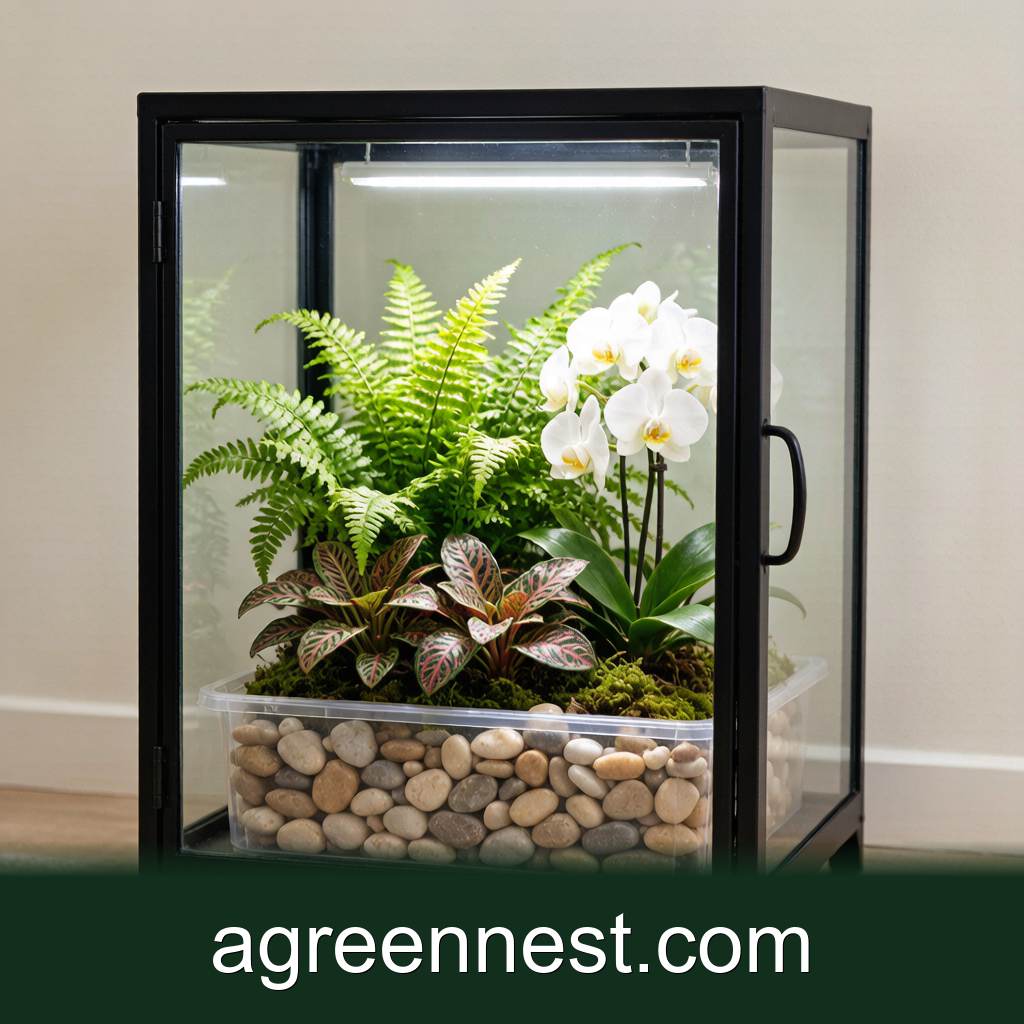
Turn a glass-front cabinet, like an IKEA Rudsta or a curio case, into a greenhouse by adding a small fan and a humidity source. Strip the shelves, line the back with a light, seal the gaps, and set plants on pebble trays. Aim for 60 to 80 percent humidity and 18 to 24C so ferns and orchids thrive indoors.
I rescued a $25 second-hand curio cabinet from a flea market and turned it into the most looked-at thing in my flat: a sealed glass greenhouse that grows maidenhair ferns I used to kill in a week. The build takes an afternoon and a few cheap parts, and it solves the one problem every humidity lover hits in a heated home. The air inside stays damp while the room stays normal.
What you need
- A glass-front cabinet with a door, about 40 to 80cm wide (an IKEA Rudsta, a curio case, or any display box)
- A small USB fan, 5 to 10cm, with a plug or power bank
- A LED strip light, 5 to 15 watts, that sticks to the back panel
- Two or three shallow trays and a bag of pebbles or horticultural gravel
- A hygrometer that reads humidity, about $8
- Plants that like damp air: ferns, fittonia, orchids, moss, small calatheas
- Weatherstrip tape or clear silicone if the door gaps
That is the whole parts list. No plumbing, no misting system, no power tools beyond a screwdriver. The same shelf skills appear in our bottle terrarium build if you want a smaller first project.
Step 1: Strip and clean the cabinet
Pull out any fabric backing and spare shelves you will not use, then wash the glass inside and out with warm water and a drop of dish soap. Dust and old residue inside a sealed box grows mould fast, so start clean. Leave two or three shelves spaced 20 to 25cm apart so the tallest plant has headroom and the light reaches the lower rows.
Dry the cabinet fully before you add anything. A damp corner at the start becomes a mould corner by week two.
Step 2: Add light to the back panel
Stick the LED strip along the top of the back panel, running down one side or across the top, so it lights the whole depth. A 10 to 15 watt full-spectrum strip is enough for a 60cm cabinet. Plug it into a timer for 12 hours a day; plants in a sealed box still need a night.
Keep the strip off the glass where plants touch it, since even a cool LED warms a leaf that leans against it. Our grow light guide covers the distance and spectrum that leafy plants want.
Step 3: Set up air and humidity
Set a shallow tray of pebbles on the floor of the cabinet and pour water to just below the top of the stones, so the pots sit above the waterline and the evaporation raises humidity. Add a second tray on a middle shelf for taller boxes. The small fan runs on low, pointed at the back wall, to keep the air moving so mould cannot settle.
Aim for 60 to 80 percent humidity on the hygrometer and 18 to 24C. If the reading climbs past 85 percent and the glass sweats all day, crack the door for an hour. Stale still air is the enemy, not the damp itself.
Step 4: Stage the plants
Place pots on the pebble trays, not directly in water. Group by need: ferns and fittonia on the humid floor, orchids and calatheas on the drier mid shelf. Leave a gap at the front so the door closes and air still moves. Use the grouping rules for height, with tall behind and trailers at the front edge.
Do not crowd the box. Three to six small plants in a 60cm cabinet look full without trapping air. A bathroom shelf is the open-air cousin of this build if you lack a cabinet.
Step 5: Seal and monitor
Close the door and check the hygrometer after an hour. If humidity sits low, add water to the trays or a damp towel rolled at the base. If it is too high, open the door a crack. Run the fan whenever the door is shut. Mark the watering day on a card so you do not flood the trays.
The cabinet now runs itself. You top up the trays every few days and wipe the glass when it fogs. The plants drink the air.
Which plants belong in a cabinet greenhouse?
Humidity lovers that fail in dry central heating are the stars here:
- Maidenhair fern: the classic test plant, thrives at 70 percent plus.
- Fittonia (nerve plant): pink and white veins pop under the soft light.
- Moth orchid (Phalaenopsis): reblooms when the air stays damp and warm.
- Calathea and maranta: the fussy prayer plants that crisp in dry rooms.
- Moss and small peperomia: carpet the base and fill gaps cheaply.
Skip cacti and most succulents, which rot in sealed damp air. A low-light list flags more candidates that like the still, mild climate.
Why are the leaves browning at the edges?
Brown crispy edges usually mean the air is too dry, not too wet, so top up the trays and check the fan is not blowing straight on the leaf. Soft brown patches with a fuzzy grey centre mean the opposite: too much water and no air, so open the door and cut back. Yellow dropping leaves often point to cold drafts from a gap, so seal the door edges with weatherstrip.
A sealed cabinet is a small climate you control. Once the numbers steady, the plants that used to die on a windowsill settle in and grow.
Frequently Asked Questions
Do I need a fancy IKEA cabinet or will any box work?
Any glass-front display case works, including a second-hand curio or a medicine cabinet with the door kept shut. The seal matters more than the brand. A tight door holds humidity; a glass box with a wide gap needs constant topping up.
How often do I water plants inside the greenhouse?
Far less than out in the room. The trapped humidity slows soil drying, so check the top 2cm with a finger and water only when it feels dry. Ferns may need a light drink every 5 to 7 days, orchids every 10 to 14.
Is the fan really necessary?
Yes. Still sealed air grows mould on the soil within days. A $6 USB fan on low keeps air moving and prevents the fuzzy grey patches. Point it at the wall, not at a plant, so leaves do not dry out.
My cabinet sweats constantly. Is that bad?
Constant heavy condensation means too much water in the trays or no air exchange. Open the door for an hour, lower the water level, and run the fan. Light morning fog that clears is healthy; all-day soak is not.
Can I put the cabinet in a cold room?
Keep it at 18 to 24C. A cold garage or unheated porch drops the temperature and the plants stall or rot. A warm living room corner is ideal, away from direct sun that bakes the sealed glass.
A cabinet greenhouse is a stripped box, a sticky light, a pebble tray, and a small fan that together hold 60 to 80 percent humidity for the ferns you could never keep alive. Strip it, light the back, tray the base, and seal the door, then let the hygrometer guide the rest. The same damp-loving species that failed on your bookshelf will thrive behind glass.
Recommended Tools for DIY Plant Projects Care
Free, no-signup helpers matched to this guide.
Free Ebooks to Explore
Downloadable handbooks — no email required.
Free Ebook
The AGreenNest Succulent Care Handbook
The complete, beginner-to-confident guide to growing fat, happy succulents — 10 chapters and a 20-plant directory.
Free Ebook
Haworthia & Haworthiopsis Care Handbook
A focused guide to the striped, forgiving Haworthia clan.
Join the Conversation
Have a tip or a question about Turn a Cabinet into an Indoor Greenhouse? Share it below — comments are saved on our server.