 AGreenNest
DIY Plant Projects
Build a Rolling Plant Caddy in 20 Minutes
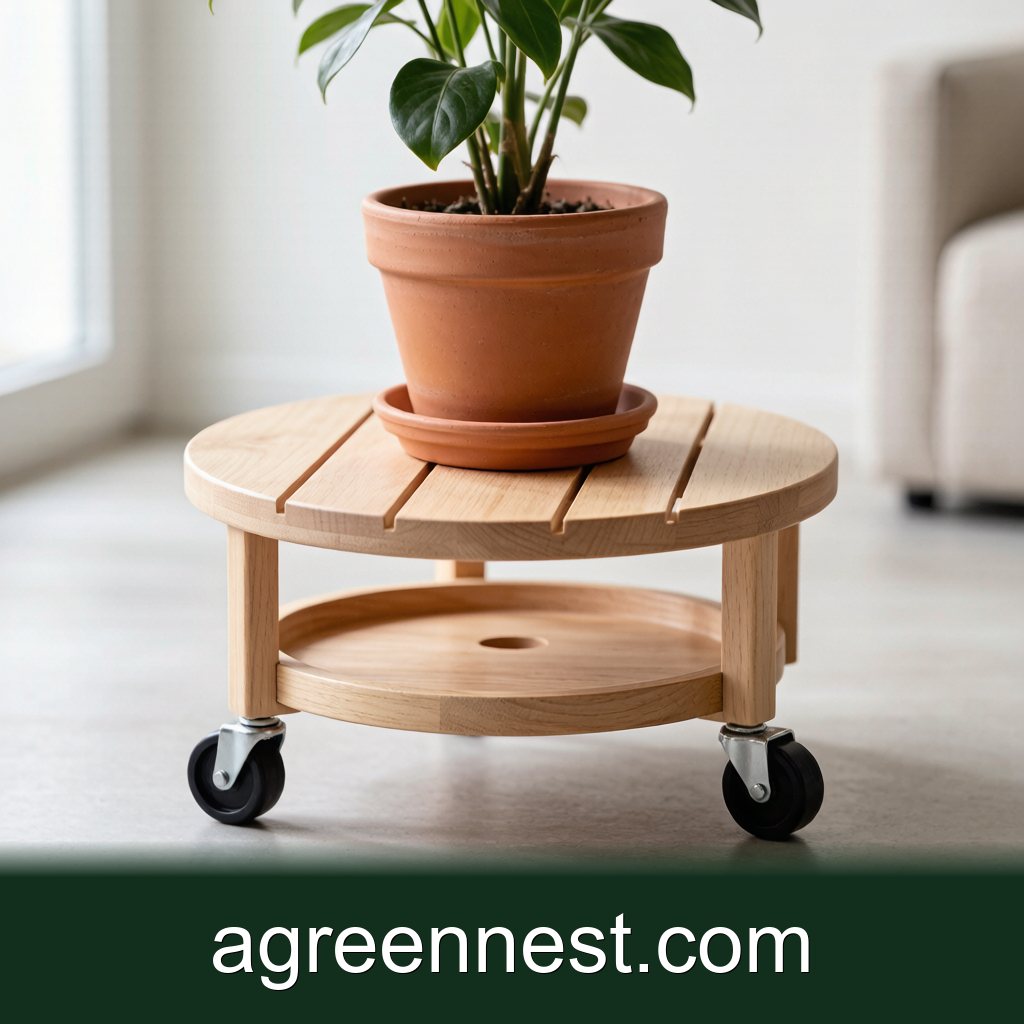
A plant caddy is a base fitted with four swivel casters that lets you roll a heavy pot instead of lifting it. Build one from an 18mm plywood disc 30 to 45cm wide and four 50mm casters rated 25 to 40kg each, fixed with 16mm screws. Add locks if the pot sits on a slope or near a draft.
I moved a 12kg Ficus lyrata by deadlifting it exactly once. The pot tipped, the soil spilled across the floor, and my lower back complained for a week. After that I stopped lifting plants and started rolling them. A caddy is the cheapest insurance against a strained back and the fastest way to chase winter sun around a room without hauling pots.
This is a base on wheels. Nothing fancy, no joinery, and no power tools required if you buy a pre-cut circle. The whole job takes about 20 minutes plus an hour for the sealant to dry. Here is the exact bill of materials and the one detail that separates a caddy that lasts from one that sheds wheels in a month.
What you need
Keep the list short. You can buy everything in a single hardware run.
- One base: an 18mm thick plywood disc 30 to 45cm across, or a square cut to the same footprint as the pot's saucer. Use 36 to 45cm for pots 25cm wide or larger.
- Four swivel casters, 50mm (2 inch) wheel, each rated 25 to 40kg. That gives a safe load of 100 to 160kg total, far above any indoor pot.
- 16mm wood screws, four per caster, plus a screwdriver or drill.
- Outdoor polyurethane, linseed oil, or a clear deck sealant to protect the wood from spills.
- Optional: four locking casters, or two lock and two free, if the pot sits on a slope or near an open window.
Total cost runs 12 to 20 dollars if you already own a screwdriver. A metal plant trolley from a garden store costs three times that and rarely fits an odd shaped pot.
Step 1: Cut or buy the base
A circular base looks clean and rolls in any direction, which is why I prefer it. Most hardware stores sell pre-cut birch circles in the craft aisle; a 36cm disc suits a 20 to 25cm pot. For a bigger Dracaena fragrans or a mature monstera, go to 45cm so the pot lip overhangs by 2 to 3cm without tipping.
If you cut your own, mark a circle with a string compass and a pencil, then cut with a jigsaw. Sand the edge so it does not snag a sock. Square bases are fine too and easier to cut, but they catch on corners when you turn, so I reach for the circle.
Step 2: Mark and pre-drill the caster holes
Lay the base face down. Place each caster near a corner, about 2cm in from the edge, and mark the four screw holes with a punch or nail. Pre-drill with a bit slightly narrower than the screw shank so the plywood does not split. Splitting is the main reason a caster works loose later.
Keep the casters symmetric. If one sits off centre the pot rocks, and a rocking 15kg pot walks itself off the base. Measure twice from each edge and you avoid the problem entirely.
Step 3: Fix the casters
Drive all four screws by hand or on a low clutch so you do not strip the head. The caster plate should sit flush with no gap, because a gap is a lever that works the screw loose every time the pot rolls over a floor tile lip.
Use the locking type if the plant lives on a hardwood floor near a draft, because a free caster and a sloped floor will drift the pot into the wall overnight. Two locks on the rear and two free on the front gives you control and still swings around corners.
Step 4: Seal the wood
Pots leak. A saucer catches most of it but condensation and overflow reach the plywood, and unsealed ply delaminates in a season. Brush on one coat of outdoor polyurethane or two coats of linseed oil and let it cure an hour.
This step is the difference between a caddy that lasts years and one that crumbles. Skip it only if the base is plastic or metal, which needs no seal.
Step 5: Set the pot and test the roll
Place the pot, saucer and all, on the centre of the disc. Roll it in a figure eight across the floor to confirm the wheels spin and the pot stays put. If it wobbles, check that all four casters touch the floor; an uneven floor is normal in older homes, and a thin rubber foot under the light corner levels it.
Now the plant goes where the light is, not where you can carry it. A Calathea that fried by the south window last summer moves to the east wall in thirty seconds, and the weekly floor wipe under it takes no acrobatics.
Which plants actually need a caddy?
Heavy ones. Anything in a pot 25cm wide or more, and anything you move more than twice a season. Floor specimens like Ficus lyrata, Dracaena fragrans, a mature Monstera deliciosa, and most palms earn a caddy on day one. Small desktop pots under 15cm do not, because you can lift those with one hand and a caddy just adds height.
Trailing plants in hanging baskets are a grey area. If the basket sits on a plant stand you move for light, a low caddy helps. If it hangs from a hook, skip it.
Do I need locking wheels, or are free casters fine?
Free casters are fine on flat, level floors away from drafts. You need locks the moment the pot sits on a slope, near an open window, or on a slick tile floor where a nudge sends it sliding. Two locks and two free is the sweet spot: locked rear wheels stop drift, free front wheels still let you pivot the pot to clean behind it.
If you already run a wall planter build or a moss pole, the caddy is the ground level piece of the same roll-it-don't-lift-it habit. And when you reposition a plant for better exposure, pair the move with a look at the grow light shortlist so the new spot still meets the plant's needs in deep winter.
Frequently Asked Questions
How much weight can a four caster caddy actually hold?
With 50mm casters rated 30kg each you get 120kg of safe load, which covers any indoor pot including a fully watered 45cm monstera. Cheap 15kg casters still give 60kg, enough for most floor plants, but I buy the higher rating so the wheel frame does not bend.
Will the casters scratch my hardwood floor?
Hard nylon or steel wheels can mark soft wood. Use soft rubber tyred casters on hardwood and the floor stays clean. On tile or vinyl any wheel type is safe.
Can I put a caddy under a pot without a saucer?
You can, but water then sits on the wood. Always use a saucer, and seal the ply as in step 4, or the base rots where the pot drips.
My caster keeps falling off after a few weeks. Why?
Almost always split plywood from missing pilot holes, or screws too short to bite. Pre-drill every hole and use at least 16mm screws into 18mm stock so the thread engages full depth.
Is a square or round base better?
Round rolls in any direction and turns in tight spaces, so it wins for most rooms. Square is easier to cut from a offcut and fine on open floor, but it catches corners when you pivot.
A caddy turns a back breaking chore into a thirty second roll, and it pays for itself the first time you slide a heavy Ficus out of the way to clean. Cut or buy an 18mm disc, screw on four rated casters, seal the wood, and the pot goes wherever the light is. For the bigger picture on moving and supporting plants, the bottle terrarium build is the natural next project once the heavy pots roll where you want them.
Recommended Tools for DIY Plant Projects Care
Free, no-signup helpers matched to this guide.
Free Ebooks to Explore
Downloadable handbooks — no email required.
Free Ebook
The AGreenNest Succulent Care Handbook
The complete, beginner-to-confident guide to growing fat, happy succulents — 10 chapters and a 20-plant directory.
Free Ebook
Haworthia & Haworthiopsis Care Handbook
A focused guide to the striped, forgiving Haworthia clan.
Sources & further reading
GreenNest authors research and write every guide independently. The external links below are reputable references we recommend for deeper reading — they are not the sources we copied from.
- Michigan State University — CANR — Michigan State University
- NC State Extension — Plant Toolbox — NC State Extension
- University of Minnesota Extension — U Minnesota Extension
Join the Conversation
Have a tip or a question about Build a Rolling Plant Caddy in 20 Minutes? Share it below — comments are saved on our server.