 AGreenNest
Plant Styling & Display
How to Style an Empty Corner With Plants
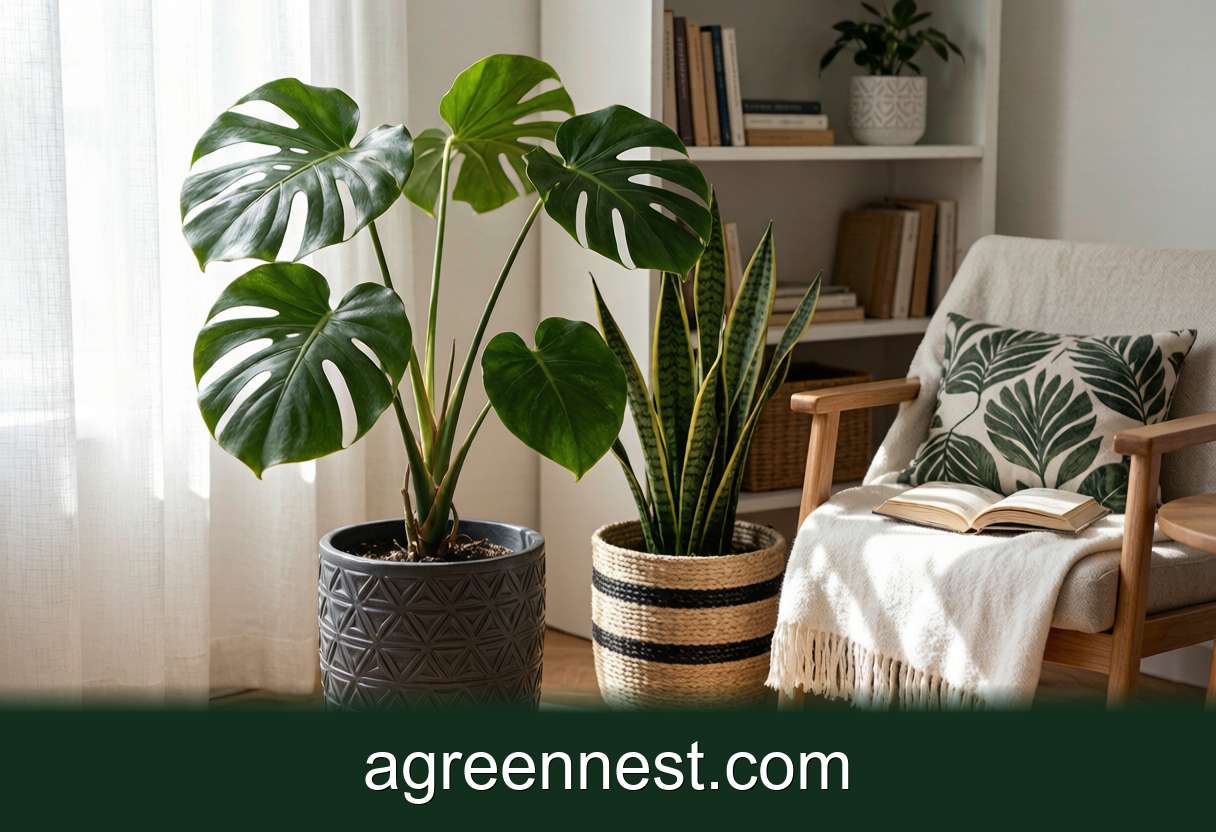
To style an empty corner with plants, build three heights: a floor plant 1.2 to 1.8m tall at the back, a mid-height plant on a stool at 60 to 90cm, and a trailing plant above. Pick species for the corner's real light, and leave a hand's width of air between pots.
Every home has one. The corner that gathers a stray charger cable, a bag you meant to put away, and nothing else. Mine was the awkward wedge between the sofa and the balcony door, and for two years I filled it with a floor lamp I did not like. Then I moved three plants into it, and the whole room finally looked finished.
A plant corner is the easiest styling win in a room, because you are working with vertical space that furniture cannot use. Here is how I build one so it reads as intentional rather than a pile of pots.
Read the light before you buy anything
The single thing that decides whether your corner thrives or slowly declines is light, and corners are usually the darkest part of the room. Before you fall for a plant, stand in the corner at midday and look at the nearest window. If it is more than 2m away or around a wall, you are working with genuine low light.
I learned this the expensive way, having killed a Ficus lyrata in exactly this spot because I wanted it there, not because it belonged there. Match the plant to the corner you actually have. For a dim spot, the low-light plant list is where I start; for a corner near a bright window, your options open right up.
Build in three heights
The trick that makes a corner look designed is layering height, so the eye travels up instead of stopping at a single blob of green. I use three tiers.
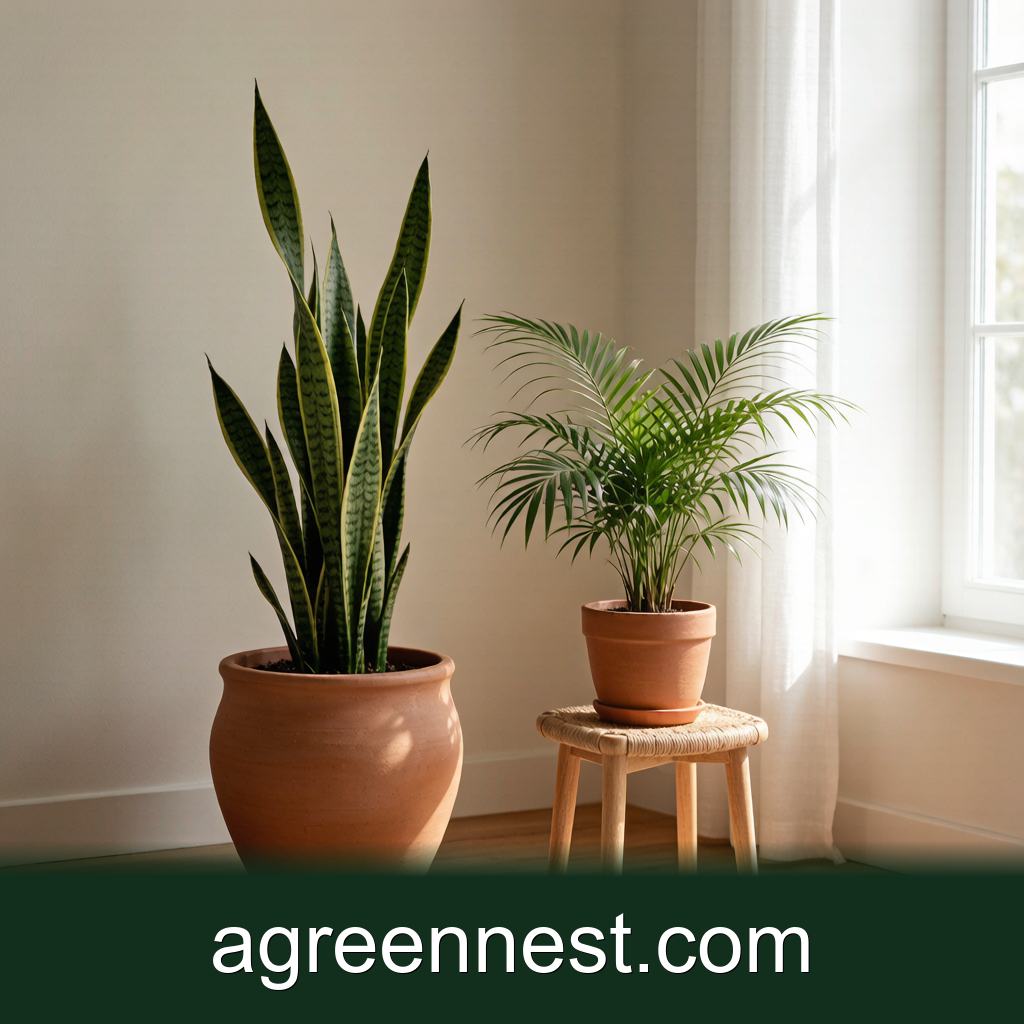
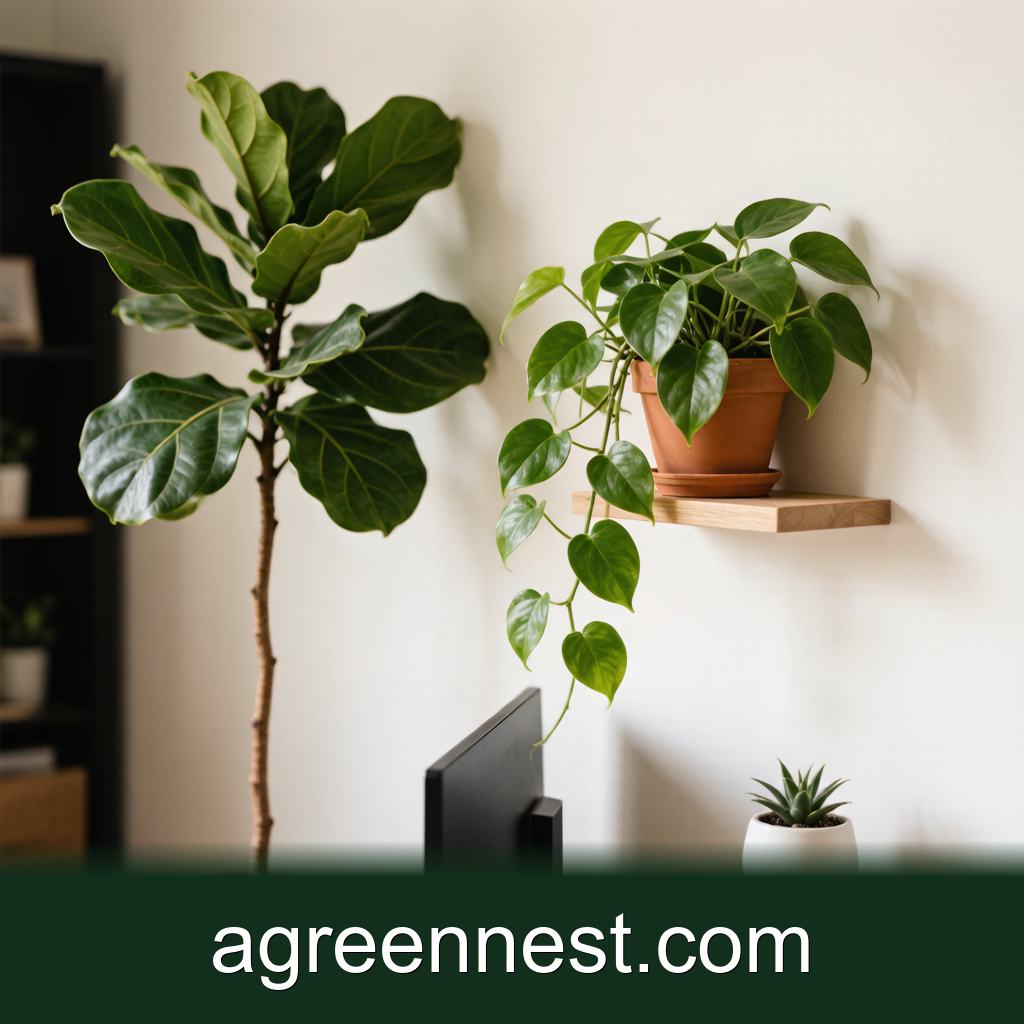
At the back, against the walls, goes the tall anchor: a floor plant 1.2 to 1.8m high in a substantial pot. A Zamioculcas zamiifolia or a Dracaena works in shade; a bird of paradise if the light is good. In front and to one side, a mid-height plant sits on a plant stand or a stool at 60 to 90cm, filling the gap between floor and anchor. Then something trailing trails, from a shelf bracket or the top of the tall plant, to soften the vertical lines.
Three plants at three heights beats seven plants all the same size. If you want the deeper logic behind why odd numbers and staggered heights work, I set it out in the plant grouping rules.
What plants work best in a room corner?
For a low-light corner, my reliable trio is a Zamioculcas zamiifolia as the floor anchor, a cast-iron plant at mid-height, and a pothos trailing above. All three tolerate a dim spot and shrug off an uneven watering hand, which matters because a back corner is easy to forget.
For a brighter corner near a window, I reach for a fiddle-leaf fig or a rubber plant as the anchor, a Chinese evergreen for colour at mid-height, and a string of hearts spilling down. Whatever you choose, keep the pots in one or two materials, terracotta and a warm ceramic, say, so the grouping feels collected rather than random.
Get the spacing and the pots right
Crowding is the mistake I see most. Pots shoved rim to rim look like a nursery shelf, and the plants compete for the same air. Leave roughly a hand's width, about 10 to 15cm, between pots so each plant keeps its own shape and airflow moves through the group.
Vary the pot heights as well as the plant heights. A short plant lifted on a stool can sit taller than a floor plant, which lets you play with the arrangement without buying bigger specimens. I keep a couple of overturned crates and a wooden stool on hand purely for staging. Raising a pot off the floor also protects the leaves from cold drafts that pool at ground level near a balcony door.
Why does my plant corner still look messy?
Usually it is one of three things, and none of them is the plants. First, the pots do not match, so the eye reads clutter instead of a group. Pick a palette of one or two pot colours and the whole corner calms down.
Second, the heights are too similar, so there is no flow for the eye to follow. Add a stool or swap one plant for a taller specimen. Third, there is stuff around the base: the charger cable, the stray bag, a watering can left out. A plant corner only reads as styled when the floor around it is clear. I keep a small basket nearby for the bits that used to live in that corner, and the tools stay out of sight.
Keep it healthy, not just pretty
A gorgeous corner that slowly browns is worse than an empty one, so give it five minutes a week. Rotate each pot a quarter turn so the plants do not lean toward the light and go lopsided. Check the soil by finger before you water, because a shady corner dries far slower than a sunny sill and overwatering is the fast route to trouble.
Wipe dust off the big leaves once a month; a floor plant in a corner collects it and dust cuts the light the plant is already short on. Group plants with similar thirst so one watering session suits them all. If your corner sits near a heat source or an air-conditioning vent, expect it to dry faster and adjust. The reward for that small routine is a corner that looks better each season instead of quietly declining.
Frequently Asked Questions
Q: My corner gets almost no natural light. Can I still put plants there?
A: Yes, but keep expectations honest. A Zamioculcas zamiifolia or cast-iron plant survives genuine shade, and a small grow light on a timer lets you use tougher, prettier plants. Without either, most plants stretch and thin out within a couple of months.
Q: How many plants make a good corner grouping?
A: Three is the sweet spot for most corners: a tall anchor, a mid-height plant, and a trailer. Odd numbers look more natural than even ones, and three heights give the eye somewhere to travel. Five works in a large corner if you keep the spacing generous.
Q: Should all the pots match?
A: They should share a palette, not be identical. One or two materials and a consistent colour family reads as designed; a jumble of every pot you own reads as storage. I mix terracotta with one warm ceramic and stop there.
Q: What is the best way to add height without buying a huge plant?
A: A plant stand, stool, or even an upturned sturdy crate lifts a small plant into the mid-height slot for the price of nothing. Staging with height is cheaper and more flexible than buying a large specimen for every tier.
Q: How do I stop the plants leaning into the room?
A: Rotate each pot a quarter turn every week or two so growth stays even. Plants in a corner reach hard toward the only light source, and without rotation they go lopsided within a month.
A styled corner comes down to three moves: match the plants to the real light, build three clear heights, and keep the spacing and pots tidy. Do that and the most useless spot in the room becomes the one people comment on. If you are not sure how much light your corner actually gets, our free light calculator turns a quick reading into a number you can plan around.
Recommended Tools for Plant Styling & Display Care
Free, no-signup helpers matched to this guide.
Free Ebooks to Explore
Downloadable handbooks — no email required.
Free Ebook
The AGreenNest Succulent Care Handbook
The complete, beginner-to-confident guide to growing fat, happy succulents — 10 chapters and a 20-plant directory.
Free Ebook
Haworthia & Haworthiopsis Care Handbook
A focused guide to the striped, forgiving Haworthia clan.
Sources & further reading
GreenNest authors research and write every guide independently. The external links below are reputable references we recommend for deeper reading — they are not the sources we copied from.
- Royal Horticultural Society — Houseplants — RHS
- Missouri Botanical Garden — Missouri Botanical Garden
- NC State Extension Plant Toolbox — NC State Extension
Share Your Plant Story
Grown something tricky, or found a trick that finally worked? Tell us in the comments, or see what other readers are sharing on our Community page. The best reader tips get folded back into our guides.
Join the Conversation
Have a tip or a question about How to Style an Empty Corner With Plants? Share it below — comments are saved on our server.