 AGreenNest
Plant Pests & Diseases
Whiteflies on Houseplants: Spot Them and Clear Them in 48 Hours
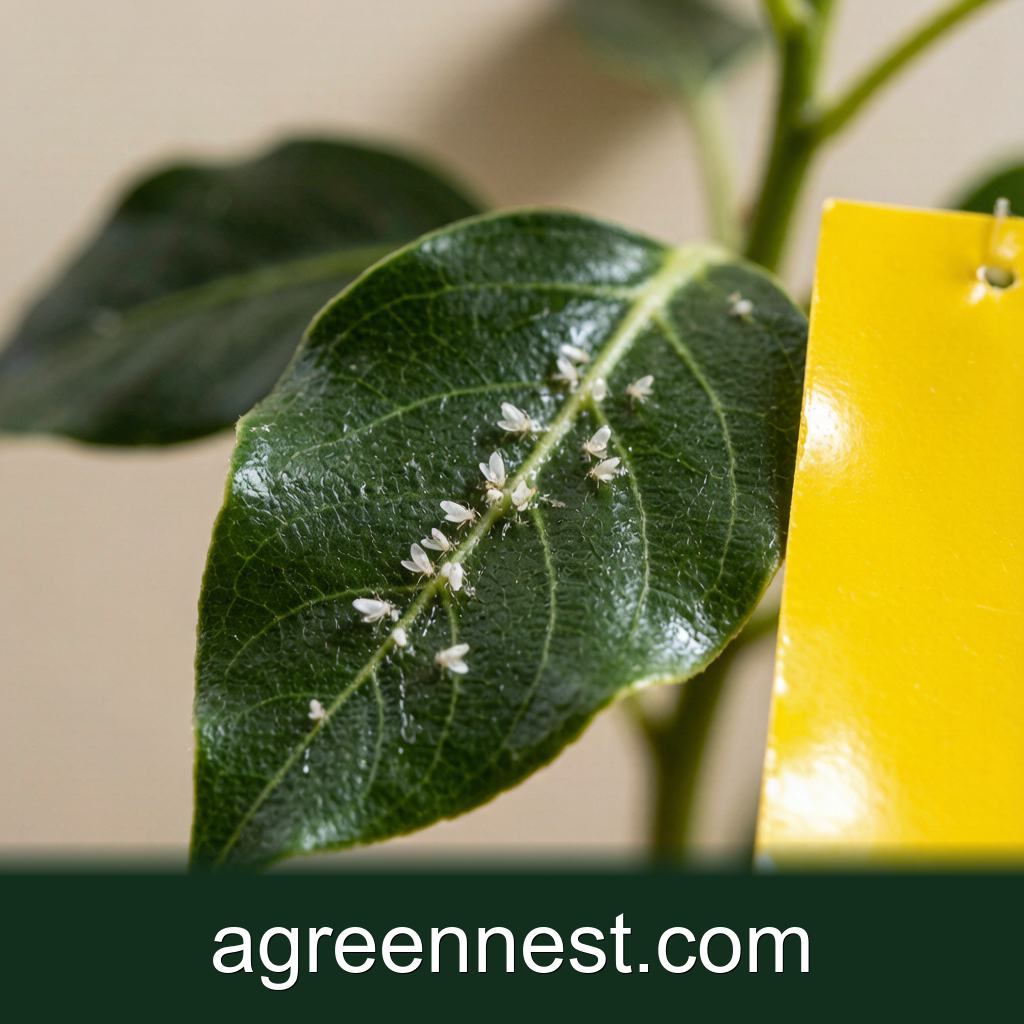
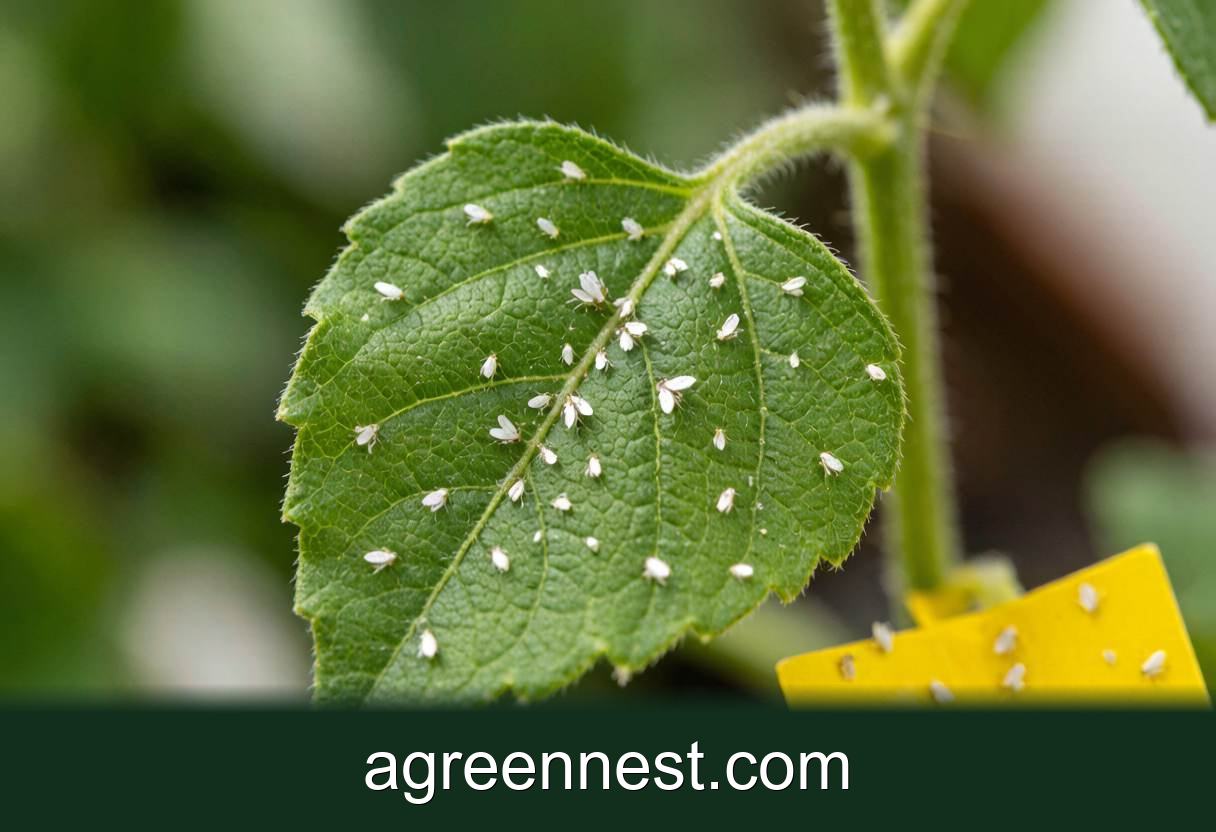
You went to water your tomato and a cloud of tiny white moths lifted off the leaves. That is the moment most people realise they have whiteflies, and by then the plant has been feeding them for weeks. I lost a whole shelf of seedlings to them one spring because I mistook the first yellow leaves for normal hunger.
What whiteflies actually are
Despite the name, they are not flies. Whiteflies are sap-sucking true bugs in the family Aleyrodidae, and the two you meet indoors are the greenhouse whitefly (Trialeurodes vaporariorum) and the sweetpotato whitefly (Bemisia tabaci). Both live through hidden life stages, which is why they are hard to beat.
- Adults: 1 to 2mm, moth-like, white wings, they flutter up when disturbed.
- Eggs: pinned upright on the leaf underside in a neat ring, pale yellow.
- Nymphs (crawlers and scales): flat, oval, legless, stuck to the underside like scale. This stage does most of the damage.
- Honeydew: the sticky shine they excrete, which then grows black sooty mold.
They are often confused with spider mites, but mites make fine webbing and no flying cloud, and with aphids, which cluster on soft new growth rather than the leaf backs.
Ranked causes, most likely first
Work down this list and you usually find the trigger on the first pass.
- Warm, still, humid air. Whiteflies breed fastest at 21 to 27°C with humidity over 60 percent. A crowded shelf near a radiator is the classic setup.
- A new plant carried them in. Eggs and crawlers hide on the underside of nursery leaves. Always quarantine new arrivals for two weeks, as our early pest identification guide stresses.
- Too much nitrogen fertilizer. Soft, fast, leafy growth is exactly what whiteflies seek, so a heavy feeder is a magnet.
- No monitoring. Without a yellow sticky card you miss the first adults until the leaves yellow.
- Ants farming them. Ants protect whiteflies for the honeydew and will fight off the predators that would control them.
If several nearby plants show the same cloud at once, the environment is the problem, not one sick plant. Our complete pest and disease guide helps you rule the others out.
The 48-hour fix
Act the day you see the cloud. The aim is to knock adults down and coat the nymphs before they spread to the next pot.
- Isolate. Move the plant to a separate room for at least two weeks.
- Knock the adults down. Hold the pot over a bucket and blast the foliage with a strong water spray, or use a handheld vacuum in the morning when they are sluggish. Hang a yellow sticky card beside it to catch the rest.
- Wipe the undersides. Apply insecticidal soap to the leaf backs every 3 to 5 days; that is where the nymphs sit. Soap must touch them to work, so thorough coverage matters more than strength.
- Spray neem oil. A neem oil mix with azadirachtin smothers eggs and disrupts the nymphs' growth. Coat the undersides weekly for three weeks. The neem oil application guide gives the dilution I trust.
- Change the conditions. Cut nitrogen, run a fan for airflow, and drop humidity below 50 percent near the plant. Warm still air is what let them explode.
You should see far fewer adults within a week if you stay on the every-few-days schedule. New clean growth is the sign you won.
Aftercare and prevention
Once the cloud is gone, keep the door shut on them.
- Hang a yellow sticky card per shelf and check it weekly; one adult caught early beats a full outbreak.
- Quarantine every new plant for two weeks and inspect the undersides before it joins the collection.
- Ease off high-nitrogen feed during the warm months when whiteflies breed fastest.
- For a serious indoor greenhouse, the tiny wasp Encarsia formosa parasitises the nymphs; it is the one biological control worth trying when cards fill up.
- If the plant collapsed before you caught it, the save-a-plant-after-pests guide covers the recovery trim.
Frequently Asked Questions
Q: Why do whiteflies only appear after I move the plant indoors for winter?
A:
Indoor air is warmer and stiller than the garden, and a greenhouse whitefly brought in on the leaves breeds without the cold and predators that held it back outside. Quarantine and a sticky card catch them before they settle.
Q: The leaves are sticky but I see no bugs, what is happening?
A:
You are seeing honeydew from nymphs on the undersides, which are flat and easy to miss. Turn a leaf over and look for tiny oval scales near the veins, then start soap wipes on the back.
Q: Will neem oil alone clear a bad outbreak?
A:
It helps a lot but rarely alone on a heavy infestation, because it must coat eggs and young nymphs and the adults keep flying in. Pair it with sticky cards and soap wipes on the undersides every few days.
Q: Are whiteflies the same as the white moths on my outdoor brassicas?
A:
Often the same species, but treating a potted houseplant is easier because you control the air and can isolate it. The outdoor ones need broader garden management.
Q: Can I eat the tomatoes after treating the plant?
A:
Rinse any fruit well and skip pods or fruit that touched soap or oil directly. Wait a few days after the last spray, and wash before eating as you would normally.
Whiteflies reward fast hands, so the moment a cloud lifts off the leaves, isolate and start the underside wipes. Catch them inside 48 hours and you usually save the plant without losing the shelf. Keep our early pest identification guide bookmarked and flip every leaf when you water, because the nymphs hide where you are not looking.
Recommended Tools for Plant Pests & Diseases Care
Free, no-signup helpers matched to this guide.
🔍 Free Tool
Pest & Problem Identifier
Pick the symptoms you see and get the likely culprit plus a fix.
Free Ebooks to Explore
Downloadable handbooks — no email required.
Free Ebook
The AGreenNest Succulent Care Handbook
The complete, beginner-to-confident guide to growing fat, happy succulents — 10 chapters and a 20-plant directory.
Free Ebook
Haworthia & Haworthiopsis Care Handbook
A focused guide to the striped, forgiving Haworthia clan.
Join the Conversation
Have a tip or a question about Whiteflies on Houseplants: Spot Them and Clear Them in 48 Hours? Share it below — comments are saved on our server.