 AGreenNest
Succulent Care
Burro's Tail (Sedum morganianum) Care Guide
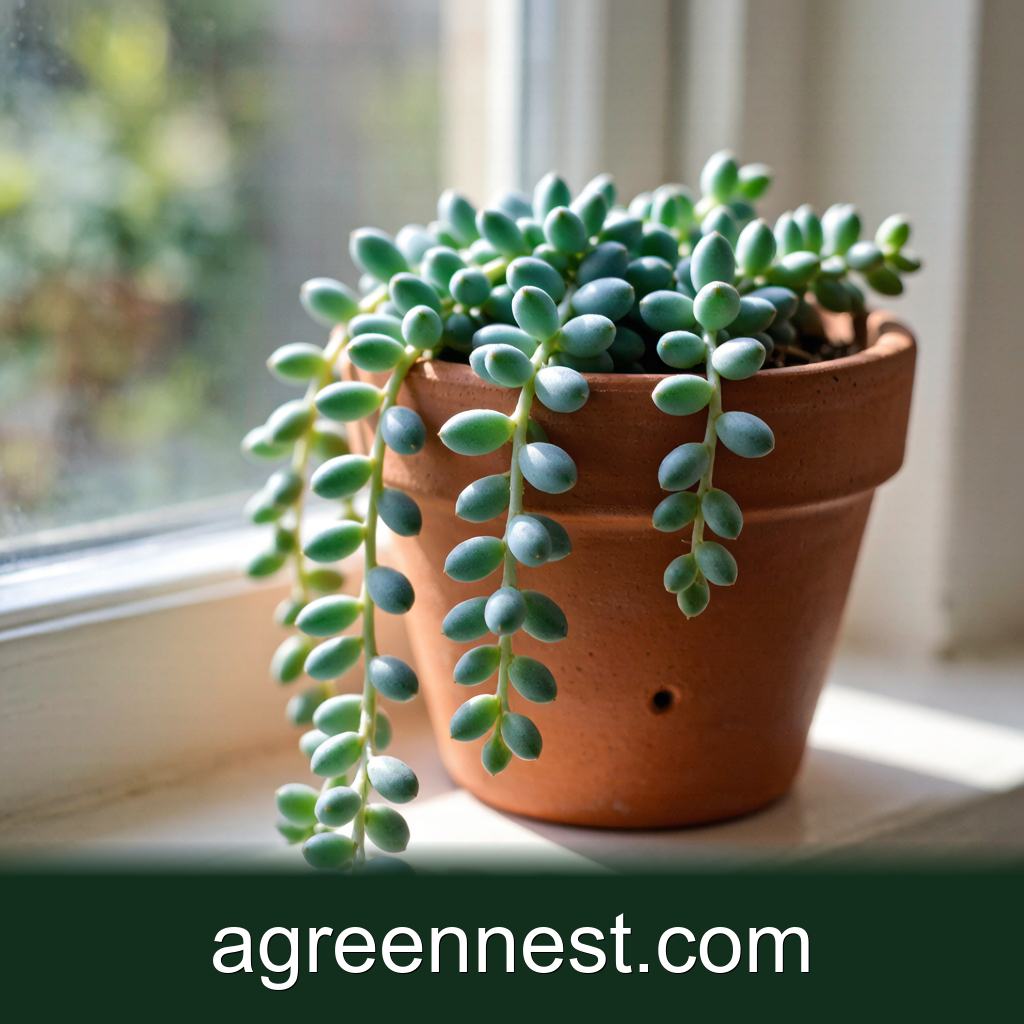
Burro's Tail (Sedum morganianum) needs bright indirect to direct light for 4 to 6 hours, water only when the top 4cm of soil is dry (about every 14 to 21 days), and a gritty cactus mix. Its biggest problem is leaf drop from rough handling, so move it rarely and support the stems.
A single bump against the pot and a dozen leaves hit the floor. That is the first thing most people learn about Burro's Tail, and it is also the thing that makes the plant memorable. Sedum morganianum grows long braids of plump blue green leaves that spill 60 to 90cm over a shelf, and each leaf sits on the stem like a bead on a string. Treat it as a calm, steady succulent and the payoff is a curtain of trailing stems that few other houseplants can match.
Where Burro's Tail comes from
The plant grows wild in the rocky hills of southern Mexico, where it drapes over cliff faces in full sun and dry air. That habitat explains its whole personality: it stores water in those bead leaves, shrugs off heat, and hates being fussed with. In the wild the stems flop over ledges and root where they touch soil, so a hanging pot or a high shelf copies its natural home better than a spot on a table.
It belongs to the Crassulaceae family, the same group as jade plants and Sedum stonecrops, which is why the care reads like a typical succulent with one twist: the leaves drop at the slightest disturbance. Our complete succulent guide covers the family habits worth knowing before you commit.
The light it actually wants
Burro's Tail wants more light than a dim corner gives. Aim for 4 to 6 hours of bright indirect light, or a few hours of gentle morning sun, every day. A south or west window behind a sheer curtain works well in most homes. In low light the stems stretch, the spacing between leaves widens, and the colour fades from blue green to a pale yellow green.
I keep mine on a west sill and it holds a tight, fat leaf set through summer. If your window is weak, run a grow light for 10 to 12 hours a day about 20 to 30cm above the plant. Pull it back from hot glass in a heatwave, because scorched leaf tips turn brown and do not recover.
How often should I water a Burro's Tail?
Water only when the top 4cm of soil is dry, which works out to about every 14 to 21 days in spring and summer and every 3 to 4 weeks in winter. Push a finger into the pot: if the top 4cm still feels cool and damp, wait. When you do water, soak the pot until liquid runs from the drainage hole, then let it dry fully before the next round.
The biggest mistake is a fixed weekly splash. Burro's Tail stores weeks of water in its leaves, and a wet schedule rots the shallow roots and the base of the stems. If you struggle to judge dryness by feel, our watering guide walks through the dry down check that keeps succulents alive.
The right soil and pot
Use a gritty mix: 2 parts cactus or succulent soil to 1 part pumice or coarse perlite, with a handful of coarse sand if your bagged mix feels heavy. The goal is a blend that sheds water in seconds. A terracotta pot pulls moisture from the root zone and suits this plant better than a glazed ceramic that stays wet, and the unglazed walls also keep the stem base dry.
Pot depth matters less than support. The stems are heavy when wet, so a pot with a wide base and a drainage hole is safer than a tall narrow one. If you prefer, build your own blend with our succulent soil recipe and skip the bagged stuff.
Why are the leaves dropping off?
Leaf drop is the problem every owner meets. The cause is almost always physical, not thirst: a bump, a turn, a repot, or a curious pet brushing the strands. Each leaf falls at a touch because it sits on the stem with almost no attachment. The fix is prevention. Set the plant where it will not be knocked, and once it is placed, do not move it.
If leaves drop from the whole plant at once and the stems feel soft, that is rot from overwatering, not handling. Check the base: a healthy stem is firm and green; a rotted one is translucent and squishy. Cut above the soft spot and let the top callous for a day before rooting it in dry gritty mix, the same rescue used for rotting succulents.
Quick care summary
Light: 4 to 6 hours of bright indirect to direct sun, or a grow light for 10 to 12 hours. Water: only when the top 4cm is dry, about every 14 to 21 days, and never on a fixed weekly clock. Soil: 2 parts cactus mix to 1 part pumice in a terracotta pot with drainage. Stems trail 60 to 90cm, so give them a shelf or a hook and leave them alone. The one rule that overrides the rest: steady light, a dry schedule, and no touching.
For a trailing trio once you have the rhythm, Ruby Necklace and string of hearts share the same sunny, dry demands and look good beside it.
Frequently Asked Questions
Can I grow Burro's Tail from a single dropped leaf?
Yes. Lay the fallen leaf on dry cactus mix, mist it lightly every few days, and a tiny rosette forms at the base in 3 to 6 weeks. The stems also root from a 8 to 10cm tip stuck into gritty soil.
Why are my stems going bald at the top?
Usually stretched, weak growth from too little light. The top leaves thin out and the stem shows. Move the plant to brighter light and the new growth comes in tighter. Trim a bald tip and root it to restart a full strand.
Is Burro's Tail safe around cats and dogs?
It is mildly toxic if eaten and can upset a pet's stomach, though it is not deadly. Keep the trailing pot on a high shelf where a cat cannot swat the strands, which also stops the leaf drop from brushing.
Should I fertilise it, and when?
Feed once a month in spring and summer with a cactus fertiliser at half strength. Stop in winter. Too much food pushes soft, leggy growth that drops even faster, so less is better than more.
My plant looks fine but sheds leaves whenever I water it. What gives?
The leaves are likely already loose from being jostled, and watering just adds weight that pulls them off. Water with the pot in place, use a narrow spout, and avoid turning the plant while the soil is wet.
Burro's Tail rewards the grower who sets it up once and then mostly leaves it alone. Give it bright light, a dry gritty pot, and a spot where nothing bumps the strands, and those bead leaves will trail 60 to 90cm without fuss. For the wider picture on keeping succulents happy, our complete succulent guide is the page I would read next.
Recommended Tools for Succulent Care
Free, no-signup helpers matched to this guide.
Free Ebooks to Explore
Downloadable handbooks — no email required.
Free Ebook
Sedum, Graptopetalum & Graptosedum Care Handbook
Easy trailing and rosy succulents for shelves and wreaths.
Free Ebook
The AGreenNest Succulent Care Handbook
The complete, beginner-to-confident guide to growing fat, happy succulents — 10 chapters and a 20-plant directory.

Join the Conversation
Have a tip or a question about Burro's Tail (Sedum morganianum) Care Guide? Share it below — comments are saved on our server.