 AGreenNest
Succulent Care
Jade Plant (Crassula ovata) Care Guide
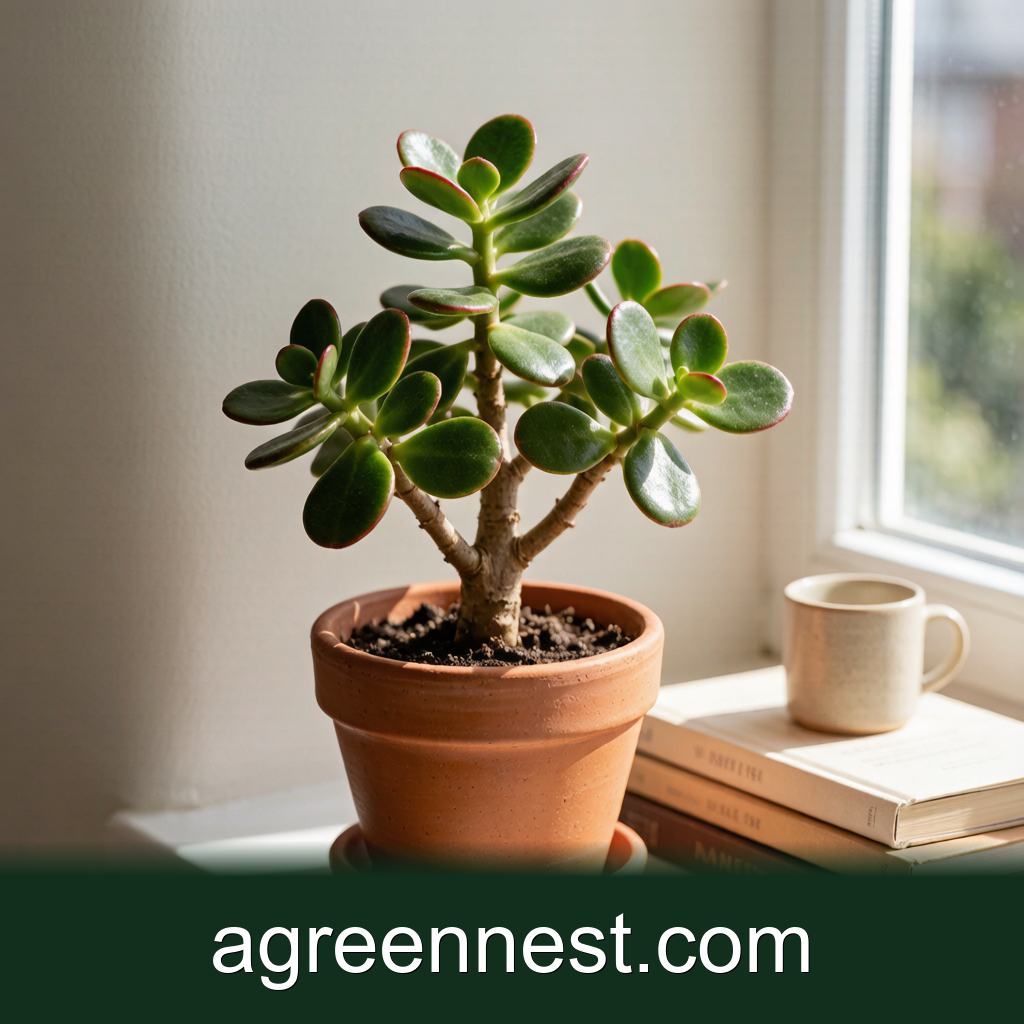
Crassula ovata (jade plant) needs 4 to 6 hours of bright indirect light, water only when the top 4 to 5cm of soil is dry (about every 14 to 21 days in summer, 4 to 6 weeks in winter), and a gritty, fast-draining mix in a terracotta pot. Prune in spring to keep it tree-shaped, and propagate any leaf or stem cutting.
A jade plant on a sunny sill can outlive the furniture around it. Crassula ovata is a succulent that grows a woody trunk and round, coin shaped leaves, and given steady light it turns into a miniature tree that hands down through a family. The plant is not fussy, but it has one rule that trips most newcomers: it would rather be a little too dry than a drop too wet.
Where the jade plant comes from
Jade plant grows wild in the dry, rocky hills of South Africa, where it shrugs off long rainless stretches and full sun. That origin explains its whole personality. The thick leaves store water for weeks, the stem slowly toughens into wood, and it sulks in dim, damp corners. Our complete succulent guide covers the family habits worth knowing before you commit to one.
In the wild a jade can reach 2 to 3 metres, but in a pot it stays a manageable 30 to 90cm, shaped by how much light and how much you prune. Give it the conditions below and it rewards you with a plant that looks older and better every year.
The light it actually wants
Jade wants more sun than a typical shelf plant. Aim for 4 to 6 hours of bright indirect light, or a few hours of gentle morning sun, every day. A south or west window behind a sheer curtain is ideal. In low light the stems stretch, the spaces between leaves widen, and the plant loses the tight, tree like shape that makes it special.
If your brightest window is weak, run a grow light for 10 to 12 hours a day about 20 to 30cm above the canopy. I keep mine on a west sill and it holds fat, red rimmed leaves through summer. Pull it back from hot glass in a heatwave, because leaf edges scorch and turn brown where they touch the pane.
How often should I water a jade plant?
Water only when the top 4 to 5cm of soil is dry, which works out to every 14 to 21 days in spring and summer and every 4 to 6 weeks in winter. Push a finger into the pot: if the top 4cm still feels cool and damp, wait. When you do water, soak the pot until liquid runs from the drainage hole, then let it dry fully before the next round.
The classic mistake is a fixed weekly splash, which keeps the shallow roots wet and rots the base of the trunk. A moisture meter removes the guesswork in winter when the dry down is slow. If you struggle to judge dryness by feel, our watering guide lays out the finger test that keeps succulents alive.
The right soil and pot
Use a gritty mix: 2 parts cactus or succulent soil to 1 part pumice or coarse perlite. The blend should shed water in seconds, not hold a damp clump. Build your own with our succulent soil recipe if the bagged mix feels heavy. A terracotta pot pulls moisture from the root zone and suits jade better than a glazed ceramic that stays wet at the base.
Pot size matters more than depth. Jade likes to be slightly snug, so move up only one pot size when roots fill the current one, about every 2 to 3 years. A wide, shallow pot with a drainage hole is safer than a tall narrow one, because the trunk base stays dry and the plant stands steady as it gains weight.
How do I shape a jade plant into a tree?
Prune in late spring to keep the tree shape. Pinch or snip a stem just above a leaf node, and the plant branches there, building the trunk and canopy you want. Leave the lower trunk clear for a classic bonsai look, or let it bush out for a fuller plant. The cuttings you remove are not waste, they are the easiest propagation you will ever do.
Jade is also one of the few succulents that takes both leaf and stem cuttings. Lay a leaf on dry mix and a tiny plant forms at its base in 3 to 6 weeks, or stick a 8 to 10cm stem cutting into gritty soil and water lightly after a day of callousing. The first month care guide covers the early routine for the new plants you raise.
Why are the leaves wrinkling or dropping?
Wrinkled, soft leaves mean the plant is thirsty, so water and they plump up within a day or two. Leaves that drop while still firm and green, often from the lower trunk, point to overwatering and the start of rot at the base. Check the trunk: a healthy one is firm and woody; a rotted one is soft and discoloured at the soil line. If you catch it early, the rotting succulent rescue walks through the dry, cut, and repot steps that bring it back.
Brown leaf edges in summer are usually scorched sun or dry air, not a watering fault, while red leaf rims in bright light are normal and a sign the plant is happy. The common mistakes guide lists the other traps jade owners fall into.
Frequently Asked Questions
Is the jade plant safe around cats and dogs?
No, it is toxic if eaten and can cause vomiting and sluggishness in pets, though it is not usually fatal. Keep the pot on a high sill or a spot a pet cannot reach, since the round leaves look like a snack to a curious cat.
Why are my jade leaves turning red at the edges?
Bright light brings out red margins, which is normal and healthy, not a problem. The colour deepens with more sun, so a plant moved outdoors for summer often flushes red, then greens up again in lower light.
Can a jade plant grow outdoors in summer?
Yes, in morning sun and afternoon shade once nights stay above about 10C. Harden it off over a week and bring it back in before the first cold night, because it has no frost tolerance and a single freeze damages the leaves.
How old does a jade plant have to be to flower?
Usually 4 to 5 years or older, and only in bright, slightly cool and dry winter conditions. The small white or pink star flowers are a bonus, not a sign of health, so do not worry if yours never blooms.
Should I fertilise my jade, and when?
Feed once a month in spring and summer with a cactus fertiliser at half strength, and stop in winter. Too much nitrogen pushes soft, leggy growth that loses the compact tree shape, so less food makes a better plant.
Jade plant is the succulent you grow for the long haul: steady light, a dry gritty pot, and a light hand with water will carry it for decades and turn it into a genuine little tree. Prune in spring, prop the offcuts, and resist the weekly watering can, and it only gets better with age. For the wider picture on keeping succulents happy, our complete succulent guide is the page I would read next.
Recommended Tools for Succulent Care
Free, no-signup helpers matched to this guide.
Free Ebooks to Explore
Downloadable handbooks — no email required.
Free Ebook
Crassula (Jade) Care Handbook
Everything you need to grow a Jade Plant that lives for decades.
Free Ebook
The AGreenNest Succulent Care Handbook
The complete, beginner-to-confident guide to growing fat, happy succulents — 10 chapters and a 20-plant directory.
Sources & further reading
GreenNest authors research and write every guide independently. The external links below are reputable references we recommend for deeper reading — they are not the sources we copied from.
- RHS: Houseplant care — Royal Horticultural Society
- Missouri Botanical Garden: Gardening resources — Missouri Botanical Garden
Join the Conversation
Have a tip or a question about Jade Plant (Crassula ovata) Care Guide? Share it below — comments are saved on our server.