 AGreenNest
Succulent Care
5 Succulent Mistakes That Kill New Plants
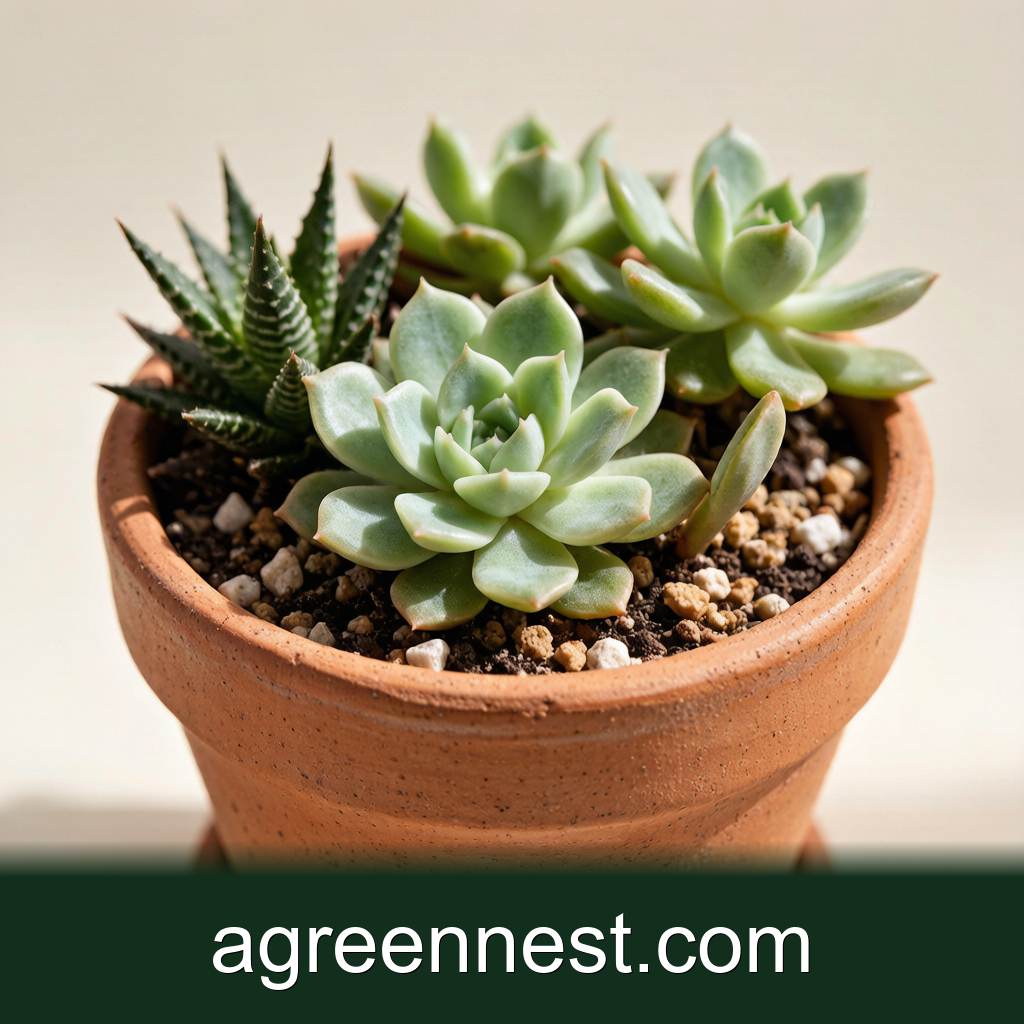
Most new succulents die from five avoidable mistakes: too much water, no drainage hole, weak light that stretches them, a soil mix that stays wet, and fertiliser in the first month. Water only when the top 3 to 4cm is dry, give 4 to 6 hours of bright light, and use a gritty cactus mix in a pot with a hole.
A succulent arriving brown and shrivelled is usually not thirsty. It is drowned. The care that keeps a fern alive is the care that rots a succulent from the base up, and new owners follow that fern script without knowing it. Five mistakes account for almost every failure I see in first year collections, and all five are easy to undo.
Why Are My New Succulents Dying?
The usual answer is not neglect. It is care aimed at the wrong plant. Succulents store water in their leaves, so the habits that keep leafy houseplants alive are the ones that kill a Echeveria or Haworthia from below. If your plant is going soft at the base while the top still looks plump, you are overcaring it, not undercaring it.
Mistake 1: Watering on a schedule
The biggest killer is a fixed weekly splash. A succulent in a gritty pot may need water every 7 to 10 days in hot summer but every 3 to 4 weeks in winter. Push a finger 3 to 4cm into the soil: if it still feels cool and damp, wait. Watering by the calendar keeps the root zone wet long enough for rot to start at the stem base.
The fix is a feel test, not a date. Our watering guide shows the dry down check that works for every pot size, and it matters most for succulents because their margin is thin.
Mistake 2: A pot with no drainage hole
A pot without a hole turns one overwater into a swamp. Water pools at the bottom, the roots sit in it, and the base goes translucent and soft within a week. Even a "self watering" pot is wrong for most succulents unless the reservoir stays empty.
Use a terracotta pot with a drainage hole; the unglazed walls pull moisture from the soil and dry the base faster. If you love a hole-less pot, nest a plastic nursery pot inside it and lift the plant out to drain after watering.
Mistake 3: Light too weak to hold shape
In dim light a succulent stretches. The leaf spacing widens, the rosette opens, and the stem leans toward the window. This is etiolation, and it does not reverse. A Graptopetalum that sat on a north shelf for a month comes out pale and leaning.
Give 4 to 6 hours of bright indirect light, or a few hours of gentle morning sun. If your window is weak, a grow light 20 to 30cm above the plant for 10 to 12 hours a day holds the shape. The succulent stretching guide explains how to read the early signs before the lean sets in.
Mistake 4: Soil that stays wet
Bagged potting soil holds water for days and suffocates succulent roots. A mix meant for ferns is the wrong home. Use a gritty blend: 2 parts cactus soil to 1 part pumice or coarse perlite, with a handful of coarse sand if the bag feels heavy. Water should run through in seconds.
Build your own with the succulent soil recipe or buy a labelled cactus mix. The difference shows in the base: a plant in fast soil stays firm; one in heavy soil rots from below while the top still looks fine. The best soil for succulents guide compares the blends worth buying.
Mistake 5: Feeding in the first month
Newly potted or shipped succulents have young, tender roots. Liquid feed in the first month burns them and pushes soft growth that drops at a touch. Wait at least four weeks after potting, then feed a cactus fertiliser at half strength once a month in spring and summer only.
The first month succulent care guide lays out the four moves to make before you reach for any bottle. Less food, more light, is the safer path for a plant built to store its own reserves.
Frequently Asked Questions
My succulent looks wrinkled and dry but the soil is wet. What is wrong?
That is rot, not thirst. Overwatering rots the roots so the plant cannot drink, and the leaves wrinkle from the top down. Check the base for soft, translucent tissue and follow the rotting succulent rescue steps before the whole stem goes.
Can I save a succulent that already stretched and went pale?
You cannot un stretch it, but you can behead the rosette, let the cut callous a day, and root it in gritty soil under brighter light. The old stretched stem can stay as a weird specimen or be composted.
How do I know the soil is dry 3 to 4cm down without a meter?
A finger works. For deep pots a wooden skewer left in for a minute comes out cool and dark when damp, dry when ready. A moisture meter gives a number if you prefer not to guess.
Is misting succulents a good idea in dry winter air?
No. Misting wets the leaves and the crown, where it sits and invites rot and marks. Dry air bothers the plant less than wet crowns. If humidity is the worry, group plants instead of misting them.
Why did my succulent rot in a terracotta pot with a hole?
Usually still too much water or too heavy a soil. Terracotta helps but does not beat a weekly soak in a mix that holds moisture. Cut water and add pumice, and read why leaves turn yellow for overlap signs.
Most succulent deaths are five mistakes repeated: scheduled water, no drainage, weak light, wet soil, and early feed. Fix those and a Haworthia or Echeveria will sit unchanged for years. Start with the complete succulent guide if you want the full picture, and water by feel from day one.
Recommended Tools for Succulent Care
Free, no-signup helpers matched to this guide.
Free Ebooks to Explore
Downloadable handbooks — no email required.
Free Ebook
The AGreenNest Succulent Care Handbook
The complete, beginner-to-confident guide to growing fat, happy succulents — 10 chapters and a 20-plant directory.
Free Ebook
Haworthia & Haworthiopsis Care Handbook
A focused guide to the striped, forgiving Haworthia clan.
Join the Conversation
Have a tip or a question about 5 Succulent Mistakes That Kill New Plants? Share it below — comments are saved on our server.