 AGreenNest
Succulent Care
String of Pearls: How to Keep the Beads Plump
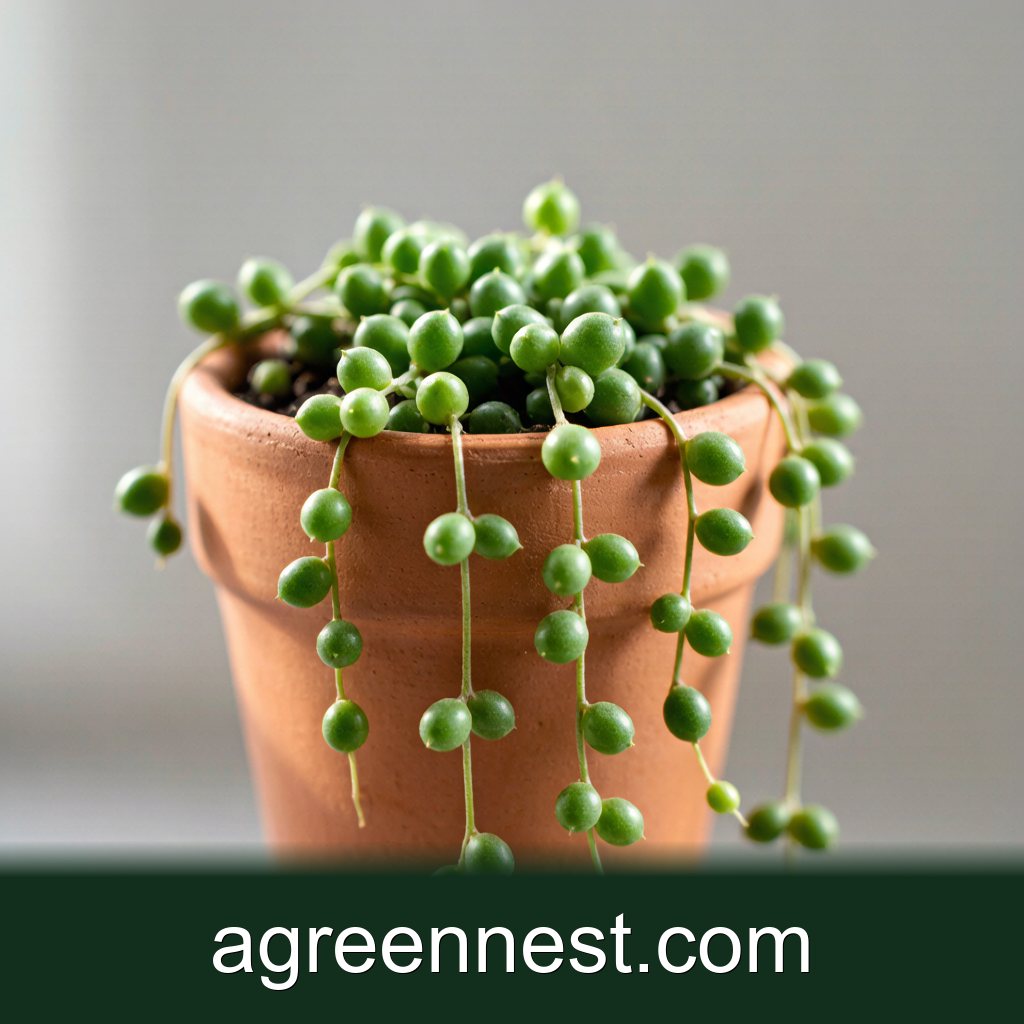
The secret to a happy String of Pearls is restraint. Place it in bright, indirect light, then wait until the soil is bone dry before watering (14 days between waterings). Use a lean, sandy soil and a porous pot so excess moisture escapes fast and rot never gets started.
The first string of pearls I owned fooled me completely. It arrived as a fat, glossy mound of green beads and within two months had turned into a few lonely strands with a bald, woody crown. I had watered it like my other succulents and set it in what I thought was a bright corner. The plant wanted something different, and it is a tougher trailer than it looks once you learn its temper.
What makes string of pearls different
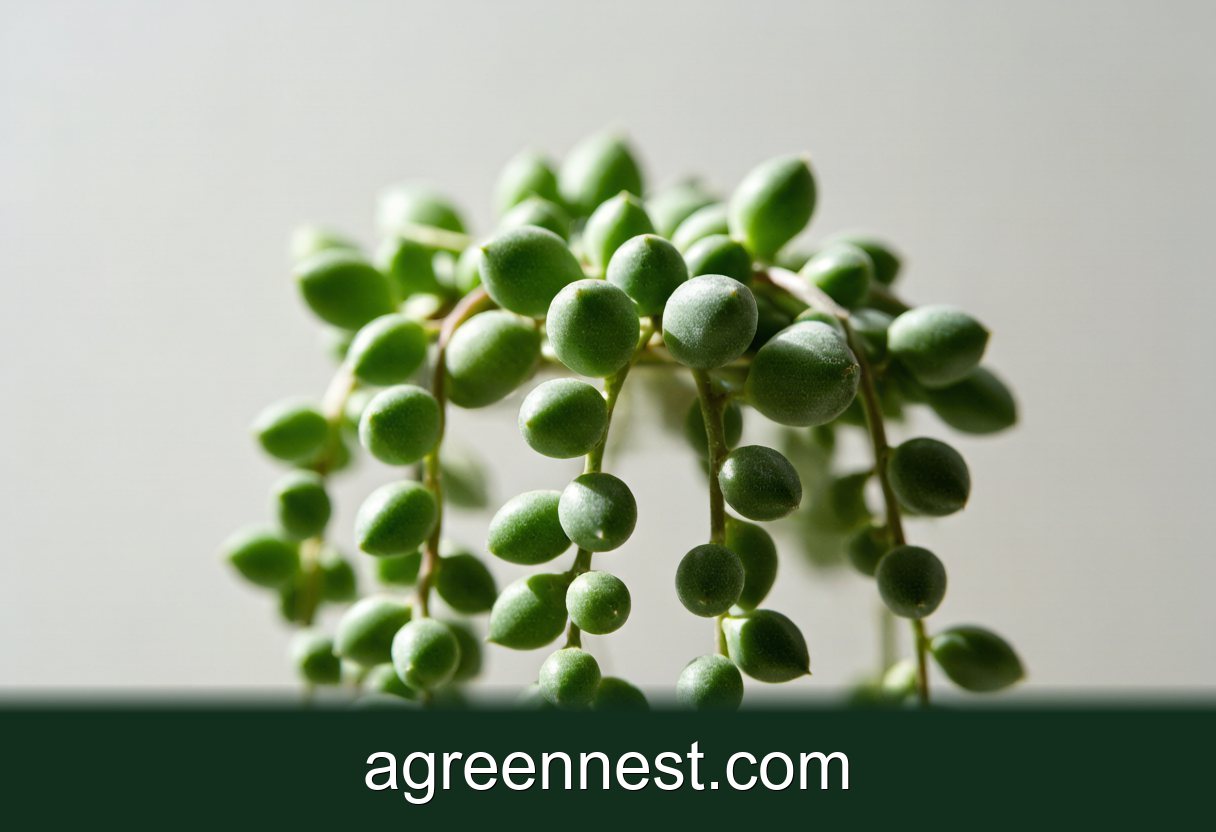
Senecio rowleyanus, now often listed as Curio rowleyanus after a botanical reshuffle, is a trailing succulent from the dry regions of southwest Africa. Each leaf is a near-perfect sphere, about 6 to 8mm across, with a thin window of translucent tissue on top that lets light into the leaf. The stems are slender and can run 30 to 90cm long, which is what makes the plant such a natural for a high shelf or a hanging pot where the beads can spill over the rim.
Those round leaves are a water tank. They store enough moisture that the plant shrugs off a missed watering, but the thin stems and shallow roots mean it also rots fast if the soil stays wet. That is the whole personality in one line: drought tough, quick to rot in wet soil. The complete succulent guide covers the family habits, but this species sits at the needy end of the light scale and the careful end of the water scale.
How much light keeps the beads round
String of pearls wants more sun than most people give it. Aim for 4 to 6 hours of bright indirect light, or a few hours of gentle morning sun, every day. A south or west window behind a sheer curtain is the sweet spot in my home. In good light the beads stay fat and the strands branch and fill in. In a dim corner the stems stretch, the spacing between leaves widens, and the plant thins to a few straggly threads.
If your brightest window is weak, run a grow light for 10 to 12 hours a day about 20 to 30cm above the canopy, and pull it back from hot glass in a heatwave so the beads do not scorch where they touch the pane. The light and temperature guide covers that scorch in detail.
Why are my string of pearls going bald at the top?
This is the question every owner types into a search box eventually, because the plant tends to lose beads from the crown outward while the tips keep growing. The usual cause is too little light. The old leaves at the base of the strand give up first, and the stem goes woody and bare. Move the plant to brighter light and the new growth at the tips stays leafy, though the bare wood will not refill. You can also lay the strands back on the soil so the nodes touch the surface and root, which hides the bald patch with fresh plants.
The second cause is crown rot from water sitting in the dense center of the pot. If the bare stems are also soft and the base smells musty, you have overwatered. Trim the healthy tips, let the cut ends callous for a day, and restart them in fresh dry mix rather than trying to rescue the rotted core.
How often should I water string of pearls?
Water only when the top 3 to 4cm of soil is fully dry, which works out to about every 10 to 14 days in spring and summer and every 3 to 4 weeks in winter. Push a finger into the pot: if the top 3cm still feels cool and damp, wait. When you do water, soak the pot until liquid runs from the drainage hole, then let it dry hard before the next round.
The classic mistake is a fixed weekly splash, which keeps the shallow roots wet and rots the strands. A moisture meter takes the guesswork out of winter, when the dry down is slow. If you struggle to judge dryness by feel, the watering guide lays out the finger test that keeps trailing succulents alive.
Soil, pot, and the drainage rule
Use a gritty mix: 2 parts cactus or succulent soil to 1 part pumice or coarse perlite. The blend should shed water in seconds, not hold a damp clump. Build your own with our succulent soil recipe if the bagged mix feels heavy. A terracotta pot pulls moisture from the root zone and suits this plant better than a glazed ceramic that stays wet at the base.
Pot depth matters less than drainage. String of pearls likes a pot with a wide rim so the strands can drape, and always a hole in the bottom. A hanging pot that holds 10 to 14cm of soil is plenty; a deep narrow pot keeps more mix wet than the small roots can use, which is how rot starts.
When and how do I propagate the strands?
Propagation is the fix for a plant that has gone bald. Snip a 8 to 12cm tip, strip the bottom 3 to 4cm of beads, and lay the bare stem on damp gritty mix with the nodes touching the surface. Roots form in 2 to 4 weeks if the mix stays just barely moist. You can also coil a longer strand across the soil and pin it down with a hairpin so several points root at once and fill a thin pot.
Unlike echeverias, leaf cuttings do not work here, so always use stem cuttings. The first month care guide covers the early routine for the new plants you raise from these tips, and the common mistakes guide lists the other traps owners fall into.
Frequently Asked Questions
Why are my string of pearls beads shrivelling and wrinkling?
Usually thirst. When the round leaves flatten and wrinkle, the plant is using its stored water and wants a thorough soak. Beads plump back up within a day or two. If they wrinkle while the soil is still damp, the roots have rotted and the plant cannot drink, so check the base of the stems.
Can string of pearls take full sun outdoors in summer?
Morning sun and bright shade, yes, once nights stay above about 10C. Harden it off over a week and bring it back in before the first cold night, because it has no frost tolerance and a single freeze browns the beads.
Is string of pearls safe around cats and dogs?
No, it is toxic if eaten and can cause vomiting and drooling in pets. Hang the pot where a curious cat cannot swat the strands, since the dangling beads look like a toy.
How do I make a thin plant look full again?
Lay the existing strands back on the soil so the nodes touch the surface and root, and add fresh stem cuttings coiled across the top. Within a month or two the pot fills in from several points instead of a few bare threads.
Should I fertilise string of pearls, and when?
Feed once a month in spring and summer with a cactus fertiliser at half strength, and stop in winter. Too much nitrogen pushes soft, leggy growth that loses the tight bead look, so less food makes a better plant.
String of pearls rewards restraint more than effort: bright light, a hard dry down between waters, and grit under its roots will keep the beads round for years. When a strand goes bald, take tip cuttings and refill the pot rather than mourning the old wood. For the wider picture on keeping succulents happy, our complete succulent guide is the page I would read next.
Recommended Tools for Succulent Care
Free, no-signup helpers matched to this guide.
Free Ebooks to Explore
Downloadable handbooks — no email required.
Free Ebook
The AGreenNest Succulent Care Handbook
The complete, beginner-to-confident guide to growing fat, happy succulents — 10 chapters and a 20-plant directory.
Free Ebook
Haworthia & Haworthiopsis Care Handbook
A focused guide to the striped, forgiving Haworthia clan.
Sources & further reading
GreenNest authors research and write every guide independently. The external links below are reputable references we recommend for deeper reading — they are not the sources we copied from.
- Royal Horticultural Society — Houseplant care — RHS
- Missouri Botanical Garden — Missouri Botanical Garden
- NC State Extension — Plant Toolbox — NC State Extension
Join the Conversation
Have a tip or a question about String of Pearls: How to Keep the Beads Plump? Share it below — comments are saved on our server.