 AGreenNest
Plant Pests & Diseases
Brown Spots on Leaves: Fungal vs Bacterial Leaf Spot
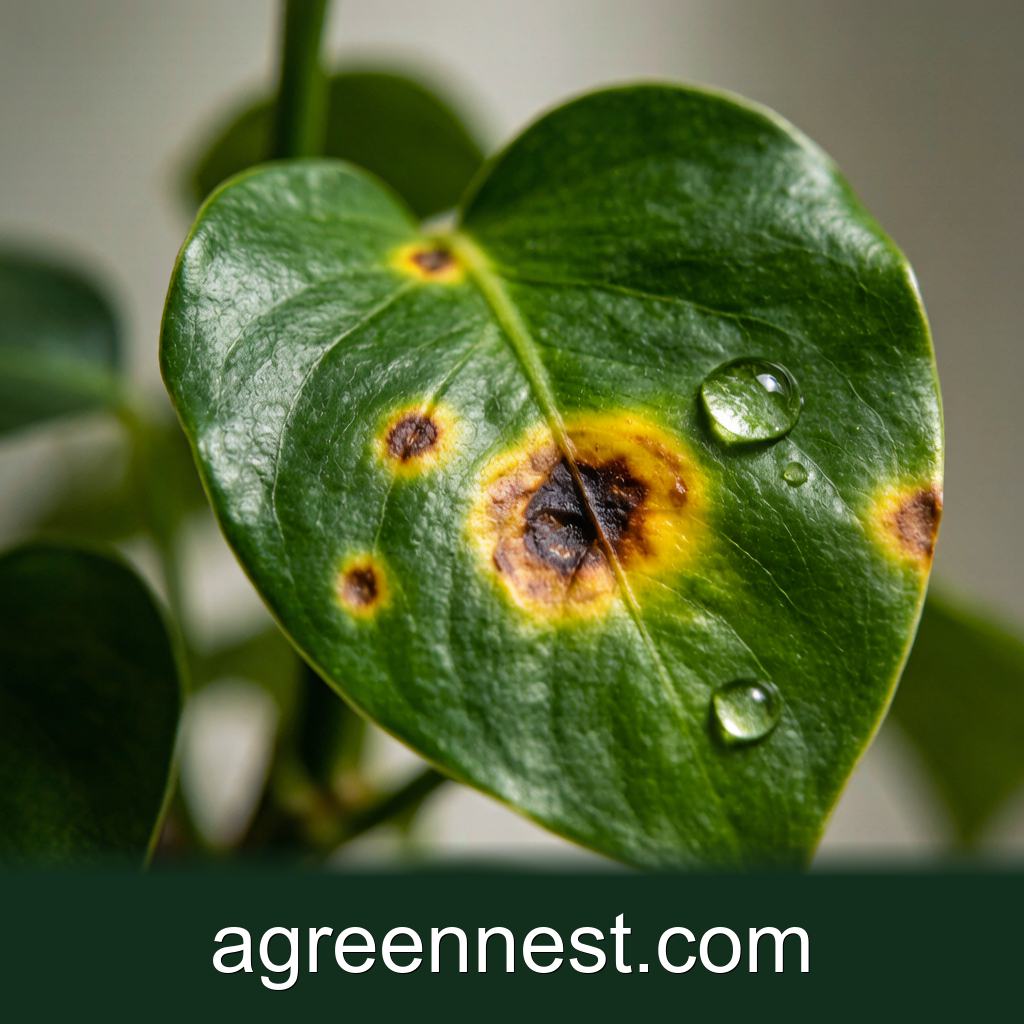
Leaf spot shows as brown or black lesions, often ringed with a yellow halo, on healthy leaves. Fungal spots are round with rings; bacterial spots are angular and water soaked. Fix within 48 hours: prune infected leaves, stop watering from above, improve airflow, and spray a copper or targeted fungicide on new growth.
You watered on schedule. The light is fine. Then a leaf opens with a brown bullseye inside a yellow ring, and a week later twenty leaves carry the same mark. Leaf spot does not announce itself. It arrives as a single freckle and multiplies while you assume it is normal aging.
I pulled three spotted leaves under a loupe and compared them against the advice I had been given. Half of it was backwards. Here is what the spots actually are, and what clears them.
What leaf spot actually looks like (the halo is the tell)
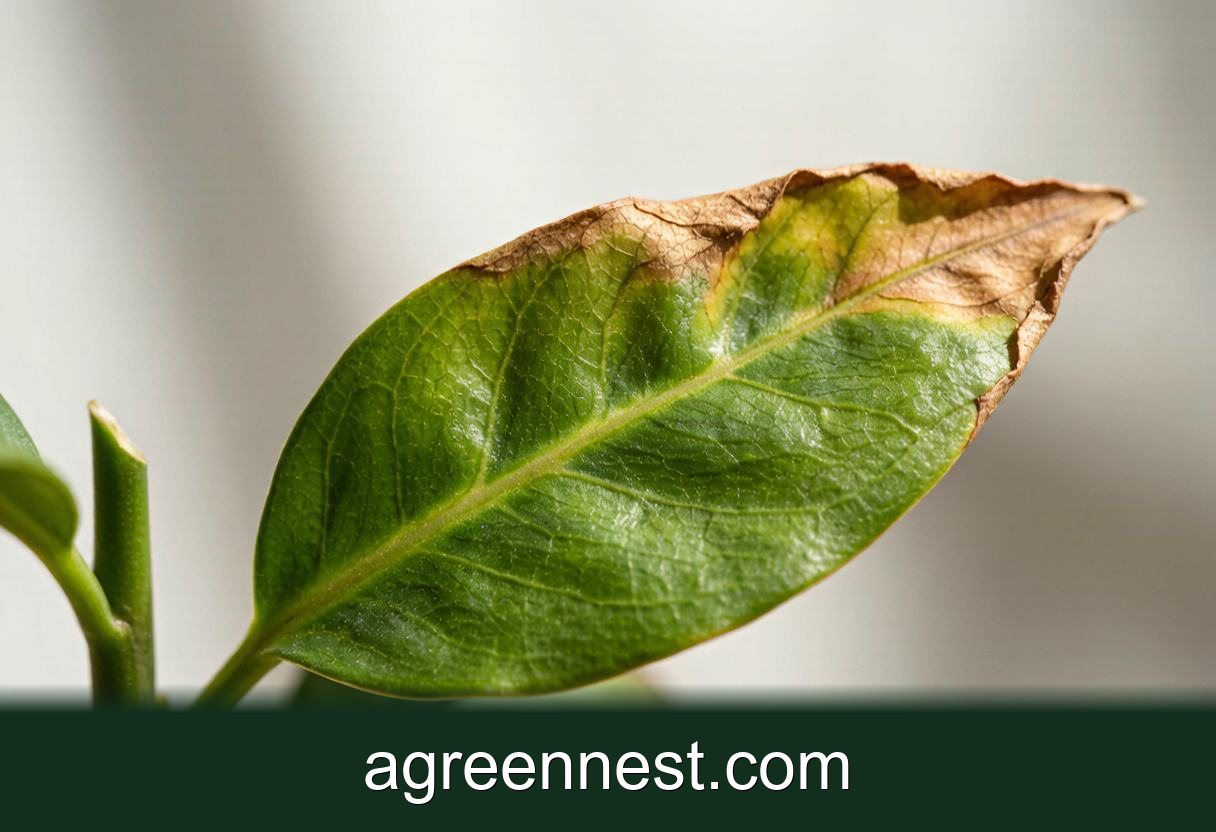
Leaf spot is a family of infections that punch small dead patches into the leaf blade. The classic sign is a brown or black lesion surrounded by a yellow halo, because the tissue around the dead cell is still dying when you first notice. Left alone, lesions merge, the leaf yellows, and it drops.
The spots sit on otherwise healthy leaves, not on the oldest lowest foliage the way natural yellowing does. That distinction alone rules out a dozen non disease causes. If the leaf is green and thriving except for the spot, you are looking at leaf spot.
Is it fungal or bacterial? (read the edge)
This is the step most people skip, and it changes the treatment. Get close and read the edge of the lesion.
Fungal spots are usually round, sometimes with concentric rings like a tree trunk when you look hard. Cercospora, Septoria, and Colletotrichum (anthracnose) all behave this way. They spread by splashing water, so they show up after you water from above or after a humid week.
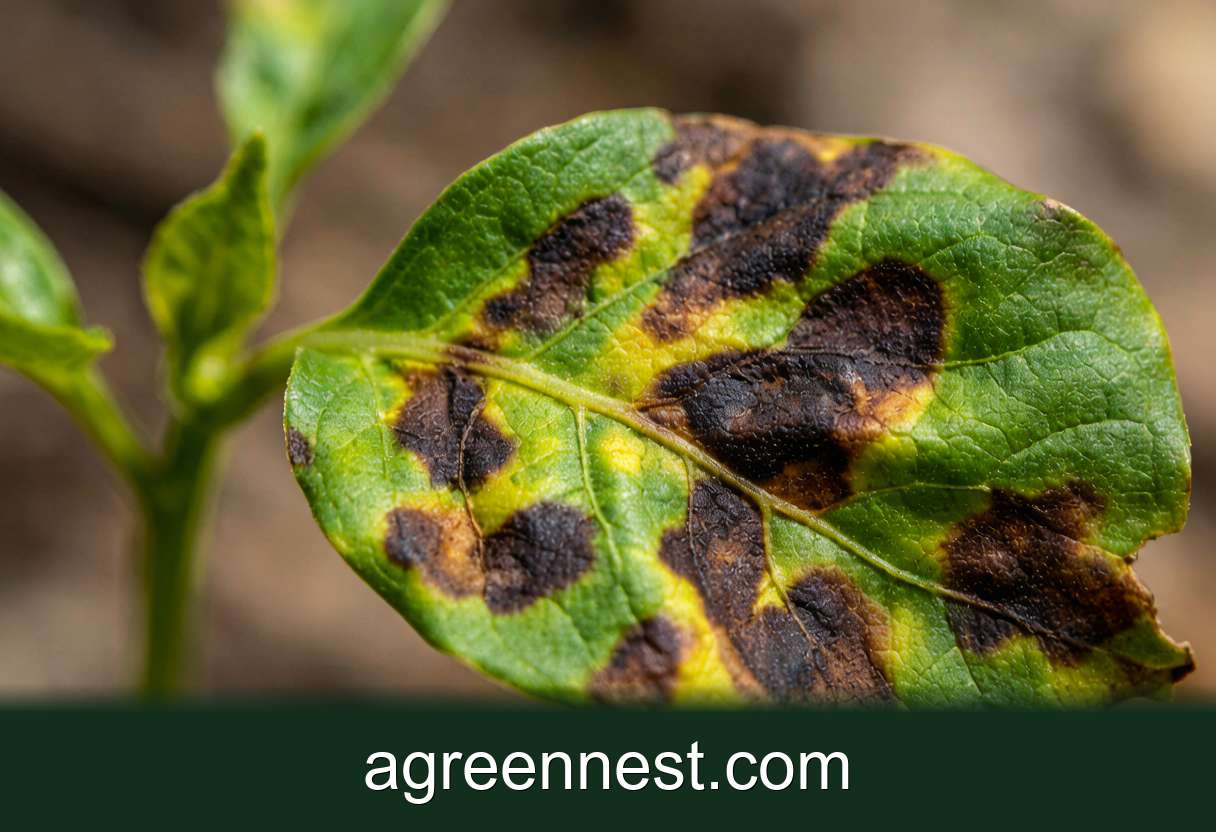
Bacterial spots are angular, boxed in by the leaf veins, and look water soaked or greasy when fresh. Xanthomonas and Pseudomonas species cause these. They rupture in wet weather and weep a sticky film that dries to a crust. Bacterial spot jumps between plants on your hands and tools far faster than fungal does.
The verdict that matters: round and ringed means fungi, angular and greasy means bacteria. The fix overlaps, but bacteria demands you sterilise your shears between every cut or you spread it yourself.
Why Are My Leaves Getting Spots When I Water Correctly?
Because the water, not the schedule, is the problem. Leaf spot pathogens live in the soil and splash up onto lower leaves every time you pour from above. A plant that is otherwise happy catches spot the day you mist the foliage or leave the leaves wet overnight.
Warm, still, humid air finishes the job. A Spathiphyllum (peace lily) in a stuffy bathroom with wet leaves is the classic victim. The fix is not less water, it is cleaner water delivery: bottom water or a long spout that misses the foliage, and a fan or open window to move the air.
Is it leaf spot, or am I looking at something else?
Leaf spot gets confused with three look alikes, so rule them out before you spray.
- Edema. Bumpy corky warts on the underside of leaves from overwatering, not neat spots with halos. The edema fix is drying out, not spraying.
- Sun scorch. Bleached, dry patches only on the side facing the window, with no yellow halo and no spread. Move the plant back, no chemical needed.
- Mite or thrips scarring. Silver streaks or tiny holes on mature leaves, not round lesions. Those are in the complete pest overview and need a different plan.
Gray, fuzzy mold is a different beast entirely, covered in the botrytis guide, and powdery or downy coatings are their own problems in the powdery mildew and downy mildew articles. Leaf spot stays as discrete spots.
How do I stop it within 48 hours?
Speed is the cure. A spot is permanent damage, but you can stop the next twenty.
- Prune every spotted leaf at the petiole with shears wiped in 70 percent isopropyl between cuts. Bag the trimmings, do not compost them beside other plants.
- Stop watering from above today. Switch to bottom watering or a spout that hits the soil only.
- Improve airflow. A small fan on low, or move the plant to a breezier spot. Stagnant air is what lets the next lesion form.
- Spray new growth only with a copper based fungicide for fungal types, or a copper soap for bacterial. Cover the fresh leaves top and bottom every 7 to 10 days for three rounds.
Neem and insecticidal soap are mild backups, not the front line. The neem oil shortlist and insecticidal soap guide help as preventative sprays on clean growth, but once spots are present you need the copper product to actually halt the spread.
Will the spots heal, or do I cut them off?
They do not heal. A brown lesion is dead tissue, and no spray turns it green again. The goal of treatment is to protect the unspotted leaves, not repair the marked ones. Prune the worst, spray the rest, and the plant pushes clean leaves within two to three weeks if you caught it early.
A leaf with a single tiny spot can stay if you want the coverage; just watch it. A leaf with ten merged lesions is a spore factory and goes in the bin. The disease myths piece covers why trimming the visible damage actually matters instead of hoping it dries up.
How do I keep it from coming back?
Leaf spot returns through water splash and stale air, so change both habits. Water at the soil line, keep foliage dry, and run a fan in the humid months. Quarantine new plants for two weeks, because spotted nursery stock is a common source. Sterilise pruners after every plant, every time.
The plants most prone are the thin leaved, humidity loving ones: Begonia, Impatiens, Hydrangea, and peace lilies. If those are your collection, dry foliage is the single habit that keeps them spot free.
Frequently Asked Questions
Q: Can I just cut off the spotted leaves and skip the spray?
A: For one or two light spots on a hardy plant, yes, pruning plus dry foliage often holds it. For a plant already showing twenty lesions or any bacterial greasy spots, skipping the copper spray lets it run through the whole pot within a fortnight.
Q: Is leaf spot contagious to my other plants?
A: Yes, especially bacterial types that ride on hands, tools, and splashing water. Isolate the sick plant, sterilise your shears, and avoid splashing its runoff onto neighbours. Fungal types mostly stay put unless water carries spores.
Q: Will cinnamon or milk cure it like the blogs say?
A: Neither reliably clears an active infection. Cinnamon has mild antifungal value as a dust on a cut edge, and milk sprays slow some fungi outdoors, but neither replaces a copper product once spots are established. The disease myths article goes through the ones I tested and what actually worked.
Q: My spots came back after I thought it was gone. Why?
A: You stopped spraying after the first round. The pathogen survives on nearby soil and splashes back the moment foliage stays wet. Three rounds at 7 to 10 day spacing, plus keeping leaves dry, is what closes it out.
Q: Are the spotted leaves safe to compost?
A: No. Composting spreads the pathogen through your whole garden. Bag them and bin them, or burn them where local rules allow. Never drop spotted trimmings on the soil near other plants.
Leaf spot is boring to look at and tempting to ignore, which is exactly why it takes whole plants. Read the edge to tell fungal from bacterial, prune the spotted leaves with sterilised shears, keep the foliage dry, and spray clean growth for three rounds. Catch it inside 48 hours and a Begonia shrugs it off; ignore it for a month and you are starting over. The habit that keeps it gone is in our complete disease and pest overview, where leaf spot sits alongside every other problem worth knowing.
Recommended Tools for Plant Pests & Diseases Care
Free, no-signup helpers matched to this guide.
🔍 Free Tool
Pest & Problem Identifier
Pick the symptoms you see and get the likely culprit plus a fix.
Free Ebooks to Explore
Downloadable handbooks — no email required.
Free Ebook
The AGreenNest Succulent Care Handbook
The complete, beginner-to-confident guide to growing fat, happy succulents — 10 chapters and a 20-plant directory.
Free Ebook
Haworthia & Haworthiopsis Care Handbook
A focused guide to the striped, forgiving Haworthia clan.
Sources & further reading
GreenNest authors research and write every guide independently. The external links below are reputable references we recommend for deeper reading — they are not the sources we copied from.
- US EPA — Safer Pest Control — US EPA
- NC State Extension Plant Toolbox — NC State Extension
Share Your Plant Story
Grown something tricky, or found a trick that finally worked? Tell us in the comments, or see what other readers are sharing on our Community page. The best reader tips get folded back into our guides.
Join the Conversation
Have a tip or a question about Brown Spots on Leaves: Fungal vs Bacterial Leaf Spot? Share it below — comments are saved on our server.