 AGreenNest
Succulent Care
String of Dolphins Care: Curio × peregrinus
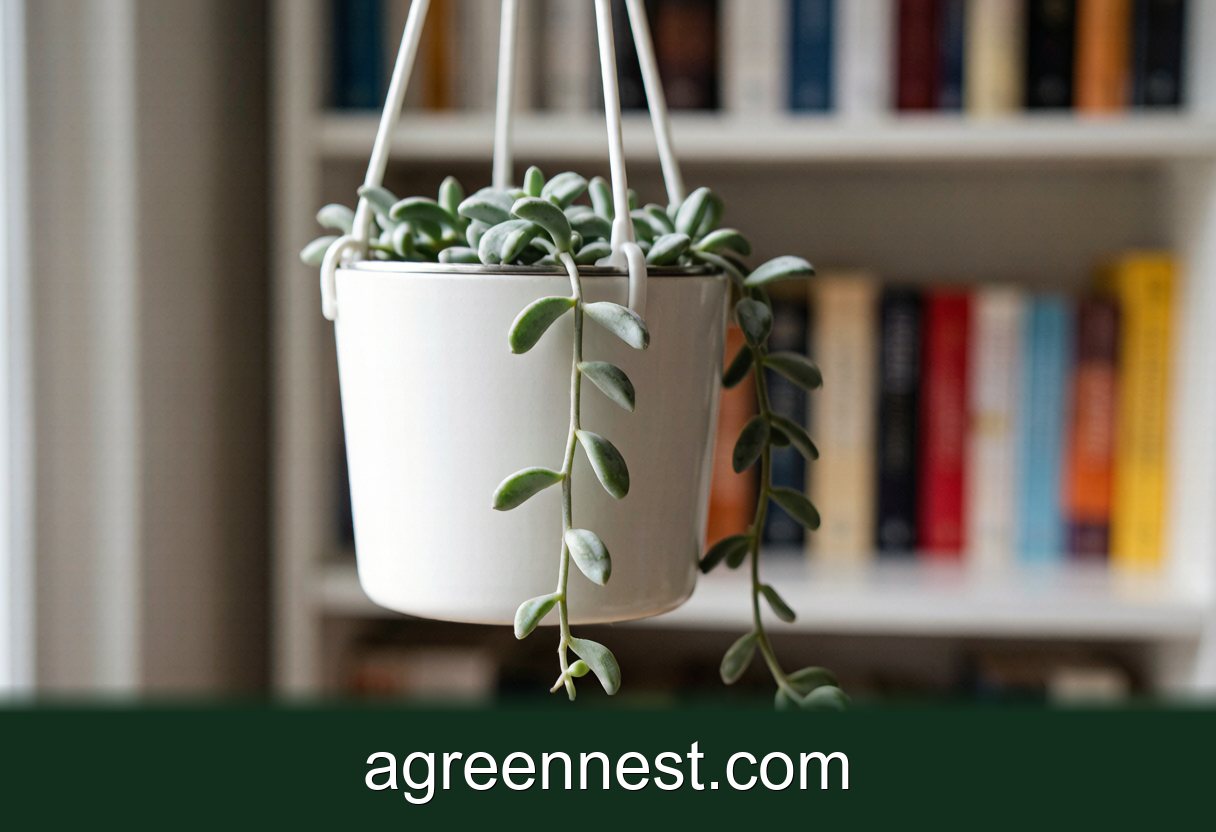
String of Dolphins (Curio × peregrinus) is a trailing succulent whose leaves curve like tiny leaping dolphins. Give it 6 hours of bright indirect light, a gritty fast-draining mix, and water only when the soil dries fully, roughly every 10 to 14 days in summer. Too little light flattens the dolphin shape.
The first String of Dolphins I owned arrived looking spectacular and was dead within a month, and it was entirely my fault. I loved it so much I watered it every few days, the way you might fuss over a new fern. The vines went soft, the little dolphins turned to mush, and I learned the hard way that this plant wants attention in the form of patience, not water. My second one is four years old now and trails off a bookshelf like a green waterfall.
Curio × peregrinus is a hybrid, a cross between string of pearls (Curio rowleyanus) and the candle plant (Senecio articulatus). It inherited the trailing habit of one parent and a curved, winged leaf from the other, and the result is a leaf that really does look like a pod of dolphins mid-leap. It is a conversation piece, and once you understand its rhythm it is no harder than any other trailing succulent.
What Exactly Is a String of Dolphins?
Each leaf is a small, plump crescent about 2 cm long, with two little bumps near the base that read as fins. The vines grow 15 to 90 cm long over a few years, slower than string of pearls but sturdier. Like its relatives it stores water in those fleshy leaves, so it survives dry spells that would flatten a leafy houseplant.
One thing worth knowing up front: the dolphin shape is not guaranteed. It shows best on healthy new growth in good light. Old or stressed vines produce rounder, less defined leaves, so the plant you buy in peak condition takes a little care to keep looking that way. If you already grow the String of Pearls, most of what you know carries straight over here.
How Much Light Keeps the Dolphin Shape?
Bright, indirect light is the single biggest factor. I aim for about 6 hours a day near an east window, or a couple of feet back from a south-facing one. That much light keeps the internodes short and the leaves crisply dolphin-shaped.
In dim light the vines stretch, the gaps between leaves widen, and the dolphins slump into vague ovals. A little gentle morning sun is fine and even welcome, but harsh afternoon sun through glass in summer will scorch the leaves and bleach the color to a pale, sunburned grey. If your brightest window still feels dark from autumn onward, a small grow light on a timer for 8 to 10 hours keeps the shape through winter. The same light-and-water balance trailing succulents need applies here almost word for word.
Watering Without Drowning the Vines
Here is where I went wrong, so learn from me. Water only when the soil has dried out completely, then water thoroughly until it runs from the drainage hole. In a warm, bright summer that usually means every 10 to 14 days. In winter, when growth slows, stretch it to every 3 to 4 weeks.
The leaves are your gauge. Plump, firm dolphins mean the plant is happy. Slightly softer, flatter leaves that pucker a little are telling you it is thirsty, and it will bounce back within a day of a good drink. Mushy, translucent, or yellowing leaves mean the opposite, that the roots have sat wet too long. When in doubt, wait. This plant recovers from a missed watering far more readily than from a soggy pot.
The Right Mix, Pot, and Temperature
Drainage is everything. I use a gritty blend of roughly one part cactus soil to one part pumice or perlite, so water races through and never lingers around the roots. A dense, peaty mix holds moisture against the stems and is the fastest route to rot.
A terracotta pot helps, because the unglazed clay wicks extra moisture out of the soil between waterings. Choose one with a drainage hole and go shallow rather than deep, since the roots are fine and near the surface. Keep the room between 18 and 24°C. String of Dolphins tolerates a warm home happily but dislikes cold drafts, and prolonged temperatures below about 10°C will damage the leaves. If you are picking a container, our notes on choosing pots for succulents cover the drainage logic in more detail.
One safety note: like other Senecio and Curio species, the sap is mildly toxic if chewed, so hang it out of reach of curious cats and toddlers.
How Do You Propagate String of Dolphins?
This is the fun part, and it is genuinely easy. Snip a healthy vine 8 to 10 cm long, strip the lowest two or three leaves, and let the cut end callus over for a day or two. Then lay the cutting on top of a gritty mix, or press the bare node just into the surface, and mist lightly every few days.
Roots usually appear within 2 to 3 weeks, and new growth follows soon after. I like to lay several cuttings across the top of the mother pot so it fills in and looks fuller, rather than starting separate pots. In summer a mature, contented plant may also throw small white puffball flowers with a faint cinnamon scent, which is a sign you have got the care right.
When the Dolphins Stop Looking Like Dolphins
If your plant is losing its defining feature, run through three things. First, light: leggy vines with round leaves and wide gaps almost always mean it is too dark, so move it brighter. Second, water: leaves that balloon and lose their crescent curve can mean chronically wet soil, so ease off. Third, age: very old vines naturally produce plainer leaves, and the fix is to propagate fresh cuttings from the best growth.
I keep mine on a bright shelf, turn the pot a quarter every week or two so it grows evenly, and trim any straggly vine back to encourage branching. Those trimmings become new plants, which is how one starter pot slowly becomes gifts for half your friends. For another trailing succulent with almost identical rules, the String of Hearts guide makes a good companion read.
Frequently Asked Questions
Q: Why do my string of dolphins leaves look flat instead of like dolphins?
A: The crescent shape needs good light and healthy new growth. Flat or rounded leaves usually mean the plant is too dim or the vines are old. Move it to 6 hours of bright indirect light and propagate fresh cuttings from the best sections.
Q: Is Curio × peregrinus the same as string of pearls?
A: No, but they are close relatives. String of Dolphins is a hybrid with string of pearls (Curio rowleyanus) as one parent, which is why the care is nearly identical. The leaf shape is the giveaway: crescents with little fins rather than round beads.
Q: Why are the gaps between my leaves getting so long?
A: That stretching, called etiolation, is a light problem. The vine is reaching for a brighter spot. Give it more bright indirect light or add a grow light, and trim the leggy sections to encourage denser new growth.
Q: Can I hang string of dolphins in a sunny window?
A: Gentle morning sun is fine, but strong midday and afternoon sun through glass will scorch and bleach the leaves. A spot with bright, filtered light or a sheer curtain over a south window keeps the color rich without burning.
String of Dolphins rewards restraint. Give it bright indirect light, a gritty mix in a terracotta pot, and water only when the soil is bone dry, and those little leaping leaves will trail happily for years. Resist the urge to overwater, propagate the best growth to keep it looking sharp, and check your light levels first whenever something looks off. If you are still dialing in your watering rhythm, our free light calculator helps you match the plant to the window.
Sources & further reading
GreenNest authors research and write every guide independently. The external links below are reputable references we recommend for deeper reading — they are not the sources we copied from.
- Royal Horticultural Society — Houseplant care — RHS
- Missouri Botanical Garden — Missouri Botanical Garden
- NC State Extension Plant Toolbox — NC State Extension
Recommended Tools for Succulent Care
Free, no-signup helpers matched to this guide.
Free Ebooks to Explore
Downloadable handbooks — no email required.
Free Ebook
The AGreenNest Succulent Care Handbook
The complete, beginner-to-confident guide to growing fat, happy succulents — 10 chapters and a 20-plant directory.
Free Ebook
Haworthia & Haworthiopsis Care Handbook
A focused guide to the striped, forgiving Haworthia clan.
Share Your Plant Story
Grown something tricky, or found a trick that finally worked? Tell us in the comments, or see what other readers are sharing on our Community page. The best reader tips get folded back into our guides.
Join the Conversation
Have a tip or a question about String of Dolphins Care: Curio × peregrinus? Share it below — comments are saved on our server.